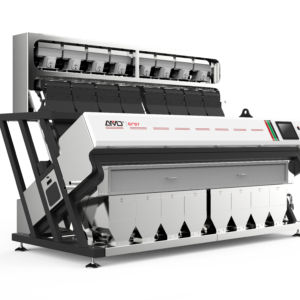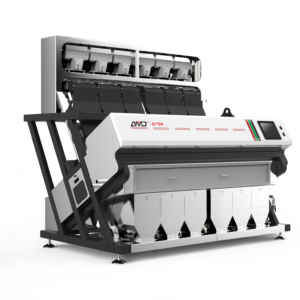
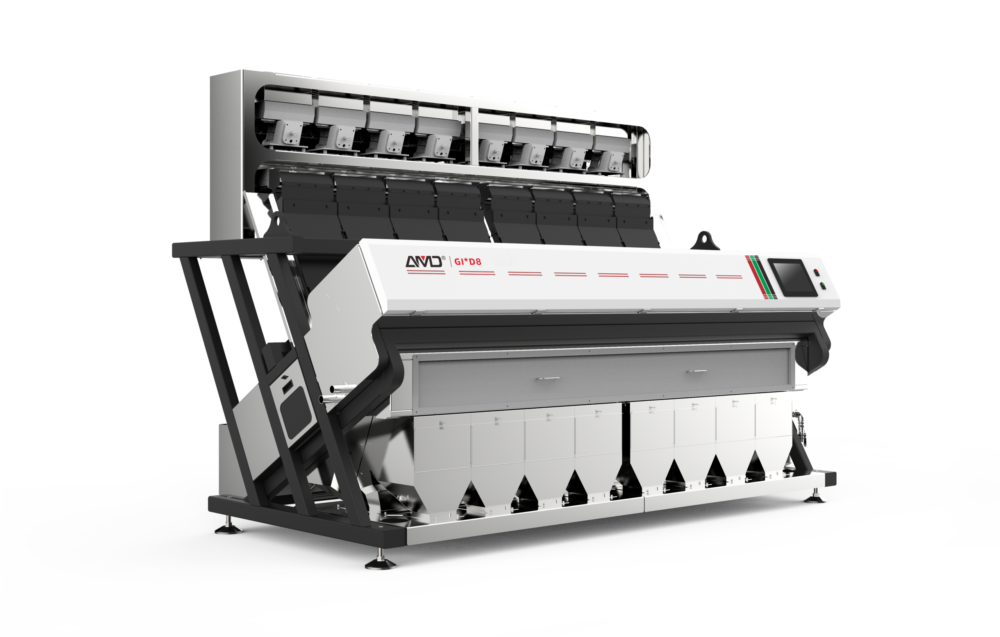
| Product Name | GI*D Pet Flake Polymer & Color Sorter |
| Model | GI*D8 |
| SENSOR TECHNOLOGY | 2D NIR (Near-Infrared) and color sensor technology |
| Throughput(T/h) | 2-6 |
| Air Consumption (m3/min) | <6 |
| Voltage (V/hz) | 220/50 |
| Power (kW) | 8.2 |
| Weight (kg) | 2350 |
| Dimension (mm) | 3518*1928*2385 |
| APPLICATION | Effectively detects and removes non-PET materials from PET flakes Optional HD version available for enhanced purification of PET powder The GI*D sorter combines near-infrared and color sensor to accurately separate flakes by polymer and color. |
The GI*D8 NIR Polymer Sorter Machine is engineered for recycling facilities that require greater processing capacity and enhanced polymer separation performance. Utilizing advanced Near-Infrared (NIR) technology, the system identifies different plastic materials based on their spectral signatures, enabling accurate sorting of mixed plastic streams with minimal contamination.
Designed specifically for modern recycling operations, the GI*D8 focuses on maximizing material recovery while maintaining consistent purity levels. Whether processing post-consumer plastic waste, bottle flakes, or mixed polymer fractions, the machine delivers reliable sorting results that help recyclers produce higher-value recycled materials.
As recycling plants continue to increase throughput requirements, traditional sorting systems often struggle to balance capacity and accuracy. The GI*D8 addresses this challenge through a wider sorting platform and an optimized sensor architecture.
Key operational advantages include:
This makes the machine particularly suitable for medium and large-scale recycling facilities seeking long-term operational efficiency.
The GI*D8 NIR Polymer Sorter Machine identifies plastics based on molecular composition rather than surface appearance. This allows reliable separation of materials such as:
Even when materials share similar colors or shapes, the NIR system can accurately recognize polymer differences and direct them into the appropriate output channels.
Contamination remains one of the biggest challenges in plastic recycling. The GI*D8 effectively removes unwanted materials from valuable plastic streams, helping recyclers improve final product quality and reduce downstream processing issues.
The GI*D8 combines multiple detection technologies to improve sorting reliability.
Identify plastic resin types with high precision.
Analyze visual characteristics such as color variation, opacity, and surface appearance.
Advanced algorithms continuously evaluate material flow and optimize sorting decisions during operation.
Industrial-grade air valves provide rapid and accurate rejection of unwanted particles while minimizing valuable material loss.
This integrated approach helps maintain stable performance even when processing inconsistent feedstock.
The GI*D8 is suitable for a broad range of recycling applications.
Separate valuable polymers from heterogeneous waste streams.
Improve polymer purity before pelletizing and extrusion processes.
Remove cross-contamination from crushed and washed plastic flakes.
Recover reusable polymers from manufacturing scrap and production waste.
Sort packaging plastics according to material composition for further recycling.
The machine provides flexibility for facilities handling multiple material categories within a single production line.
The GI*D8 NIR Polymer Sorter Machine can process:
Its ability to identify polymer types makes it a valuable solution for facilities targeting high-purity recycled products.
Installing the GI*D8 can provide measurable improvements throughout the recycling process.
Cleaner recycled materials command stronger market prices.
More valuable polymers can be recovered from mixed waste streams.
Automation reduces manual labor requirements and increases processing efficiency.
Consistent sorting performance helps recyclers meet customer specifications more reliably.
The machine supports future production growth without sacrificing sorting accuracy.
| Feature | Description |
| Sorting Technology | NIR Polymer Identification |
| Detection System | Multi-Sensor Recognition Platform |
| Application | Mixed Plastic & Polymer Sorting |
| Operation Mode | Continuous Industrial Processing |
| Sorting Method | Material-Based Separation |
| Ejection Technology | High-Speed Pneumatic Valves |
| Suitable Industries | Plastic Recycling & Resource Recovery |
Customized configurations are available according to material characteristics, plant layout, and production requirements.
The GI*D8 is designed for recyclers who prioritize polymer purity, operational efficiency, and long-term profitability. Rather than focusing solely on color separation, the system targets the fundamental challenge of plastic recycling: accurately identifying and separating different polymer types.
By improving material consistency and reducing contamination, the GI*D8 helps recycling facilities produce premium recycled materials suitable for demanding downstream applications.
The machine identifies and separates different plastic polymers using Near-Infrared technology.
Yes. It is specifically designed for mixed plastic recycling applications where multiple polymer types are present.
No. The GI*D8 primarily uses NIR spectral analysis to identify materials based on polymer composition.
Yes. It can effectively separate PET from contaminating plastics and improve overall material purity.
Yes. Machine configurations can be adjusted according to throughput requirements, material characteristics, and production objectives.
The GI*D8 NIR Polymer Sorter Machine is a powerful solution for recyclers seeking accurate polymer identification, higher recovery rates, and improved recycled material quality. Through advanced NIR technology, intelligent detection systems, and industrial-grade sorting performance, the machine helps transform mixed plastic waste into valuable recyclable resources.
For recycling operations focused on maximizing material purity and operational efficiency, the GI*D8 provides a reliable foundation for long-term growth and sustainable resource recovery.