In many processing industries, product quality problems are not always visible from the outside. A nut may appear normal but contain internal damage, a grain batch may include hidden stones, and raw materials may contain dense foreign objects that reduce product value. These hidden defects can lead to product rejection, customer complaints, and unnecessary material losses, making advanced sorting technology increasingly important for modern manufacturers.
This is why more companies are adopting X Ray Sorter technology as an advanced quality control solution.
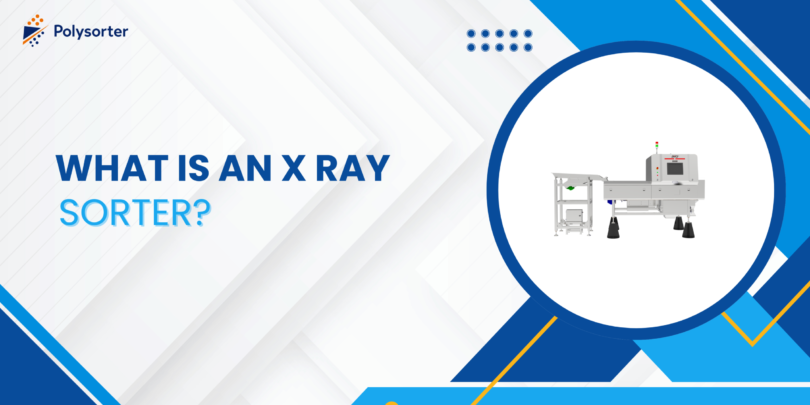
An X Ray Sorter is a sensor-based sorting machine that uses X-ray imaging technology to detect and separate unwanted materials, foreign objects, and internal defects based on differences in material density and composition. Unlike traditional optical sorting machines that mainly analyze visible characteristics such as color, shape, and surface appearance, X-ray sorting technology can inspect the internal structure of materials.
By analyzing individual items during high-speed production, an X Ray Sorter can identify problems such as stones inside agricultural products, internal defects in nuts, dense contaminants, and other unwanted materials that may not be visible through traditional inspection methods.
After detection, the system activates a precision rejection mechanism to remove defective materials while keeping valuable products in the production stream. This helps processors improve product purity, reduce waste, and maintain consistent quality throughout the production process.
For companies processing high-value materials such as nuts, beans, seeds, grains, minerals, or recyclable materials, X-ray sorting technology provides an additional inspection layer beyond conventional optical sorting. Modern systems can also combine X-ray imaging with visible light cameras and intelligent image analysis to improve recognition performance and identify both external and internal defects.
How Does an X Ray Sorter Work?
The working principle of an X Ray Sorter is based on the fact that different materials absorb X-rays differently. When products pass through the inspection area, the machine captures information about their internal density and composition. The system then analyzes this data and determines whether each item meets the required quality standards.
Simply explained, an X Ray Sorter works like an advanced inspection system that can “look inside” materials instead of only checking their external appearance.
The complete sorting process usually includes four main stages.
1. Material Feeding and Distribution
The sorting process begins when materials enter the machine through a controlled feeding system.
A stable and evenly distributed material flow is essential because overlapping products can affect detection accuracy. For bulk materials such as beans, seeds, nuts, and grains, proper feeding ensures that each individual item can be inspected effectively.
A well-designed feeding system also helps maintain stable throughput, reduce unnecessary product loss, and improve overall sorting performance during continuous operation.
2. X Ray Image Capture and Internal Inspection
Inside the inspection chamber, an X-ray source produces penetrating radiation that passes through the materials. A high-resolution detector captures the transmitted signals and converts them into digital images.
Because different materials have different densities and compositions, they create different X-ray absorption patterns. The sorting system analyzes these variations to identify abnormal areas and unwanted materials.
Unlike traditional optical cameras that mainly detect surface characteristics, X-ray imaging can identify internal problems such as:
- Internal cracks
- Insect damage
- Hollow areas
- Stones
- Metal contamination
- Dense foreign materials
- Abnormal internal structures
This capability is especially valuable in industries where external appearance does not always represent actual product quality.
For example, a premium nut may have an attractive outer appearance but contain internal deterioration. An X Ray Sorter can identify these hidden issues before the product reaches customers.
Industrial X-ray sorting systems are also designed with protective shielding and safety controls to support reliable operation in production environments.
3. Intelligent Image Analysis and Recognition
Modern X Ray Sorters increasingly use intelligent image analysis technology to improve detection accuracy and sorting stability.
Advanced recognition algorithms analyze image information and compare material characteristics against established quality standards. Through optimized software models, the system can recognize complex defect patterns and adapt to different materials and production conditions.
Compared with traditional inspection methods, intelligent sorting systems provide several practical advantages:
- Faster defect recognition
- More consistent sorting performance
- Reduced dependence on manual inspection
- Improved product recovery rates
In real production environments, stable detection performance and reliable operation are often just as important as advanced technology itself.
Some advanced systems combine X-ray imaging with visible imaging technology, allowing the machine to evaluate both surface characteristics and internal conditions within one sorting process.
4. Precision Rejection System
After identifying unwanted materials, the control system sends a signal to the rejection unit.
High-speed air ejectors or mechanical separation systems remove defective items from the product stream within milliseconds. The goal is not simply to remove unwanted materials but to achieve the best balance between:
- High product purity
- Low loss of valuable materials
- Stable production capacity
- Long-term operating efficiency
This balance is especially important for businesses processing expensive raw materials, where excessive rejection of good products can directly reduce profitability.
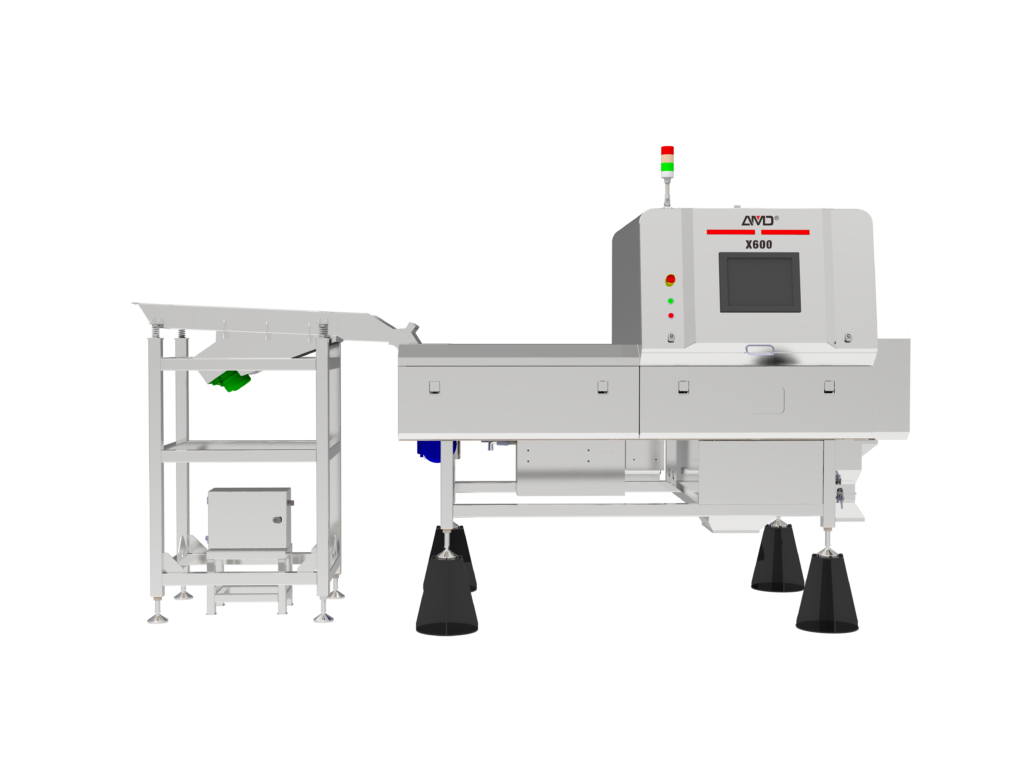
X Ray Sorter vs Optical Sorter: What Is the Difference?
When selecting sorting equipment, many buyers compare X Ray Sorters with traditional optical sorting machines. Although both technologies improve product quality, they focus on solving different sorting challenges.
A traditional optical sorter uses cameras and light-based imaging to identify differences in visible characteristics, including:
- Color variation
- Surface defects
- Shape differences
- External contamination
For many applications, optical sorting remains highly effective. It can remove discolored grains, broken products, and materials with abnormal surface appearance.
However, optical sorting has limitations when defects are hidden inside the material. A product may look acceptable externally while containing internal damage or dense contaminants.
An X Ray Sorter provides a different approach by analyzing internal density differences. This makes it particularly useful when internal quality, food safety, or contamination control is a priority.
| Feature | Optical Sorter | X Ray Sorter |
| Detection Method | Visible light imaging | X-ray penetration imaging |
| Main Detection Target | Surface characteristics | Internal and density-related differences |
| Color Detection | Excellent | Limited unless combined with visible imaging |
| Hidden Defect Detection | Limited | Excellent |
| Dense Material Detection | Sometimes difficult | Highly effective |
| Typical Applications | Rice, grains, beans, plastics, surface sorting | Nuts, seeds, food inspection, industrial quality control |
In many advanced production lines, these technologies are not replacements for each other. Instead, they work together to create a more complete sorting solution.
For example, combining visible imaging, X-ray detection, and intelligent recognition technology allows manufacturers to identify both external defects and hidden internal problems, improving overall product quality and reducing material losses.
Applications of X Ray Sorter in Modern Processing Industries
The demand for higher product quality, improved safety standards, and automated production has expanded the application range of X Ray Sorter technology across multiple industries. Unlike traditional inspection methods that rely mainly on visible characteristics, X-ray sorting provides deeper analysis by identifying differences in material density, composition, and internal structure.
Today, X Ray Sorters are widely used in food processing, agriculture, recycling, mining, and other industries where product purity and consistency directly influence business value.
X Ray Sorter Applications in Food and Agricultural Processing
Food processing is one of the most important application areas for X Ray Sorters. In industries involving nuts, beans, seeds, grains, and other agricultural products, even a small amount of foreign material or internal defects can affect product quality, customer confidence, and market competitiveness.
Traditional optical sorting systems are highly effective for removing visible defects such as discoloration, broken pieces, or abnormal surface appearance. However, some quality problems remain hidden inside products and cannot be identified through external inspection alone.
For example:
- A nut may look healthy externally but contain internal damage.
- A grain batch may contain stones with similar colors to the product.
- Seeds may include internal defects that affect quality or processing performance.
An X Ray Sorter addresses these challenges by analyzing internal density differences and identifying defects that conventional cameras may miss.
Common applications include:
- Nuts such as almonds, walnuts, pecans, and hazelnuts
- Beans and pulses
- Seeds and spices
- Specialty grains
- Agricultural bulk materials
For food processors, the main benefits include:
- Improved product purity
- Reduced foreign material contamination
- Higher customer confidence
- Lower product loss during quality control
By combining X-ray inspection with intelligent recognition technology, modern sorting systems can provide more consistent performance in demanding production environments.
X Ray Sorter Applications in Recycling and Industrial Material Processing
Modern recycling operations handle increasingly complex material streams. As recycled materials move toward higher-value applications, contamination control has become a critical challenge for processing companies.
Traditional optical sorting technologies can separate materials based on visible characteristics, color, or material differences. However, some contaminants are difficult to identify because they may have similar appearances to the target material.
An X Ray Sorter provides additional detection capability by identifying materials according to density differences.
Common targets include:
- Dense foreign materials
- Metal contamination
- Glass fragments
- Stones and other heavy impurities
In recycling facilities, this additional detection layer can help improve material purity and protect downstream processing equipment.
For example, before recycled materials enter further processing stages, removing unwanted dense contaminants can reduce equipment wear, improve final product quality, and increase the value of recycled output.
As recycling industries continue to develop toward stricter quality requirements, multi-sensor sorting solutions that combine different detection technologies are becoming increasingly important.
X Ray Sorter Applications in Mining and Mineral Processing
The mining industry also benefits from X-ray sorting technology because valuable minerals often have different density characteristics compared with surrounding waste materials.
Traditional mineral processing methods usually require significant energy and resources during crushing, grinding, and separation. Sensor-based sorting allows mining companies to remove waste materials earlier in the process, improving overall production efficiency.
X Ray Sorters can support applications such as:
- Ore pre-concentration
- Waste rock rejection
- Mineral recovery improvement
- Reduction of unnecessary processing volume
By identifying differences between valuable materials and unwanted rock, X-ray sorting technology helps mining operations optimize resource utilization and reduce downstream processing costs.
For mining companies, the value of X-ray sorting is not only improved separation accuracy but also better control over the entire production process.
How to Choose the Right X Ray Sorter for Your Business
Choosing an X Ray Sorter is a long-term investment decision. The right equipment should match your material characteristics, production requirements, and quality objectives.
Instead of selecting a machine only based on price or advertised capacity, buyers should evaluate several important factors before making a decision.
1. Understand Your Material and Sorting Requirements
The first step is identifying what you need to remove and why.
Different materials create different sorting challenges.
For example:
- Nut processors may focus on internal defects, shell fragments, and foreign materials.
- Grain processors may prioritize stones and density-related impurities.
- Recycling companies may focus on contamination removal.
- Mining operations may require waste material separation.
A suitable X Ray Sorter should be selected according to your actual application rather than choosing a standard configuration without proper evaluation.
Before purchasing, it is important to understand:
- Material characteristics
- Defect types
- Required purity level
- Production environment
- Expected sorting accuracy
A machine designed for one application may require different configurations when handling another material.
2. Evaluate Detection Technology and System Configuration
Not all X-ray sorting systems provide the same performance. Buyers should carefully evaluate the technical configuration before investment.
Important factors include:
X-Ray Detection Resolution
Higher-resolution imaging helps identify smaller defects and improves sorting precision, especially when processing high-value materials.
Multi-Sensor Integration
Some advanced systems combine X-ray imaging with visible cameras, allowing the machine to analyze both surface appearance and internal characteristics.
A combined detection approach can provide better results when materials contain multiple types of defects.
Intelligent Recognition Capability
Modern sorting equipment increasingly uses intelligent image analysis to improve recognition accuracy.
When evaluating a supplier, buyers should consider whether the system can:
- Handle different material conditions
- Maintain stable sorting performance
- Adapt to changing production requirements
- Reduce unnecessary rejection of good products
3. Match Processing Capacity with Production Goals
Processing capacity is another critical factor when purchasing an X Ray Sorter.
A machine with insufficient capacity may become a production bottleneck, while an oversized system may increase unnecessary investment costs.
Before choosing equipment, consider:
- Current production volume
- Future expansion plans
- Required sorting accuracy
- Material characteristics
- Available installation space
The ideal system should provide stable performance while leaving room for future business growth.
A professional supplier should help evaluate whether the machine capacity matches your actual production conditions instead of recommending equipment based only on standard specifications.
4. Consider Supplier Experience and Technical Support
The performance of an X Ray Sorter depends not only on the machine itself but also on the supplier’s technical capability.
A reliable supplier should be able to provide:
- Application evaluation
- Material testing support
- Customized sorting solutions
- Installation guidance
- Operator training
- Maintenance assistance
- Spare parts support
Before purchasing, buyers should work with suppliers that understand their industry and have experience with similar materials.
Many sorting challenges cannot be solved by hardware alone. Proper parameter adjustment, software optimization, and technical support are essential for maintaining stable operation over the long term.
5. Check Testing and Validation Before Purchase
Before finalizing an investment, buyers should consider whether the supplier can provide material testing and performance verification.
Testing helps determine:
- Whether the system can detect target defects
- Expected sorting accuracy
- Suitable machine configuration
- Potential product loss rate
A reliable testing process reduces purchasing risks and helps ensure that the selected X Ray Sorter meets actual production requirements.
Frequently Asked Questions About X Ray Sorter
1. What is an X Ray Sorter used for?
An X Ray Sorter is used to detect and separate unwanted materials, foreign objects, and internal defects by analyzing differences in density and composition.
It is commonly used in food processing, agriculture, recycling, mining, and industrial inspection applications.
2. What can an X Ray Sorter detect?
Depending on the application and system configuration, an X Ray Sorter can detect:
- Stones
- Metal contamination
- Dense foreign materials
- Internal defects
- Shell fragments
- Abnormal density areas
These problems may not be detected effectively through traditional optical sorting methods.
3. Is an X Ray Sorter better than a color sorter?
An X Ray Sorter and a color sorter solve different problems.
Color sorters are highly effective for detecting visible surface differences such as color and appearance defects, while X Ray Sorters are better suited for identifying internal problems and density variations.
In many advanced processing lines, both technologies are used together to achieve more complete quality control.
4. Can an X Ray Sorter improve food quality?
Yes. By removing hidden defects and foreign materials, an X Ray Sorter can help improve product purity, reduce contamination risks, and support higher food quality standards.
For food processors handling valuable products, improved sorting accuracy can also help reduce customer complaints and increase market competitiveness.
5. How do I choose the right X Ray Sorter?
The right machine depends on several factors, including:
- Material type
- Production capacity
- Sorting targets
- Required accuracy
- Future expansion plans
A professional supplier should evaluate your specific application before recommending the most suitable solution.
6. How much does an X Ray Sorter cost?
The cost of an X Ray Sorter varies depending on factors such as detection technology, machine configuration, processing capacity, application requirements, and customization level.
Instead of choosing equipment based only on initial price, buyers should consider total ownership costs, including maintenance, operating efficiency, reliability, and technical support.
7. Can an X Ray Sorter replace a color sorter?
In most cases, an X Ray Sorter does not completely replace a color sorter.
The two technologies focus on different inspection methods. Color sorting mainly identifies visible surface differences, while X-ray sorting focuses on internal characteristics and density variations.
Using both technologies together can provide a more complete quality control solution for demanding applications.
Summary
As industries continue to increase quality requirements and improve production efficiency, traditional inspection methods are no longer sufficient for many applications.
An X Ray Sorter provides manufacturers with the ability to identify hidden defects, remove difficult contaminants, and improve product consistency through advanced sensor-based sorting technology.
For companies processing agricultural products, recyclable materials, minerals, and other valuable materials, selecting the right X-ray sorting solution can improve operational efficiency and strengthen long-term competitiveness.
However, successful implementation depends on choosing equipment that matches actual production needs. Factors such as detection technology, processing capacity, supplier experience, testing capability, and after-sales support all play an important role in achieving reliable sorting performance.
By working with an experienced sorting equipment provider, businesses can develop a solution that meets current production requirements while supporting future growth and improving long-term production efficiency.