Rice quality has become one of the most important factors determining product value in today’s global grain market. Whether rice is supplied to local supermarkets, food manufacturers, restaurants, or exported internationally, buyers expect every shipment to meet increasingly strict standards for color consistency, purity, and food safety. Even a small percentage of yellow kernels, chalky grains, mold-damaged rice, stones, or plastic contaminants can reduce product value, trigger customer complaints, and even lead to rejected export shipments.
This is why understanding how a rice color sorter machine works has become essential for mill owners, grain processors, and investors planning to upgrade their production lines. Modern rice color sorters no longer rely solely on simple color comparison. Instead, they combine high-speed optical imaging, artificial intelligence, precision air ejection, and advanced image processing to inspect every individual grain in real time. Within milliseconds, defective kernels are identified and removed while premium-quality rice continues through the production line.
In simple terms, a rice color sorter machine works by feeding rice into a single layer, capturing high-speed images of every grain, using AI to identify defects, and removing unwanted kernels with precisely timed bursts of compressed air. This fully automated process enables processors to achieve higher purity, consistent quality, and significantly greater efficiency than manual inspection.
However, not every rice color sorter delivers the same performance. Different manufacturers use different camera technologies, illumination systems, AI algorithms, ejector valves, and feeding designs. These differences directly affect sorting accuracy, product yield, operating costs, and long-term return on investment.
In this guide, you’ll learn exactly how a rice color sorter machine works, the technologies behind modern optical sorting, what defects today’s machines can identify, and which features truly matter when selecting equipment for your rice processing business.
What Is a Rice Color Sorter Machine?
A rice color sorter machine is an intelligent optical sorting system designed to automatically separate defective rice kernels and foreign materials from good rice based on their visual and physical characteristics. Instead of inspecting rice in bulk, the machine analyzes every individual grain while it travels through the sorting channel at high speed.
Earlier generations of color sorters focused mainly on detecting obvious color differences, such as yellow or black rice. Although this represented a significant improvement over manual sorting, it had limitations. Slight discoloration, subtle defects, and contaminants with similar colors often escaped detection, reducing overall sorting efficiency.
Today’s machines have evolved far beyond simple color recognition. Modern rice color sorters evaluate multiple characteristics simultaneously, including:
- Color variations
- Brightness and contrast
- Grain shape
- Surface texture
- Grain size
- Edge definition
- Material position and movement
- Infrared spectral characteristics (on selected models)
Rather than making decisions based on color alone, advanced systems combine all of these data points to determine whether a grain should be accepted or rejected. AI-powered recognition algorithms continuously improve classification accuracy by identifying increasingly complex defect patterns instead of relying on fixed color thresholds.
Many high-end machines also integrate deep-learning image recognition, intelligent positioning algorithms, adaptive feeding control, and self-learning software that continuously optimizes sorting performance under changing production conditions. These technologies help processors achieve higher purity while minimizing the loss of good rice, resulting in better profitability over the lifetime of the machine.
Because of these capabilities, modern rice color sorters are widely used to process:
- White rice
- Brown rice
- Paddy rice
- Parboiled rice
- Glutinous rice
- Long-grain rice
- Short-grain rice
- Premium export rice
- Specialty rice varieties
Whether you’re operating a regional rice mill or a large industrial processing plant, understanding how a rice color sorter machine works is the first step toward selecting equipment that delivers consistent product quality and long-term production efficiency.
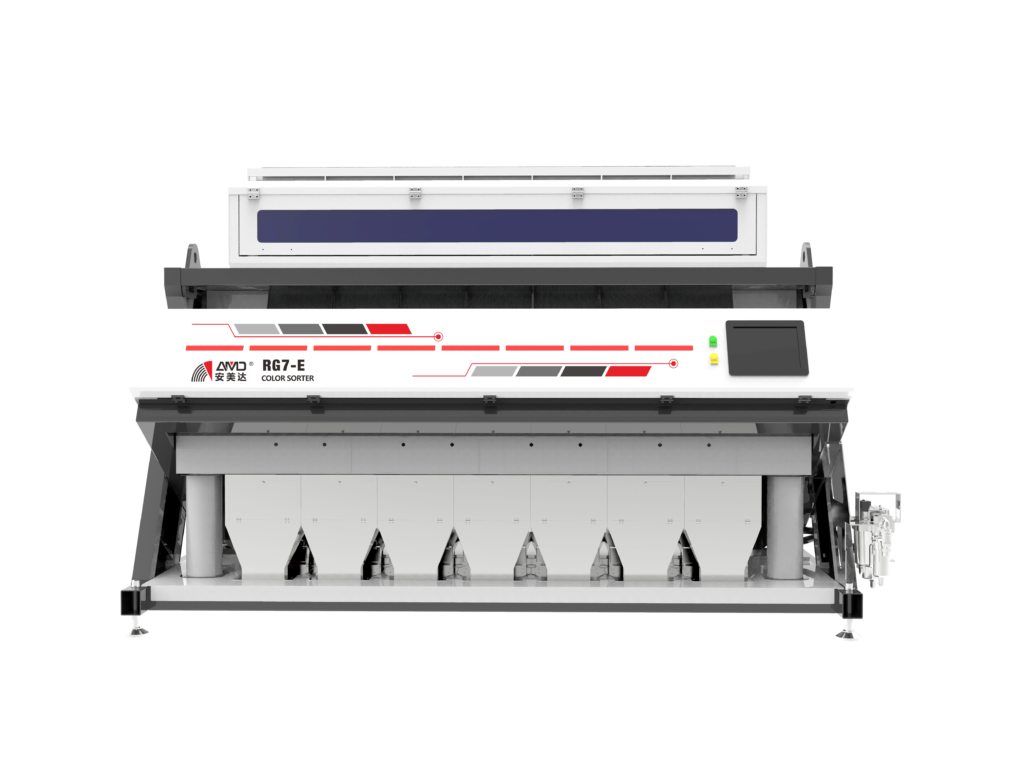
How Does a Rice Color Sorter Machine Work?
Although modern rice color sorters incorporate sophisticated AI software, high-speed cameras, and precision pneumatic systems, the overall sorting process follows a straightforward sequence. Each stage is carefully engineered to ensure every grain is inspected individually before an accurate sorting decision is made.
The complete workflow looks like this:
Rice Feeding
↓
Grain Alignment
↓
High-Speed Image Capture
↓
AI Defect Analysis
↓
Precision Air Ejection
↓
Finished Product Collection
Let’s look at each step in more detail.
Step 1: Uniform Feeding and Grain Alignment
The sorting process begins with the feeding system.
Rice enters the machine through a hopper before flowing onto specially designed vibratory channels or inclined chutes. At this stage, maintaining a stable, uniform flow is critical. If grains overlap, bounce, or travel in clusters, the cameras cannot accurately inspect each kernel, reducing sorting accuracy.
To solve this challenge, advanced rice color sorters use balanced feeding systems that regulate material flow and evenly distribute grains across every chute. Stable feeding offers several important advantages:
- Better image quality
- Higher sorting accuracy
- Lower carryover
- Reduced unnecessary rejects
- More consistent throughput
Many modern systems also optimize airflow and vibration inside the feeding structure, helping maintain smooth grain movement even during high-capacity operation. This stable presentation allows every rice kernel to enter the inspection zone in the correct position for accurate analysis.
Step 2: High-Speed Optical Imaging
Once the grains are aligned into a single layer, they begin falling freely through the inspection zone.
This is where the optical system goes to work.
Industrial-grade cameras capture thousands of high-resolution images every second while specially designed LED lighting creates a stable inspection environment with minimal shadows and highly accurate color reproduction.
Depending on the machine configuration, the inspection system may include:
- Full-color RGB cameras
- High-resolution CCD or CMOS sensors
- Visible-light imaging
- Near-Infrared (NIR) sensors
- Multi-spectral imaging systems
Each technology contributes different information. Visible-light cameras accurately identify color defects, while NIR sensors can distinguish certain foreign materials that appear almost identical to rice under normal lighting. Together, these systems generate a detailed digital image of every grain before it reaches the rejection point.
Step 3: AI Image Processing and Defect Analysis
Capturing images is only the beginning.
The real intelligence lies inside the machine’s processing software.
Every image is analyzed almost instantly using advanced computer vision algorithms. Instead of comparing colors alone, modern AI systems evaluate multiple grain characteristics simultaneously, including:
- Hue and brightness
- Shape consistency
- Grain dimensions
- Surface texture
- Edge characteristics
- Defect location
- Motion trajectory
- Spatial position
Imagine two rice kernels that appear almost identical to the human eye. One is perfectly healthy, while the other contains a tiny mold spot or slight discoloration caused by improper drying. A traditional color sorter may struggle to distinguish between them because the color difference is extremely subtle.
An AI-powered rice color sorter evaluates far more than color. It analyzes texture, shape, edge definition, and multiple visual features simultaneously, allowing it to identify defects that conventional systems often miss.
Deep-learning models trained with extensive sample databases continue improving their recognition capability over time. Some advanced platforms also include self-learning functions that optimize sorting performance for different rice varieties, production environments, and customer quality standards.
Once the analysis is complete, every grain is instantly classified as either acceptable or defective, preparing it for the final stage of the sorting process.
Step 4: Precision Air Ejection Removes Defective Grains
After the AI has classified every grain, the rice continues falling toward the ejection zone.
This stage takes only milliseconds, but it has the greatest impact on the machine’s overall performance.
As each defective kernel reaches the calculated ejection point, a high-speed air valve releases a precisely timed burst of compressed air. The defective grain is instantly diverted into a reject chute, while all acceptable rice continues its natural trajectory into the finished product outlet.
The success of this process depends on several key factors working together:
- Air valve response speed
- AI positioning accuracy
- Grain trajectory stability
- Consistent feeding performance
- Precise timing between image capture and air ejection
This is one of the main reasons why two rice color sorters with similar camera specifications can produce very different results in real-world production. A slower valve or less accurate positioning system may reject more good rice along with defective kernels, increasing carryover, reducing yield, and ultimately lowering profitability.
To address this challenge, many modern systems combine AI positioning algorithms with motion prediction technology. Rather than estimating where a grain will be, the software continuously calculates its speed, posture, trajectory, and spatial position before triggering the air jet. This enables highly accurate rejection while minimizing the loss of acceptable rice.
For rice processors, the goal is not simply to reject more defects—it’s to reject only the defects. A machine that balances high purity with high yield will usually deliver the strongest long-term return on investment.
How Does a Rice Color Sorter Identify Different Types of Rice Defects?
A modern rice color sorter machine does more than simply detect color differences. By combining high-resolution cameras, advanced image processing technology, and intelligent sorting algorithms, the machine can analyze each individual rice grain and identify quality defects during high-speed operation.
During the sorting process, rice grains pass through the inspection area where cameras capture detailed images of each grain. The system evaluates differences in color, brightness, shape, and surface characteristics to distinguish acceptable rice from unwanted materials or defective kernels.
Common defects identified by optical sorting technology include yellow grains, damaged rice, immature kernels, discolored grains, and foreign materials with different optical characteristics. After detection, precision air ejectors quickly remove the unwanted particles without affecting the quality of accepted rice.
Compared with manual inspection methods, optical rice sorting technology provides more consistent results, higher processing efficiency, and better quality control for modern rice mills.
What Can a Rice Color Sorter Machine Detect?
Many people assume a rice color sorter simply removes yellow rice.
In reality, modern optical sorting systems can identify a wide variety of defects and contaminants by combining visible-light imaging, AI recognition, and, in some configurations, Near-Infrared (NIR) technology.
The table below summarizes the most common materials today’s rice color sorters can detect.
| Detection Category | Typical Examples |
| Color Defects | Yellow rice, dark yellow rice, chalky rice, black rice, red rice, heat-damaged rice, mold-damaged kernels |
| Physical Defects | Broken rice, cracked kernels, misshapen grains, insect-damaged rice, surface blemishes |
| Foreign Materials | Stones, glass fragments, plastic particles, husks, straw, dust clusters, weed seeds, small wood pieces |
Machines equipped with Near-Infrared (NIR) sensors can go a step further. Instead of relying only on visible color, NIR analyzes how different materials reflect infrared light. This allows the sorter to distinguish contaminants that appear almost identical to rice under normal illumination.
For example, transparent plastic fragments or certain types of glass may be difficult for conventional color cameras to recognize, yet they produce distinct infrared signatures that NIR sensors can detect with much greater reliability.
As food safety standards continue to tighten around the world, many processors supplying premium domestic and export markets now consider NIR technology an important investment rather than an optional upgrade.
Why Modern AI Rice Color Sorters Deliver Better Results
The biggest advancement in rice sorting over the past decade hasn’t been faster cameras—it has been artificial intelligence.
Traditional color sorters relied on manually adjusted thresholds for brightness, color, and contrast. While these systems performed well under stable conditions, operators often needed to recalibrate the machine whenever rice varieties, moisture levels, or lighting conditions changed.
AI-powered rice color sorters work differently.
Instead of asking,
“Is this grain yellow enough to reject?”
they ask,
“Based on everything I’ve learned, should this grain belong in the finished product?”
To answer that question, AI evaluates multiple characteristics simultaneously, including:
- Color
- Shape
- Texture
- Surface patterns
- Area
- Edge definition
- Motion trajectory
- Relative position
Consider two grains that appear nearly identical to a human operator. One grain is perfectly healthy, while the other has a tiny mold spot caused by improper storage. A conventional color sorter may see almost no difference. An AI-powered system, however, recognizes subtle variations in texture, edges, and surface characteristics, allowing it to classify the defective grain with much greater confidence.
Some advanced platforms also feature self-learning capabilities. By continuously analyzing accepted and rejected samples, the software refines its recognition models and adapts to different rice varieties, customer quality standards, and production environments.
Many manufacturers now integrate cloud connectivity as well, allowing operators to synchronize sorting recipes, monitor machine performance remotely, receive predictive maintenance alerts, and optimize production across multiple facilities.
The result is:
- Higher sorting accuracy
- Lower carryover
- Better product consistency
- Less operator intervention
- Improved production efficiency
- Higher long-term profitability
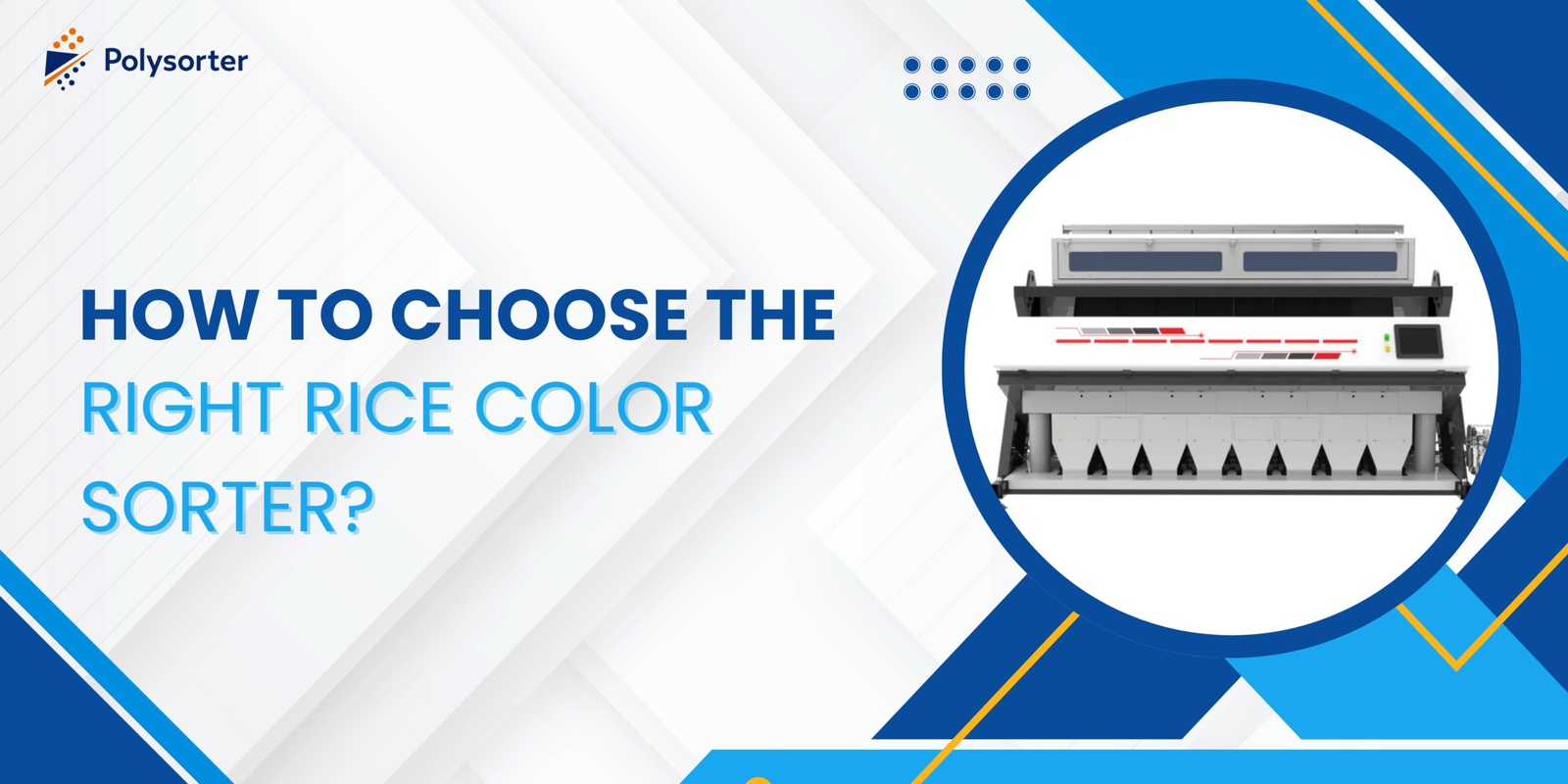
How to Choose the Right Rice Color Sorter Machine
Once you understand how a rice color sorter machine works, choosing the right equipment becomes much easier.
Many buyers focus primarily on purchase price. In reality, the true cost of ownership depends on much more than the initial investment. A lower-priced machine that rejects excessive good rice or requires frequent adjustments can become significantly more expensive over its operating life.
When comparing suppliers, evaluate the following factors carefully.
Sorting Accuracy
High sorting accuracy directly improves product quality and customer satisfaction. Whenever possible, request performance data using rice that closely matches your own production materials.
Carryover Ratio
A low carryover ratio means fewer acceptable grains are rejected together with defective kernels. Even a small reduction in carryover can translate into substantial annual savings for high-capacity mills.
Throughput Capacity
Select equipment that meets both your current production requirements and future expansion plans. A machine that is too small may become a bottleneck, while an oversized system may increase unnecessary operating costs.
Sensor Technology
Visible-light cameras perform well for most color-based applications, while NIR or multispectral systems provide additional protection against difficult contaminants and increasingly strict food safety requirements.
AI Recognition Capability
Deep-learning algorithms generally provide more stable performance than conventional rule-based software, particularly when processing multiple rice varieties or identifying subtle defects.
Air Valve Performance
Fast, accurate ejector valves improve rejection precision while minimizing the loss of good rice.
Ease of Operation
Automatic calibration, intuitive software, recipe management, and remote diagnostics reduce operator training requirements and improve day-to-day efficiency.
After-Sales Support
Reliable technical support, spare parts availability, software updates, and preventive maintenance services are just as important as the machine itself.
One practical recommendation: always request a live sorting test using your own rice samples instead of relying solely on brochure specifications. Testing real production material provides the most accurate picture of sorting accuracy, carryover ratio, throughput, and overall machine performance.
Why Are Rice Color Sorter Machines Important for Modern Rice Processing?
As consumer requirements for rice quality continue to increase, maintaining consistent appearance and purity has become an important challenge for rice processors. Even a small percentage of defective grains can affect product value, customer satisfaction, and market competitiveness.
A rice color sorter machine helps processors improve product quality by automatically removing unwanted grains that are difficult to separate through traditional methods. Whether used for premium white rice, specialty rice, or large-scale commercial processing, optical sorting equipment provides a reliable solution for achieving higher quality standards.
For rice processing companies, investing in advanced sorting technology is not only about improving sorting accuracy but also about reducing manual labor, increasing production efficiency, and creating more stable product quality.
FAQs
How accurate is a rice color sorter machine?
Modern AI-powered rice color sorters can achieve sorting accuracies exceeding 99% under suitable operating conditions. Actual performance depends on factors such as rice quality, machine configuration, feeding stability, and parameter optimization.
Can a rice color sorter remove stones and plastic contaminants?
Yes. Modern machines can detect many types of stones, glass, plastics, husks, and other foreign materials. Systems equipped with NIR sensors typically provide even better performance when separating contaminants with similar visible colors.
Does a rice color sorter detect moldy rice?
Yes. Mold-damaged kernels often exhibit subtle differences in color and texture. AI-powered vision systems can recognize these defects far more effectively than traditional color-only sorters.
What is the difference between an AI rice color sorter and a traditional CCD color sorter?
A traditional CCD color sorter primarily evaluates color differences based on preset thresholds. An AI rice color sorter analyzes multiple characteristics—including color, texture, shape, edge definition, and surface features—allowing it to recognize more complex defects with greater consistency and fewer false rejects.
How much rice can a rice color sorter process?
Processing capacity depends on machine size and configuration. Compact models may handle approximately 1–2 tons per hour, while large industrial systems can process more than 10 tons per hour, depending on the number of chutes, rice variety, and sorting requirements.
Is Near-Infrared (NIR) technology necessary?
Not every application requires NIR. Standard commercial rice can often be sorted effectively using visible-light cameras alone. However, processors targeting premium export markets or strict food safety standards frequently benefit from NIR’s enhanced ability to detect difficult contaminants.
Summary
Understanding how a rice color sorter machine works is about more than learning the technology—it helps you understand how every stage of the sorting process influences product quality, production efficiency, and long-term profitability.
From uniform feeding and high-speed optical imaging to AI-powered defect recognition and precision air ejection, modern rice color sorters inspect every grain individually and make thousands of intelligent sorting decisions every second. Today’s most advanced systems go beyond simple color comparison by combining deep learning, intelligent image analysis, motion prediction, and precision air control to maximize both purity and yield.
If you’re planning to invest in a rice color sorter, don’t compare machines based on price alone. Evaluate the complete solution, including AI capabilities, sensor technology, carryover ratio, throughput, reliability, ease of maintenance, and after-sales support. A high-quality rice color sorter is more than a processing machine—it is a long-term investment that improves product value, reduces waste, strengthens customer confidence, and increases the competitiveness of your business.
Whether you’re processing white rice, brown rice, parboiled rice, glutinous rice, or premium export varieties, PolySorter can recommend a solution tailored to your specific production goals. Our engineering team works closely with customers to select the most suitable configuration based on rice variety, processing capacity, target purity, and future expansion plans—helping you maximize both product quality and return on investment.