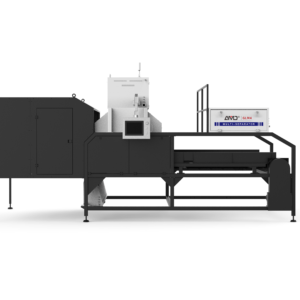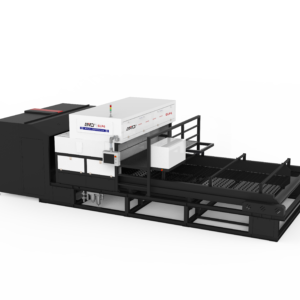
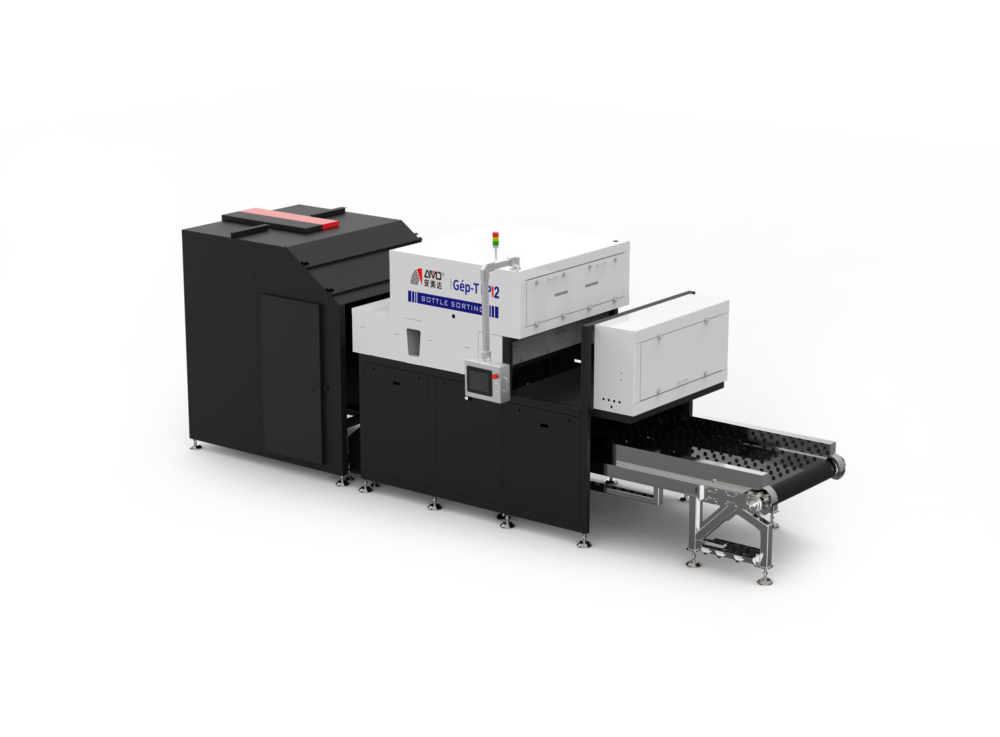
| Product Name | GLPI Series Plastic Bottle Sorting Machine |
| Model | GLPI2 |
| SENSOR TECHNOLOGY | NIR Sorting Technology |
| Capacity(T/H) | 1.5-2.0 |
| Voltage (V/hz) | 380V/50Hz |
| Power (kW) | 10 |
| Weight (kg) | 4000 |
| Dimension (mm) | 7360*1870*2660 |
| APPLICATION | Visible light and Al-powered sorting system for various plastic bottles (PET, HDPE, food containers, etc.), with or without labels. Efficiently removes unwanted colors and supports partial material recognition and rejection. |
As recycling standards continue to rise worldwide, separating plastic bottles by color alone is no longer enough. Modern recycling facilities must accurately identify different polymer types to produce high-purity recycled materials suitable for bottle-to-bottle recycling, food-grade applications, and premium recycled resin production.
The GLPI 2 NIR Plastic Bottle Sorting Machine is designed to meet these demands through advanced Near-Infrared (NIR) technology and intelligent material recognition. Unlike conventional optical sorting systems that primarily focus on color differences, the GLPI 2 identifies the molecular characteristics of plastic materials, allowing precise separation of PET, HDPE, PP, PE, and other polymers from mixed bottle streams.
For recyclers seeking higher purity levels, improved recovery rates, and reduced manual sorting costs, the GLPI 2 provides a reliable and efficient solution.
Plastic bottles often appear similar to the human eye, even when they are made from completely different materials. A transparent PET beverage bottle may look nearly identical to a transparent PVC or HDPE container, yet mixing these materials can significantly reduce the value of recycled products.
Even small amounts of unwanted polymers can create serious issues during reprocessing, including:
The GLPI 2 NIR Plastic Bottle Sorting Machine eliminates these challenges by automatically identifying material types before further processing.
The core of the GLPI 2 is its high-performance Near-Infrared detection system.
NIR technology analyzes the unique spectral signature of each plastic material. Every polymer reflects infrared light differently, allowing the system to accurately identify the composition of individual bottles moving across the sorting belt.
The system can recognize:
This material-based identification enables much higher sorting accuracy than color-only systems.
PET is one of the most valuable recycled plastics in the global recycling industry. However, contamination from non-PET materials can quickly reduce product quality and resale value.
The GLPI 2 is specifically designed to separate:
Including:
Including:
By creating cleaner PET streams, recyclers can improve the quality of recycled flakes and pellets while increasing profitability.
In addition to NIR detection, the GLPI 2 utilizes intelligent sorting algorithms that continuously process material data in real time.
The AI-assisted system helps:
This combination of NIR sensing and intelligent processing ensures reliable operation even when bottle streams contain varying shapes, sizes, colors, and contamination levels.
Once target and non-target materials have been identified, the GLPI 2 activates a high-speed pneumatic ejection system.
The system delivers:
Every bottle is analyzed and sorted within milliseconds, allowing the machine to process large volumes of material while maintaining high recovery rates.
The GLPI 2 is suitable for a wide range of plastic bottle recycling operations.
Produce cleaner PET streams for high-quality flake and pellet production.
Support food-grade recycling processes that require extremely low contamination levels.
Automatically separate valuable plastic bottles from mixed municipal waste streams.
Recover specific polymer types for dedicated recycling applications.
Improve feedstock consistency before shredding, washing, and extrusion processes.
Separate polymers with high precision and reduce contamination in recycled materials.
Higher-purity material streams often command stronger market prices.
Automated identification significantly decreases labor requirements.
Produce cleaner PET fractions suitable for demanding recycling applications.
Reduce downstream processing issues caused by mixed polymer contamination.
Maintain consistent sorting performance during continuous industrial operation.
The GLPI 2 is engineered to integrate seamlessly into existing bottle recycling lines.
Typical installation positions include:
Its modular design allows operators to customize sorting configurations according to specific material streams and production objectives.
The GLPI 2 can be configured for:
This flexibility makes the system suitable for both dedicated recycling facilities and mixed-waste recovery operations.
Accurately identifies polymer types based on spectral characteristics.
Combines NIR sensing with AI-assisted analysis.
Ensures accurate separation at industrial throughput rates.
Engineered for reliable operation and reduced downtime.
Supports a variety of recycling applications and material streams.
The system can identify and separate PET, HDPE, PP, PE, PVC, and various other plastic materials depending on sorting requirements.
Yes. PET and non-PET separation is one of the primary applications of the GLPI 2.
NIR technology identifies the actual material composition of a bottle, while color sorting only analyzes visual appearance. For polymer separation, NIR provides significantly higher accuracy.
Yes. NIR technology works independently of bottle color and can identify materials in clear, blue, green, and other colored bottles.
Yes. The GLPI 2 helps achieve the high material purity levels required for bottle-to-bottle and food-grade recycling applications.
The GLPI 2 NIR Plastic Bottle Sorting Machine provides recyclers with a powerful tool for achieving high-purity polymer separation, improving material recovery rates, and increasing the value of recycled plastics.
Whether your goal is PET purification, bottle-to-bottle recycling, or advanced polymer recovery, our team can help configure a solution tailored to your production requirements.