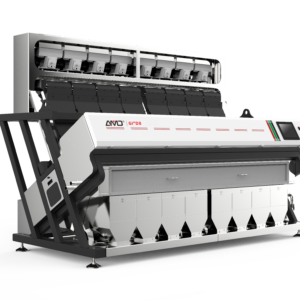
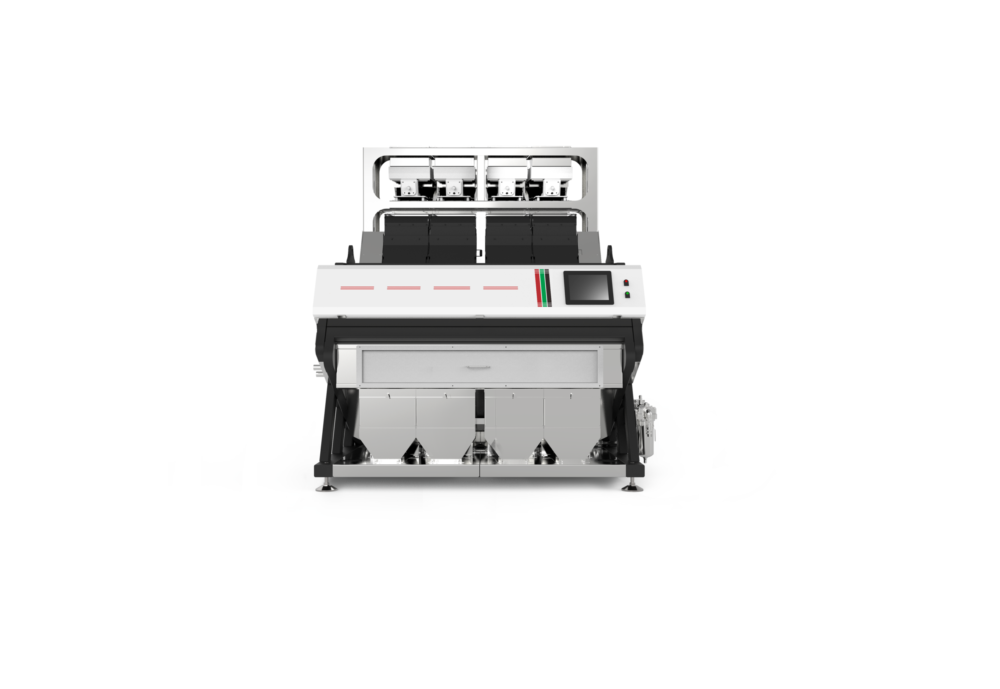
| Product Name | GI*D Pet Flake Polymer & Color Sorter |
| Model | GI*D4 |
| SENSOR TECHNOLOGY | 2D NIR (Near-Infrared) and color sensor technology |
| Throughput(T/h) | 0.8-3 |
| Air Consumption (m3/min) | <3 |
| Voltage (V/hz) | 220/50 |
| Power (kW) | 4.2 |
| Weight (kg) | 1250 |
| Dimension (mm) | 2150*1928*2385 |
| APPLICATION | Effectively detects and removes non-PET materials from PET flakes Optional HD version available for enhanced purification of PET powder The GI*D sorter combines near-infrared and color sensor to accurately separate flakes by polymer and color. |
The GI*D4 Plastic Color Sorting Machine is designed for PET recycling lines that need to improve both polymer purity and color consistency in processed PET flakes. It combines NIR-based polymer identification with optical color sorting, allowing recyclers to address two different quality problems within the same sorting stage.
Washed post-consumer PET flakes may still contain non-PET polymers, unwanted colored flakes, and other visible contaminants. These impurities can reduce the consistency, processing stability, and market value of the recovered material. The GI*D4 provides an automated solution for further PET flake purification before pelletizing or other downstream processes.
Its four-chute configuration offers a practical balance between processing capacity, sorting performance, equipment footprint, and investment requirements. This makes it suitable for medium-capacity PET recycling operations with clearly defined purification targets.
A conventional plastic color sorter mainly evaluates visible characteristics. It works well when acceptable and rejected materials have clear color differences. However, polymer contamination creates a more difficult sorting challenge.
Two flakes can look almost identical while being made from different polymers. Visible-light inspection alone may therefore be unable to identify all unwanted materials in a PET flake stream.
The GI*D4 addresses this problem by combining two complementary detection methods:
This integrated approach allows the machine to control polymer contamination and color variation during the same sorting stage. It can reduce dependence on manual inspection and improve the consistency of continuous PET flake processing.
For recycling plants, combining polymer recognition and color detection in one system can simplify the purification process while making better use of available production space.
Polymer contamination is one of the most difficult problems to control with a standard color-only sorter. PVC and other unwanted plastic fractions may sometimes have an appearance similar to acceptable PET flakes.
When these materials remain in the recovered stream, they can interfere with downstream thermal processing and reduce the quality of recycled PET.
The GI*D4 uses NIR sensor technology to analyze the material stream according to the spectral characteristics of different polymers. This provides information that cannot be obtained through visible-color inspection alone.
As the flakes pass through the detection area, the system evaluates the incoming material. When it identifies a configured reject material, the control system activates the corresponding high-speed ejector. The unwanted flake is then separated from the accepted PET stream.
This additional layer of material recognition is particularly valuable after upstream stages such as:
At this stage, the objective is no longer limited to removing large foreign objects. The process must identify smaller residual contaminants that could influence the quality of the final recycled PET.
By adding NIR polymer identification to the purification line, recyclers gain more precise control over visually similar contaminants and can produce a more consistent PET flake stream for further processing.
Polymer purity is only one part of PET flake quality. Color composition can also determine the value and possible downstream use of the recovered material.
A PET recycling stream may contain clear, green, blue, yellow, or other colored flakes, even when all these materials belong to the same polymer family. Depending on the intended recycled product, unwanted colors may need to be removed to achieve a more consistent output.
The optical detection system of the GI*D4 evaluates each flake according to its visible color characteristics. The sorting program can then be configured around the desired accepted and rejected fractions.
For example, a recycler producing clear PET flakes may use the machine to retain the desired clear fraction while removing green, blue, yellow, and other unwanted colors. Another facility may configure the system to recover a particular colored PET fraction from a mixed stream.
The appropriate sorting strategy can be set according to:
Because color detection and polymer recognition solve different quality problems, their combination gives the GI*D4 broader purification capabilities than a standard plastic color sorter.
If your recycling line must control both polymer contamination and visible color variation, PolySorter can help define a sorting strategy around your target PET grade.
The performance of a sensor-based sorting machine depends heavily on its position within the complete recycling process.
The GI*D4 is intended for PET flake purification. It is not designed as the primary sorting stage for complete bottles, heavily contaminated municipal waste, or large mixed-plastic objects.
A typical process arrangement may include:
Bottle Sorting → Crushing → Washing → Drying → Preliminary Separation → GI*D4 Polymer and Color Sorting → Pelletizing or Further Processing
Before entering the GI*D4, PET flakes should normally be washed, dried, and screened to create a stable feed condition. Major contaminants should already have been reduced through suitable upstream processes.
Consistent feeding is also essential. When flakes are distributed evenly across the chutes, the detection system can inspect individual pieces more clearly. The ejection system can then remove targeted contaminants with greater control.
Excessive overlap, unstable feeding, high moisture, or unsuitable particle-size distribution may reduce sorting efficiency. A complete project evaluation should therefore consider more than nominal machine throughput.
Important factors include:
The machine configuration should be based on the actual feed material and required output instead of a theoretical capacity figure alone.
The GI*D4 is suitable for PET recycling plants that require more than basic color separation but want polymer recognition and color control within one sorting platform.
Its main advantage is the combination of NIR material identification and optical color recognition. This allows recyclers to address non-PET polymer contamination and unwanted PET colors without treating them as completely separate quality-control tasks.
Practical benefits can include:
The four-chute structure gives the GI*D4 a clear role in medium-capacity recycling operations. It can also suit facilities that need a compact purification stage without selecting a larger machine than their production volume requires.
However, the number of chutes should not be the only selection criterion. Required capacity, contamination levels, target purity, reject rate, and material characteristics must all be considered when configuring the equipment.
The GI*D4 Plastic Sorting Machine is primarily intended for PET flake recycling and purification applications where polymer contamination and visible color differences need to be controlled.
Typical applications include:
The machine can be installed after washing and drying or used as a later-stage purification unit. The appropriate position depends on the plant layout, remaining contaminants, and final product requirements.
A stable and well-prepared feed helps the GI*D4 concentrate on the smaller polymer and color defects left behind by upstream separation processes. This makes the machine particularly useful as a refinement stage for recyclers seeking higher-value PET output.
Yes. The machine combines NIR polymer recognition with optical color detection. It can identify configured non-PET contaminants while also separating PET flakes according to visible color differences.
A standard plastic color sorter mainly detects visible differences. The GI*D4 adds NIR polymer recognition, allowing it to evaluate material characteristics as well as color. This is especially useful when unwanted polymer flakes look similar to acceptable PET flakes.
Yes. Its optical system can distinguish visible color differences in PET flakes. The sorting program can be configured according to the color fraction that the recycling plant wants to accept or reject.
The NIR system is designed to identify differences between PET and targeted non-PET polymers, including PVC under suitable sorting conditions. Actual separation performance depends on the material composition, flake size, surface condition, contamination ratio, feed distribution, and required output standard.
It is generally installed at the PET flake purification stage after crushing, washing, drying, and preliminary separation. The exact position should be determined according to the recycling-line layout and the contaminants remaining after upstream processing.
No. The GI*D4 is designed primarily for PET flakes. Complete bottles normally require a sorting machine and feeding system designed for larger material forms.
Dry and consistently distributed flakes generally provide better conditions for optical and NIR detection. Excessive surface moisture can affect feeding stability and sensor performance.
Useful project information includes:
Providing accurate material information helps determine whether the GI*D4 is suitable and how the sorting program should be configured.
Producing consistent recycled PET requires more than removing visibly different flakes. Residual polymer contamination and unwanted colors can both influence downstream processing and the value of the recovered material.
The GI*D4 Plastic Color Sorting Machine combines NIR polymer identification with optical color sorting to provide a dedicated PET flake purification solution. Its four-chute configuration makes it a practical choice for recycling lines that require automated polymer and color quality control at a medium processing scale.
Contact PolySorter with your PET flake type, main contaminants, flake size, required throughput, and target output quality. Our team can evaluate representative samples and recommend a suitable sorting configuration for your recycling line.