Rice quality has become one of the most important factors influencing consumer purchasing decisions and international trade. Whether rice is sold to supermarkets, food manufacturers, restaurants, or exported overseas, buyers expect every batch to meet strict standards for appearance, purity, and consistency. As food safety regulations become stricter and consumers demand higher-quality rice, processors must achieve greater consistency without sacrificing throughput or yield.
This is why the rice sorter machine has become an essential piece of equipment in modern rice mills. Instead of relying on manual inspection or traditional mechanical separation, today’s rice sorting systems combine high-speed cameras, artificial intelligence, advanced image processing, and precision air ejectors to inspect every individual kernel. Within milliseconds, defective kernels are identified and removed while high-quality rice continues through the production line.
If you are planning to invest in a rice sorter machine, choosing the right system can be challenging. Different manufacturers offer different sensor technologies, sorting algorithms, throughput capacities, and automation features. This guide explains how a rice sorter machine works, what it can detect, and which features truly matter when selecting equipment for your rice processing business.
What Is a Rice Sorter Machine?
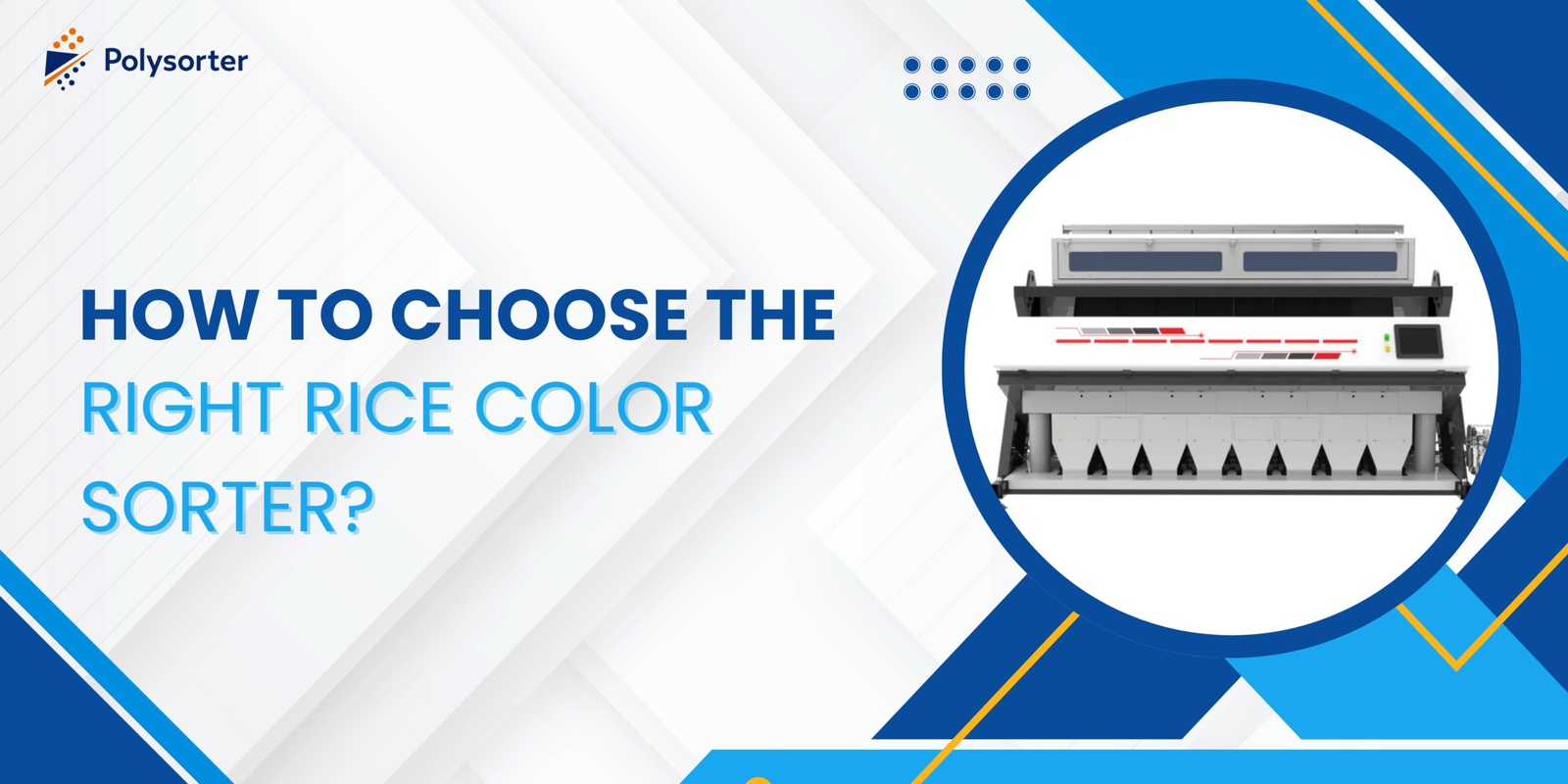
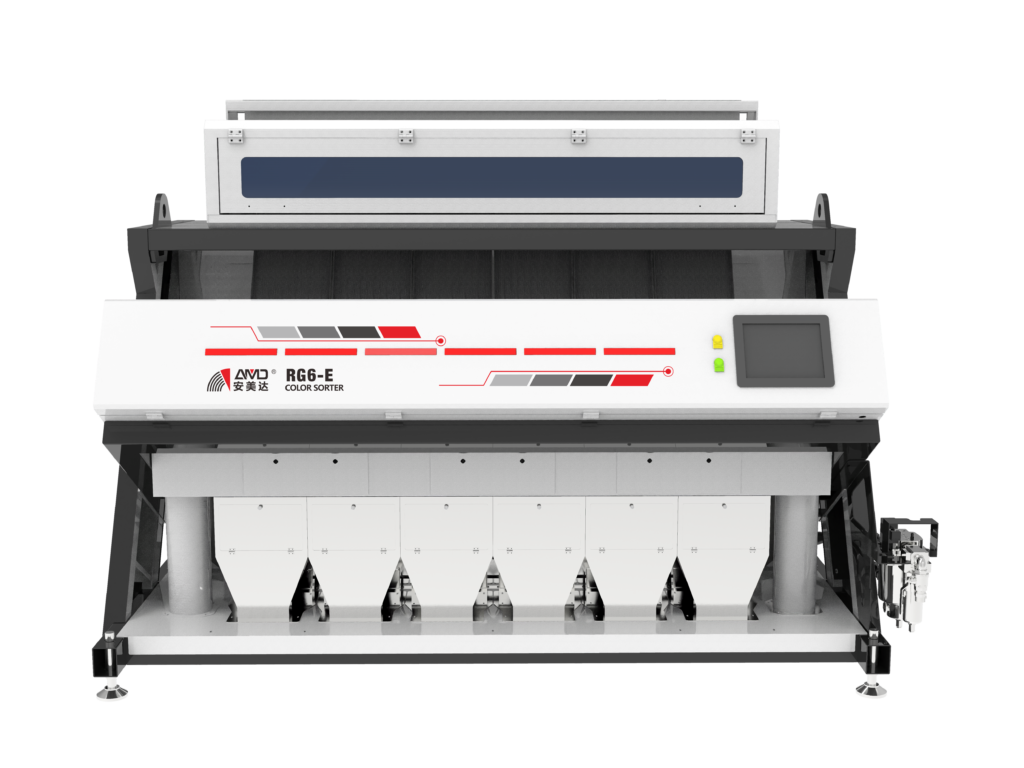
A rice sorter machine is an intelligent, chute-type optical sorting system designed to inspect and classify every individual rice kernel in real time. Its primary objective is to maximize product purity, increase finished rice value, and deliver consistent quality for both domestic and export markets.
Unlike traditional screening equipment, which separates materials only by size or weight, a rice sorter evaluates every kernel using optical sensors and sophisticated image recognition software. Unlike sieves, gravity separators, or de-stoners, an optical rice sorter analyzes the visual and spectral characteristics of each kernel rather than relying solely on physical properties such as size, density, or weight.
As a vertical gravity-fed system, rice flows down specially coated chutes where every kernel is evaluated according to multiple characteristics, including:
- Color
- Brightness
- Shape
- Surface texture
- Size
- Transparency
- Defect patterns
When the system detects a kernel that does not meet the predefined quality standard, it immediately activates a high-speed air nozzle to eject only the unwanted material without interrupting the flow of acceptable rice.
Modern AI-powered rice sorters can process several tons of rice every hour while maintaining exceptionally high sorting accuracy. Advanced image recognition combined with deep learning algorithms allows these machines to identify subtle defects that conventional CCD color sorters often struggle to detect, including slight discoloration, chalkiness, dark spots, insect damage, and complex mixed impurities.
Many advanced models also combine visible-light imaging with optional Near-Infrared (NIR) detection to improve the identification of foreign materials and difficult defects that cannot be distinguished by color alone. As a result, processors can consistently produce premium-grade rice while reducing manual labor, minimizing product loss, and increasing overall profitability.
How Does a Rice Sorter Machine Work?
Although today’s rice sorters rely on sophisticated AI algorithms and high-speed computing, the overall sorting workflow is surprisingly straightforward. Every kernel passes through four key stages before reaching the final product.
1. Uniform Feeding Ensures Stable Inspection
Every sorting process begins with consistent material feeding.
Rice enters the machine through a vibration feeder before flowing down specially designed vertical chutes. Maintaining a stable feed rate is critical because overlapping kernels can reduce detection accuracy and increase carry-over.
Modern feeding systems automatically balance material flow, reduce vibration, and distribute kernels evenly across each chute. This ensures every kernel passes through the inspection area individually, allowing the imaging system to capture clear, accurate information and improving both sorting accuracy and product recovery.
2. High-Speed Imaging Captures Every Kernel
As the rice travels through the inspection chamber, high-resolution imaging systems capture multiple images of every kernel at extremely high speed.
Depending on the machine configuration, the system may include:
- Full-color RGB cameras
- High-definition CCD or CMOS sensors
- Visible-light imaging
- Near-Infrared (NIR) sensors
- Optional Short-Wave Infrared (SWIR / InGaAs) sensors
- Multispectral imaging technologies
Each kernel is photographed several times while moving through the optical chamber. The captured images are immediately transferred to the processing system for analysis.
Unlike older color sorters that compare only basic color differences, modern systems evaluate multiple characteristics simultaneously. When optional NIR or SWIR (InGaAs) sensors are installed, the machine can also distinguish certain foreign materials that appear visually identical to rice under standard RGB imaging, including some plastics and glass fragments.
3. AI Software Makes Real-Time Sorting Decisions
This stage is where today’s rice sorter machines differ most from previous generations.
Traditional color sorters rely on manually configured color thresholds. While effective for basic applications, these systems may struggle with subtle defects or materials that share similar visual characteristics.
Modern AI-powered sorters apply deep learning algorithms trained on massive image databases. Instead of recognizing only color differences, the software analyzes multiple features simultaneously, including:
- Grain shape
- Surface texture
- Edge characteristics
- Brightness distribution
- Defect patterns
- Spectral information
Many advanced systems also incorporate intelligent self-learning technology. As more production data is collected, the software continuously refines its recognition models, improving its ability to identify difficult impurities while adapting to seasonal changes in raw material quality.
The result is more consistent sorting performance, fewer false rejects, and higher recovery of good rice.
4. Precision Air Ejection Removes Defective Kernels
Once the AI identifies an unwanted kernel, the control system calculates its precise position and predicts its trajectory in real time.
Milliseconds later, an ultra-fast pneumatic valve releases a carefully timed pulse of compressed air that ejects only the defective kernel into the reject chute.
Because every air pulse is precisely controlled, surrounding good rice remains unaffected.
Advanced positioning algorithms further optimize the ejection point according to kernel position, speed, and movement. This significantly reduces unnecessary product loss while maintaining high sorting accuracy, especially in large-scale rice mills operating continuously for many hours each day.
What Can a Rice Sorter Machine Detect and Remove?
One of the greatest advantages of modern rice sorting technology is its ability to identify far more than simple color differences.
Today’s systems inspect every individual kernel and can identify multiple defect categories within a single production run. Depending on the sensor configuration, a rice sorter machine can typically remove:
- Yellow rice
- Chalky rice
- Broken kernels
- Black or dark kernels
- Moldy rice
- Paddy kernels
- Immature kernels
- Insect-damaged rice
- Residual stones and gravel*
- Glass fragments**
- Plastic particles**
- Weed seeds
- Other foreign materials
Residual stones should only be those that remain after mechanical pre-cleaning. A de-stoner should always be installed upstream to remove large stones and protect the optical sorting system.
Detection of glass and certain plastics generally requires optional NIR or SWIR sensor configurations.
Some advanced systems can also perform multiple sorting tasks simultaneously. For example, processors may configure the machine to remove yellow kernels while retaining chalky rice, or separate white rice from broken kernels and dark defects in a single pass.
Rather than relying on a single color threshold, AI-powered systems combine color, shape, texture, and spectral information to make far more accurate sorting decisions. This improves food safety, increases export-grade quality, and helps processors maximize the value of every batch of rice.
How to Choose the Right Rice Sorter Machine
Not all rice sorter machines deliver the same level of performance. While many systems appear similar from the outside, significant differences exist in sensor technology, software intelligence, throughput, energy efficiency, and long-term operating costs.
If you’re comparing multiple suppliers, focus on the following factors rather than choosing solely based on purchase price.
1. Match Throughput to Your Production Capacity
The first question to ask is straightforward: How much rice do you process per hour?
Selecting a machine that is too small creates production bottlenecks, while purchasing an oversized model increases capital investment without providing meaningful operational benefits.
A properly sized rice sorter should integrate seamlessly with your existing milling line while leaving room for future expansion. Manufacturers typically offer multiple chute configurations to accommodate small cooperatives, medium-sized rice mills, and large industrial processors handling more than 10 tons per hour.
Choosing the correct capacity allows the machine to maintain high sorting accuracy without limiting production efficiency.
2. Look Beyond Simple Color Detection
Traditional color sorters identify defects primarily by comparing pixel colors. This approach works well for obvious yellow or black kernels but becomes less reliable when defects are subtle.
Modern AI-powered rice sorter machines evaluate far more information, including:
- Color variations
- Grain shape
- Surface texture
- Edge characteristics
- Brightness distribution
- Defect patterns
- Spectral characteristics
This multi-dimensional analysis enables the system to recognize difficult defects such as lightly chalky kernels, partially moldy rice, insect damage, and complex mixed impurities with much greater consistency.
As quality standards continue to increase worldwide, AI-based recognition has become one of the most valuable technologies for reducing false rejects while improving finished product quality.
3. Evaluate Sorting Accuracy and Carry-Over Rate
High rejection accuracy is important—but it should never come at the expense of losing excessive amounts of good rice.
Some machines achieve impressive impurity removal simply by ejecting larger portions of surrounding material. While this increases apparent sorting accuracy, it also reduces product yield and overall profitability.
A better indicator of machine performance is the balance between:
- Sorting accuracy
- Product recovery
- Carry-over rate
- Reject purity
A low carry-over rate means that very little good rice is unintentionally discharged together with rejected material. Lower carry-over translates directly into higher product recovery, reduced waste, and improved profitability over the life of the machine.
Advanced positioning algorithms and ultra-fast pneumatic valves help achieve this balance by calculating the optimal ejection point for every kernel, minimizing unnecessary product loss during continuous production.
4. Consider Software Intelligence and Future Upgrades
Hardware determines what the machine can see, but software determines what it can understand.
Leading rice sorting systems increasingly rely on artificial intelligence, cloud connectivity, and continuously evolving algorithms rather than fixed sorting rules.
Features worth considering include:
- AI deep learning models
- Intelligent self-learning
- Remote diagnostics
- Cloud parameter backup
- Software updates
- Production data monitoring
- Predictive maintenance
The best platforms also allow operators to save multiple sorting recipes, making it easy to switch between different rice varieties without lengthy recalibration.
These capabilities help processors adapt to seasonal changes in raw material quality while reducing downtime and simplifying day-to-day operation.
5. Don’t Overlook After-Sales Support
Even the most advanced rice sorter requires periodic maintenance, calibration, software updates, and replacement of wear components throughout its service life.
Before selecting a supplier, ask questions such as:
- Is remote technical support available?
- How quickly can spare parts be delivered?
- Are local service engineers available?
- Is operator training included?
- Can software be upgraded remotely?
- What preventive maintenance schedule is recommended?
Over a machine’s 10- to 15-year service life, dependable technical support often contributes more to overall return on investment than small differences in the initial purchase price.
A reliable supplier helps minimize downtime, extend equipment life, and ensure the sorter continues operating at peak performance.
Why AI Is Changing the Future of Rice Sorting
Artificial intelligence is transforming rice processing in much the same way it has reshaped manufacturing, logistics, and automated quality inspection.
Rather than relying solely on predefined sorting rules, AI-powered systems continuously improve their ability to recognize difficult defects by learning from thousands—or even millions—of sample images.
This technology delivers several important advantages:
- Higher detection accuracy
- Better performance across different rice varieties
- Lower false rejection rates
- Faster adaptation to changing raw materials
- Reduced manual parameter adjustment
- More consistent long-term performance
Rather than replacing experienced operators, AI enables them to make faster, more consistent decisions while reducing dependence on constant manual adjustments.
Combined with high-resolution imaging and precision air ejection, AI helps modern rice sorter machines deliver premium product quality while maintaining high throughput and excellent product recovery.
As labor costs rise and export quality standards become increasingly stringent, intelligent sorting technology is becoming a strategic investment rather than simply another processing machine.
Is Investing in a Rice Sorter Machine Worth It?
For most commercial rice processors, the answer is a clear yes.
Although purchasing a rice sorter machine requires an upfront investment, the long-term financial benefits often outweigh the initial cost.
A high-performance rice sorter can help processors:
- Increase the selling price of finished rice
- Meet strict domestic and export quality standards
- Reduce manual sorting labor
- Minimize customer complaints
- Improve food safety
- Reduce product waste
- Increase plant efficiency
- Strengthen brand reputation
For many commercial rice mills, the investment is recovered through higher product grades, improved recovery rates, and lower labor costs within only a few years of operation.
Rather than viewing a rice sorter as an expense, successful processors increasingly see it as a long-term investment that improves competitiveness, profitability, and production stability.
FAQs
1. What is the difference between a rice sorter machine and a traditional color sorter?
A traditional color sorter mainly detects visible color differences. A modern rice sorter machine combines high-resolution imaging, AI algorithms, and, in many cases, infrared or multispectral sensing to evaluate color, shape, texture, and other characteristics simultaneously. This results in higher sorting accuracy, lower false rejection rates, and improved product consistency.
2. Can a rice sorter remove stones and plastic contaminants?
Yes—but under the right conditions.
Modern optical rice sorters can detect and eject small residual stones, glass fragments, and certain plastic contaminants, especially when equipped with optional Near-Infrared (NIR) or Short-Wave Infrared (SWIR/InGaAs) sensors. However, large stones and heavy impurities should always be removed by a mechanical de-stoner before the rice enters the optical sorter to protect the chutes and pneumatic ejectors.
3. How accurate are modern rice sorter machines?
High-end commercial rice sorters typically achieve sorting accuracies above 99% under properly optimized operating conditions. Actual performance depends on factors such as raw material quality, machine configuration, production speed, and operator settings.
4. Is AI technology necessary for rice sorting?
For basic sorting applications, a conventional color sorter may be sufficient. However, processors producing premium-grade rice or supplying export markets generally benefit from AI-powered systems because they provide more consistent recognition of subtle defects, better adaptability to changing raw materials, and lower carry-over rates.
5. Should I Request a Sample Sorting Test Before Buying?
Absolutely.
Reputable manufacturers typically encourage customers to submit representative rice samples before making a purchasing decision.
A professional sample test should evaluate:
- Sorting accuracy
- Carry-over rate
- Throughput
- Finished product purity
- Recommended machine configuration
Testing actual production material allows buyers to compare real-world performance instead of relying solely on specification sheets, helping ensure the selected machine matches their production goals.
Final Thoughts
A modern rice sorter machine is no longer simply a color sorting device—it is an intelligent quality control platform that combines advanced imaging, artificial intelligence, and precision air ejection to maximize rice quality and processing efficiency.
As global food safety standards continue to rise and customers demand more consistent products, investing in the right sorting technology can help processors improve yield, reduce waste, increase profitability, and strengthen their competitive position in both domestic and international markets.
If you’re planning to upgrade your rice processing line, the first step isn’t choosing a machine—it’s understanding your material. Send us your rice samples, target throughput, impurity types, and quality requirements. Our engineers can recommend the most suitable sorting configuration for your business. Feel free to contact us to discuss your project requirements or to schedule a free sample sorting test.