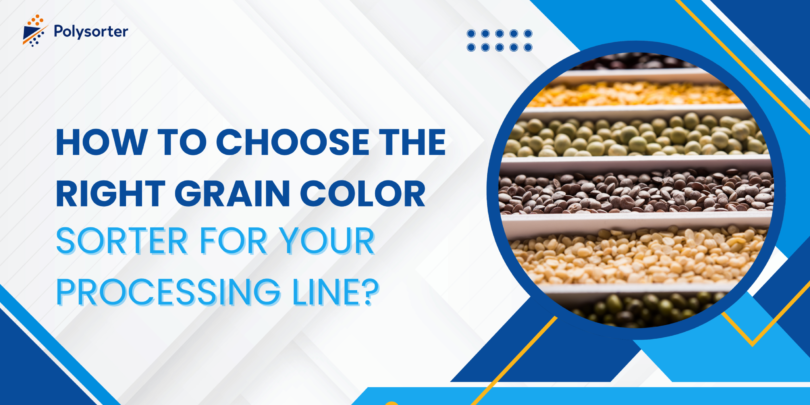
Choosing the right grain color sorter requires more than comparing equipment prices or advertised processing capacity. A successful investment depends on whether the sorting system matches your grain characteristics, production requirements, quality standards, and long-term business objectives.
This buying guide explains how grain processors can evaluate essential factors, including sorting technology, camera systems, throughput capacity, rejection performance, maintenance requirements, and supplier capabilities before selecting a grain sorting solution.
The quality of grain directly affects product value, customer satisfaction, and the competitiveness of modern food processing businesses. Whether you process rice, wheat, corn, beans, pulses, or specialty agricultural products, even a small percentage of defective kernels, foreign materials, or inconsistent grains can reduce product quality and affect market acceptance.
This is why more processing facilities are adopting advanced grain color sorter machines. Compared with manual inspection and traditional mechanical separation methods, modern optical sorting equipment can analyze thousands of individual grains every second. By combining high-resolution imaging, intelligent algorithms, and precision air ejection systems, these machines identify unwanted materials, remove defects, and maintain a high recovery rate of quality grains.
However, choosing a grain color sorter is not simply about purchasing the machine with the highest speed or lowest price. Different materials create different sorting challenges, and every processing plant has unique requirements regarding purity standards, production volume, and future expansion.
A sorting machine that performs well in one facility may not deliver the same results in another application. The ideal solution should be configured according to your actual material characteristics, production targets, and final product requirements.
Key Questions to Answer Before Buying a Grain Color Sorter
Before comparing different machines, grain processors should first define their production requirements. Understanding these factors helps avoid selecting equipment based only on catalog specifications.
What Type of Grain Will You Process?
Different agricultural products require different sorting strategies.
Rice, wheat, beans, and specialty crops have unique defect patterns, physical characteristics, and quality expectations. A machine optimized for one application may not achieve the same results with another material.
What Processing Capacity Do You Need?
Determine your required throughput based on:
- Current production volume
- Expected future growth
- Required operating hours
- Number of sorting stages
Selecting insufficient capacity may create production bottlenecks, while excessive capacity may increase unnecessary investment.
What Defects Must the Machine Remove?
Identify your main sorting challenges, such as:
- Discolored kernels
- Damaged grains
- Foreign materials
- Stones
- Mixed varieties
- Surface defects
Understanding the target defects helps determine the required camera system and sorting technology.
What Purity Standard Does Your Market Require?
Different customers and markets have different quality expectations.
Export markets, premium food brands, and commercial grain suppliers may require different levels of sorting accuracy and product appearance.
What Detection Technology Is Suitable?
Some applications may only require RGB color detection, while others may benefit from additional technologies such as:
- AI-based image recognition
- Infrared detection
- Multi-sensor sorting systems
Answering these questions before contacting suppliers allows buyers to focus on solutions that match their actual processing conditions.
Understand Your Grain Type Before Choosing a Grain Color Sorter
The first step in selecting the right grain color sorter is understanding the characteristics of the materials you need to process.
Different grains contain different types of defects, and these differences directly influence camera selection, software configuration, feeding design, and sorting performance.
For example, rice processing facilities commonly need to remove:
- Yellow kernels
- Chalky grains
- Immature grains
- Black-spotted grains
- Foreign particles
Wheat processors may focus on detecting:
- Diseased kernels
- Discolored grains
- Unwanted seeds
- Stones and other impurities
Meanwhile, processors handling beans, pulses, corn, and specialty agricultural products often face more complex sorting challenges because of variations in:
- Size
- Shape
- Surface texture
- Color
- Density
A common purchasing mistake is selecting equipment based only on advertised throughput. A high-speed sorter designed for rice applications may not provide the same accuracy when processing larger seeds, irregular products, or mixed agricultural materials.
Before selecting equipment, evaluate:
- Grain variety
- Particle size and shape
- Moisture content
- Existing contamination issues
- Required final purity level
- Target market requirements
The feeding method should also be considered. Gravity-fed chute color sorters are widely used for free-flowing materials such as rice and wheat because they provide high-speed processing. For fragile products such as beans, nuts, or premium seeds, belt-type sorting systems may provide gentler handling and reduce product damage.
A reliable manufacturer should be able to evaluate actual product samples and recommend the appropriate configuration. Sample testing helps determine the best combination of camera technology, software settings, feeding system, and rejection parameters for your application.
Match Grain Color Sorter Capacity With Your Processing Line
Processing capacity is one of the most important factors in grain sorting equipment selection.
Every processing facility has different production requirements. A small grain mill may need a compact sorting solution, while large commercial operations and export-oriented processors may require multiple high-capacity machines operating continuously.
The key performance indicator is throughput, normally measured in tons per hour (TPH).
When evaluating capacity, consider the following factors:
Current Production Requirements
The selected grain color sorter should handle your current production volume without becoming a bottleneck.
Insufficient capacity may require:
- Lower feeding speed
- Additional sorting passes
- Longer operating hours
These limitations can increase labor costs and reduce overall production efficiency.
Future Expansion Plans
Many processors purchase equipment based only on current demand and later discover that production growth exceeds machine capability.
Choosing a system with reasonable expansion potential can reduce replacement costs and support future business development.
Sorting Process Requirements
Some applications require multiple sorting stages to achieve premium quality standards.
For example:
First sorting stage:
- Removes major defects
- Eliminates foreign materials
- Improves overall product quality
Second sorting stage:
- Improves purity level
- Removes difficult-to-detect defects
- Produces higher-grade output
For export-quality grains, multiple sorting stages may provide better results than operating a single machine at maximum sensitivity.
A professional supplier should evaluate your complete processing line rather than recommending a model only according to the maximum throughput listed in a brochure.
Evaluate Grain Color Sorter Camera Technology and Sorting Accuracy
The optical detection system is the core technology of any modern grain color sorter. Unlike traditional sorting methods that rely only on visible differences, advanced sorting machines analyze individual grains through high-resolution cameras, controlled lighting systems, and intelligent image processing algorithms.
The performance of this detection system directly influences:
- Sorting accuracy
- Product recovery rate
- Final product consistency
- Overall processing efficiency
When comparing different grain sorting machines, buyers should focus on the complete imaging system rather than evaluating a single component.
Camera Resolution and Image Quality
Higher-resolution cameras allow the machine to capture smaller differences between acceptable and defective grains.
This helps identify:
- Slight color variations
- Surface defects
- Abnormal grain patterns
- Minor quality differences
For premium rice, export grains, and high-value agricultural products, improved imaging accuracy can reduce missed defects and improve the appearance of the final product.
However, camera resolution alone does not determine sorting performance. A high-resolution camera cannot deliver optimal results without proper lighting, advanced algorithms, stable feeding conditions, and accurate machine calibration.
The best grain color sorting solutions combine hardware and software technologies to achieve consistent results under continuous production conditions.
Lighting System Stability
Consistent lighting conditions are essential for reliable optical sorting.
Since grain appearance can change under different environmental conditions, professional grain color sorters use controlled LED illumination systems to provide stable imaging during operation.
A well-designed lighting system helps:
- Improve image consistency
- Reduce detection errors
- Maintain stable sorting performance
- Support long-term continuous operation
Stable illumination is especially important for products with subtle color differences, such as premium rice and specialty grains.
InGaAs and Infrared Detection Technology
For applications requiring detection beyond surface color differences, infrared technology provides additional sorting capability.
Standard RGB cameras are effective for identifying visible defects, but some foreign materials may have a similar external appearance to grains. InGaAs short-wave infrared (SWIR) technology can detect differences in material characteristics that cannot be recognized through normal color imaging.
This technology can be valuable for identifying:
- Certain foreign materials
- Hidden quality differences
- Materials with similar external colors
For processors handling complex agricultural materials or requiring higher purity standards, infrared detection can provide an additional layer of sorting capability.
AI-Based Image Processing
Artificial intelligence has significantly improved modern grain sorting performance by enabling machines to recognize complex defect patterns.
AI algorithms can help identify:
- Slight color differences
- Irregular grain appearance
- Multiple defect categories
- Changing material conditions
Compared with traditional manual adjustment methods, intelligent software can improve consistency and reduce dependence on operator experience.
When selecting a grain color sorter, do not evaluate camera specifications alone. Real-world performance depends on the complete system, including imaging technology, lighting, software algorithms, feeding design, and rejection accuracy.
Evaluate Grain Color Sorter Ejection System and Operational Reliability
Although cameras and image processing systems determine how accurately a machine identifies defective grains, the ejection system determines whether those defects can be removed efficiently without unnecessary product loss.
A high-performance grain color sorter completes the entire sorting process within milliseconds:
- Capture grain images
- Analyze quality differences
- Identify defective particles
- Activate air ejectors
- Separate rejected materials from quality grains
Any delay or instability during this process can reduce sorting accuracy and affect production efficiency.
Modern grain color sorting machines typically use high-speed air ejector valves to remove unwanted materials. When evaluating equipment reliability, consider the following factors.
Air Ejector Response Speed
Grains pass through the sorting chamber at high speed, which means the time between detection and rejection is extremely short.
Fast-response solenoid valves allow the machine to:
- Remove targeted defects accurately
- Reduce unnecessary product loss
- Maintain stable production efficiency
A reliable rejection system should work seamlessly with the optical detection system to ensure precise separation.
Air Pressure Stability
Stable air pressure is essential for consistent sorting performance.
If air pressure fluctuates during operation, the machine may experience:
- Incomplete rejection of defective materials
- Excessive loss of acceptable grains
- Reduced final product quality
A well-designed grain color sorter should provide efficient air management, reliable valve control, and convenient pressure adjustment.
Balance Between Purity and Recovery Rate
One of the biggest challenges in grain sorting is achieving the correct balance between purity and product recovery.
Increasing sorting sensitivity may remove more defects, but it can also increase the rejection of acceptable grains. Reducing sensitivity may improve recovery but lower the final quality level.
The ideal sorting system allows operators to adjust parameters according to production goals.
For example:
- Premium export rice may prioritize higher purity
- Commercial grain products may prioritize recovery rate
- Seed processing may require extremely accurate defect removal
The objective of a professional grain color sorter is not simply to remove more materials. It is to maximize the economic value of the final product.
Select the Right Grain Color Sorter Based on Application Requirements
Different grain processing applications require different sorting solutions. Instead of selecting equipment only according to technical specifications, buyers should consider how the machine fits into their complete production process.
Rice Processing Applications
Rice mills usually require accurate detection of:
- Yellow grains
- Chalky kernels
- Immature grains
- Black or damaged rice
For premium rice production, a high-resolution RGB camera system combined with intelligent image processing can improve product appearance and consistency.
Export-oriented rice processors may also benefit from multi-stage sorting systems to achieve stricter purity standards.
Wheat and Cereal Grain Processing
Wheat and other cereal grains usually require stable, high-capacity operation.
Important considerations include:
- Continuous processing capability
- Reliable defect detection
- Efficient removal of foreign materials
For large-scale grain facilities, equipment stability and throughput capacity are often just as important as sorting accuracy.
Beans, Pulses, and Specialty Crops
Beans, lentils, peas, and specialty agricultural products often have greater variations in:
- Size
- Shape
- Color
- Surface characteristics
These applications may require:
- Flexible sorting programs
- Customized feeding systems
- Accurate shape and color recognition
Because these products often have higher market value, reducing product loss becomes especially important.
Foreign Material Detection Applications
Some processing facilities need additional detection capability for materials that have similar colors to grains.
In these cases, advanced technologies such as infrared detection can provide additional sorting performance beyond traditional color recognition.
The best machine is not always the one with the highest specifications. It is the solution that matches your actual material conditions and production objectives.
Consider Grain Color Sorter Maintenance, Support, and Total Cost of Ownership
A grain color sorter is a long-term investment that directly affects production efficiency, product quality, and operational stability.
While equipment price is an important consideration, it should not be the only factor when comparing suppliers.
A lower-cost machine may create higher long-term expenses if it requires frequent maintenance, unstable operation, or limited technical support.
Machine Durability and Operating Stability
Grain processing environments usually involve:
- Dust
- Continuous operation
- Mechanical vibration
- Large production volumes
A reliable machine should provide:
- Strong mechanical construction
- Stable electronic components
- Effective dust protection
- Easy cleaning design
Regular maintenance of optical components, air systems, and mechanical parts helps maintain long-term sorting performance.
Spare Parts Availability
A grain color sorter is a critical part of your production line. Unexpected downtime can affect production schedules and customer deliveries.
Before purchasing, confirm:
- Spare part availability
- Replacement procedures
- Technical response time
- Remote troubleshooting capability
Strong after-sales support helps reduce operational risks and maintain continuous production.
Operator Training and Technical Support
Even advanced equipment requires proper operation and maintenance.
A professional supplier should provide training related to:
- Machine operation
- Parameter adjustment
- Daily inspection
- Troubleshooting procedures
For international customers, remote technical assistance and application support are especially valuable.
Total Cost of Ownership
Instead of comparing only the initial purchase price, consider the complete investment:
- Equipment cost
- Energy consumption
- Maintenance expenses
- Labor requirements
- Product recovery rate
- Expected service life
A machine with better stability and higher sorting efficiency can often provide stronger long-term returns, even with a higher initial investment.
Evaluate the Manufacturer Before Purchasing a Grain Color Sorter
Choosing the right supplier is just as important as selecting the right machine.
A grain color sorter is a long-term investment that directly affects your production efficiency, product quality, and operating stability. Even a well-designed machine may not deliver expected results without proper technical support, application experience, and after-sales service.
A professional grain color sorter manufacturer should understand not only sorting technology but also the practical challenges faced by grain processors.
Before making a purchase decision, evaluate the supplier’s:
- Manufacturing experience
- International export experience
- Grain sorting application knowledge
- Sample testing capability
- Technical support system
- Spare parts availability
An experienced supplier should help you determine:
- The most suitable machine model
- Appropriate camera configuration
- Required sorting stages
- Feeding system design
- Integration method with your existing production line
Every processing facility has different requirements. Grain variety, contamination level, production capacity, and quality standards all influence the final equipment configuration.
For this reason, a customized sorting solution is often more valuable than a standard machine selected only from a product catalog.
Before placing an order, choose a supplier that can provide:
- Real material testing
- Technical consultation
- Application recommendations
- Installation guidance
- Long-term service support
A reliable manufacturer should act as a technology partner rather than simply an equipment provider.
FAQs
What is a grain color sorter used for?
A grain color sorter is an optical sorting machine designed to identify and remove defective grains, foreign materials, and unwanted particles based on differences in color, shape, and optical characteristics.
It is widely used in:
- Rice mills
- Wheat processing plants
- Seed processing facilities
- Grain export facilities
- Agricultural product processing industries
Modern grain color sorting machines combine high-speed cameras, intelligent image processing, and precision air ejection systems to improve product quality and reduce dependence on manual inspection.
How do I choose the right grain color sorter capacity?
The correct capacity depends on several factors, including:
- Current production volume
- Grain type
- Required purity level
- Operating schedule
- Future expansion plans
A machine should provide enough capacity to support your current production while allowing reasonable room for growth.
Selecting equipment only according to maximum throughput may not always provide the best solution because actual performance also depends on material characteristics, feeding conditions, and sorting requirements.
What factors affect the accuracy of a grain color sorter?
The accuracy of a grain color sorter depends on the entire sorting system rather than a single component.
Important factors include:
- Camera resolution
- Lighting stability
- Image processing algorithms
- Feeding consistency
- Air ejector response speed
- Material characteristics
- Machine calibration
A high-resolution camera alone cannot guarantee excellent sorting results. The best performance comes from the combination of reliable hardware, intelligent software, and proper application configuration.
What is the difference between a basic and advanced grain color sorter?
Basic models generally focus on visible color differences, while advanced grain color sorters combine multiple technologies, including:
- High-resolution cameras
- AI image processing
- Intelligent sorting software
- Precision air ejectors
- Infrared detection technologies
Advanced systems provide better performance when processing complex materials, achieving strict purity standards, or handling high-value agricultural products.
Can one grain color sorter process different types of grains?
Many modern grain color sorters can process different grain varieties by adjusting software parameters and sorting programs.
However, different materials may require different:
- Feeding systems
- Chute designs
- Camera configurations
- Sorting algorithms
For example, changing from small seeds such as sesame to larger products such as kidney beans may require different machine settings or mechanical adjustments.
Testing actual product samples before purchase is recommended to confirm the most suitable configuration.
Can a grain color sorter remove stones and foreign materials?
Yes, depending on the machine configuration and detection technology.
Standard RGB optical sorting systems can remove many visible defects, while advanced solutions using technologies such as InGaAs infrared sensors can improve detection of certain foreign materials that have similar surface colors to grains.
The final capability depends on:
- Material characteristics
- Contamination type
- Required purity level
- Selected sensor technology
How much does a grain color sorter cost?
The cost of a grain color sorter depends on multiple factors, including:
- Processing capacity
- Number of sorting channels
- Camera configuration
- Detection technology
- Automation level
- Customization requirements
Instead of selecting equipment only according to purchase price, buyers should evaluate:
- Long-term operating efficiency
- Product recovery rate
- Maintenance requirements
- Energy consumption
- Technical support
A higher-quality sorting solution may provide better value throughout the machine’s service life.
Summary
Selecting the right grain color sorter requires a complete understanding of your material characteristics, production requirements, and quality objectives.
The best machine is not always the one with the highest specifications or the lowest initial cost. The ideal solution is the one that provides the right balance between:
- Sorting accuracy
- Processing capacity
- Product recovery rate
- Equipment reliability
- Operating cost
- Long-term technical support
Before investing in a grain sorting system, carefully evaluate:
- Grain compatibility
- Required throughput
- Camera and detection technology
- AI sorting capability
- Ejection system performance
- Automation features
- Maintenance requirements
- Manufacturer experience
A properly selected grain color sorter can help processors:
- Improve product quality
- Reduce manual labor
- Increase production efficiency
- Minimize product loss
- Meet stricter market requirements
Whether you are upgrading an existing rice mill, expanding a grain processing facility, or building a new production line, our engineering team can evaluate your grain characteristics, throughput requirements, and quality targets to recommend a suitable sorting configuration.
With professional application analysis and customized equipment recommendations, you can build a more efficient and reliable grain processing operation.
Contact our team today to discuss your grain sorting requirements and explore a customized grain color sorting solution designed specifically for your processing line.