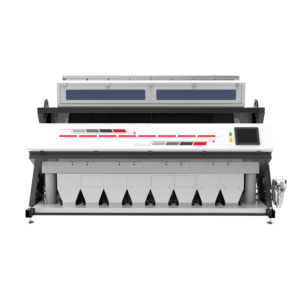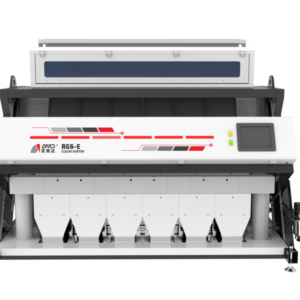
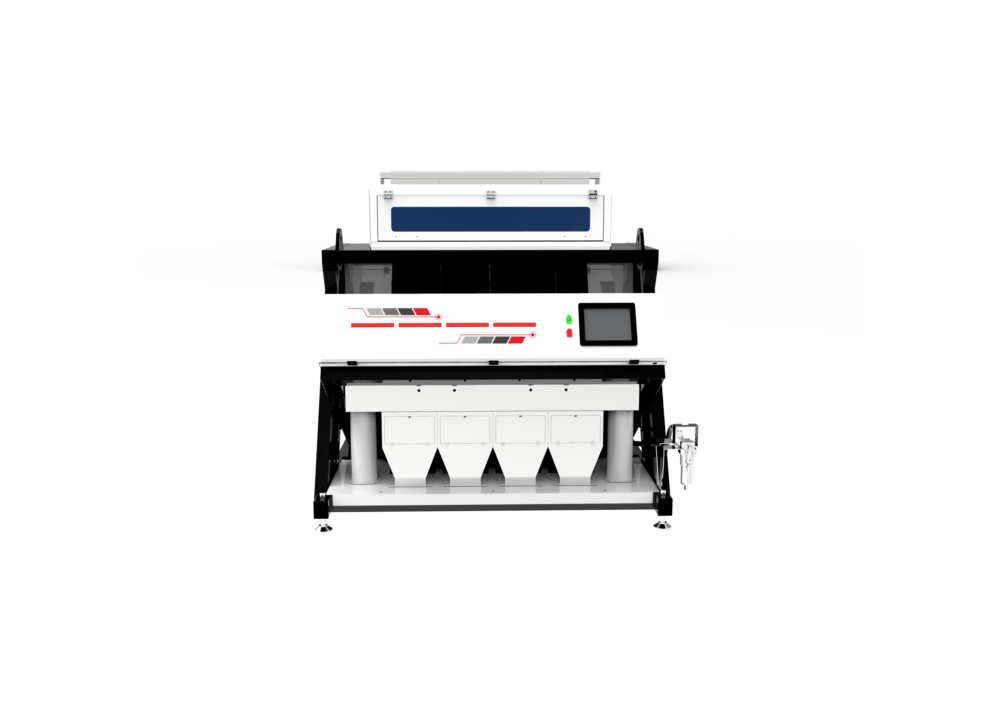
| Product Name | RG-E Series Rice Color Sorter Machine |
| Model | RG4-E |
| Processing Capacity | 3.4-4t/h |
| Sorting Accuracy | >99.99% |
| Voltage | 220V / 50Hz (Customizable) |
| Power | 2.9 kW |
| Weight | 1120 kg |
| Machine Dimensions | 2033 × 1610 × 1887 mm |
The RG4-E Rice Color Sorter Machine is designed for rice processors that need reliable optical sorting performance without moving to an oversized production system. With a processing capacity of approximately 3.4–4 t/h, it fits naturally into medium-capacity rice milling, polishing, grading, and packaging lines where consistent product quality and controlled output matter.
Rice entering the later stages of processing can still contain yellow kernels, chalky grains, discolored rice, broken pieces, and other visually distinguishable defects. The RG4-E uses optical recognition technology to inspect the material flow and separate unwanted grains according to visible differences in color and appearance.
For commercial rice mills, this creates a repeatable quality-control stage before final grading or packaging while reducing dependence on manual inspection.
Choosing a rice color sorter is not simply a matter of selecting the machine with the highest possible throughput. The sorter needs to match the actual capacity of the processing line.
For rice mills operating around the 3–4 t/h range, an oversized sorting system may add unnecessary equipment cost, floor-space requirements, and energy demand. A machine with insufficient capacity, on the other hand, can become a bottleneck during continuous production.
With approximately 3.4–4 t/h throughput, the RG4-E provides a practical middle-capacity option. It offers enough sorting capacity for regular commercial production while avoiding the unnecessary complexity of a much larger system.
This makes the RG4-E particularly suitable for medium-size rice processors, growing mills, and facilities upgrading from manual inspection or lower-capacity sorting equipment.
Color variation is one of the most common quality issues encountered during rice processing.
The RG4-E uses visible-light optical sorting technology to identify differences between acceptable rice and defective kernels. Depending on the incoming material and selected sorting program, the system can target defects such as:
Different finished-rice grades may require different sorting strategies. A processor may need to remove yellow grains while retaining acceptable white rice, reject chalky kernels for a higher-value grade, or target yellow and chalky defects within the same sorting process.
Adjustable sorting parameters allow processors to adapt the machine to actual incoming material and finished-product requirements rather than relying on one fixed selection standard.
Subtle differences in shade, brightness, and surface appearance can determine whether a rice kernel meets a particular commercial quality standard.
The RG4-E combines optical inspection with configurable recognition parameters to distinguish these differences as rice moves continuously through the sorting zone. The system evaluates the visible characteristics of the material and identifies kernels that fall outside the selected acceptance criteria.
Once an unwanted grain is detected, the rejection system coordinates detection and ejection timing to remove the targeted material from the accepted product stream.
This automated process provides a more consistent approach to quality control across production shifts and raw-material batches. Operators can establish sorting settings for different rice conditions and finished-product requirements, helping reduce the variability associated with manual visual inspection.
Removing defective rice is only one part of effective color sorting. The other is protecting acceptable product.
If rejection is too aggressive, good kernels can leave the product stream together with defective grains. This increases good-grain carryover and reduces saleable yield. If rejection is too conservative, unwanted kernels remain in the finished product.
The RG4-E is designed to balance these two objectives by combining accurate defect recognition with controlled ejection. Precise rejection timing helps target unwanted material while limiting unnecessary disturbance to surrounding acceptable rice.
This balance matters in commercial processing because sorting performance should not be judged by purity alone. A practical rice color sorter must improve finished-product quality while also helping processors protect usable yield.
Consistent feeding directly affects optical sorting performance.
When too much rice enters the inspection area at once, overlapping grains can reduce visibility and make individual defects more difficult to identify. Large fluctuations in feed rate can also change sorting conditions during production.
The RG4-E maintains a controlled material flow through the inspection area so the optical system can observe the rice more consistently. Proper feed adjustment helps processors balance throughput, defect removal, and product recovery during continuous operation.
Actual processing capacity can vary according to rice variety, incoming defect percentage, moisture condition, material quality, and required finished-product purity. For this reason, operating parameters should be adjusted according to real production conditions rather than maximum throughput alone.
Rice processors often handle different raw materials and finished-product grades on the same production line.
A standard commercial white rice product may tolerate different visual characteristics from a premium or export-grade product. Raw rice quality can also change between suppliers, harvest seasons, and storage conditions.
The RG4-E allows sorting parameters to be adjusted around these changing requirements. Typical applications include:
This flexibility allows processors to use the same sorting platform for multiple production targets while maintaining control over their acceptance and rejection criteria.
Optical sorting usually forms one stage of a complete rice processing system rather than operating as an isolated process.
A typical production flow may include:
Cleaning → Destoning → Husking → Milling → Polishing → Grading → Optical Sorting → Packaging
The exact position can vary according to plant layout and finished-product requirements. In many commercial rice mills, the RG4-E can operate near the later stages of production, where visible defects need to be removed before final grading or packaging.
This makes the machine suitable for medium-size rice mills, commercial white rice production, polishing and grading facilities, export rice processing, packaged rice production, and existing plants upgrading their quality-control equipment.
For processors expanding production gradually, its 3.4–4 t/h capacity also provides a practical step between smaller sorting equipment and higher-output multi-channel systems.
Rice characteristics rarely remain identical from one batch to the next. Variety, harvest conditions, storage, supplier quality, and defect levels can all influence sorting requirements.
Operators can adjust sorting parameters according to the incoming batch and required finished-rice quality. Once suitable settings have been established, the machine can provide a repeatable sorting process during routine production.
The equipment structure also supports routine inspection and maintenance, helping processors keep the sorting stage practical for day-to-day commercial operation.
For facilities handling multiple rice grades, this adjustability makes it easier to respond to changing production requirements without making major mechanical changes to the line.
The RG4-E is particularly suitable for processors that need more capacity than a small entry-level sorter but do not require a large high-throughput system.
Its main advantages include:
The value of the RG4-E comes from matching sorting performance with actual production requirements. For a plant operating in the medium-throughput range, it provides the necessary optical quality-control capability without unnecessarily increasing the size and complexity of the sorting section.
Selecting a rice color sorter involves more than comparing machine capacity. Rice variety, incoming defect percentage, finished-product quality, production throughput, installation conditions, and downstream processing requirements all influence the appropriate configuration.
The RG4-E Rice Color Sorter Machine provides a practical solution for processors that need approximately 3.4–4 t/h of optical sorting capacity together with flexible defect recognition, controlled rejection, and stable commercial operation.
If you are planning a new rice processing line or upgrading an existing sorting section, contact PolySorter with your raw material, required capacity, main defects, and finished-rice quality target. Our team can help you evaluate a rice sorting configuration that matches your actual production requirements.