Plastic recycling plants are under constant pressure to deliver higher purity, lower contamination rates, and better material recovery. Buyers today are not just looking for a machine that can separate colors — they need a complete sorting solution that can identify polymers, remove impurities, and keep operating costs under control.
That is why the discussion around Optical Sorting vs. NIR Sorting has become one of the most important decisions in modern recycling operations. Both technologies play critical roles in plastic recycling, but they solve very different problems. Choosing the wrong system can lead to lower product purity, excessive material loss, or unnecessary investment costs.
In many recycling facilities, the best results no longer come from using only one technology. Instead, advanced recycling plants combine optical cameras, AI recognition, and NIR polymer detection to achieve cleaner outputs and higher production efficiency. Modern sorting systems used for PET flakes, mixed plastics, bottles, engineering plastics, and recycled pellets increasingly rely on sensor-based automation to reduce labor dependency and improve consistency.
This guide explains how optical sorting and NIR sorting work, where each technology performs best, and how to determine which system your recycling plant actually needs.
What Is Optical Sorting Technology in Plastic Recycling?
Optical sorting is a sensor-based separation technology that identifies materials primarily through visible characteristics such as:
- Color
- Brightness
- Transparency
- Shape
- Surface defects
- Visual contamination
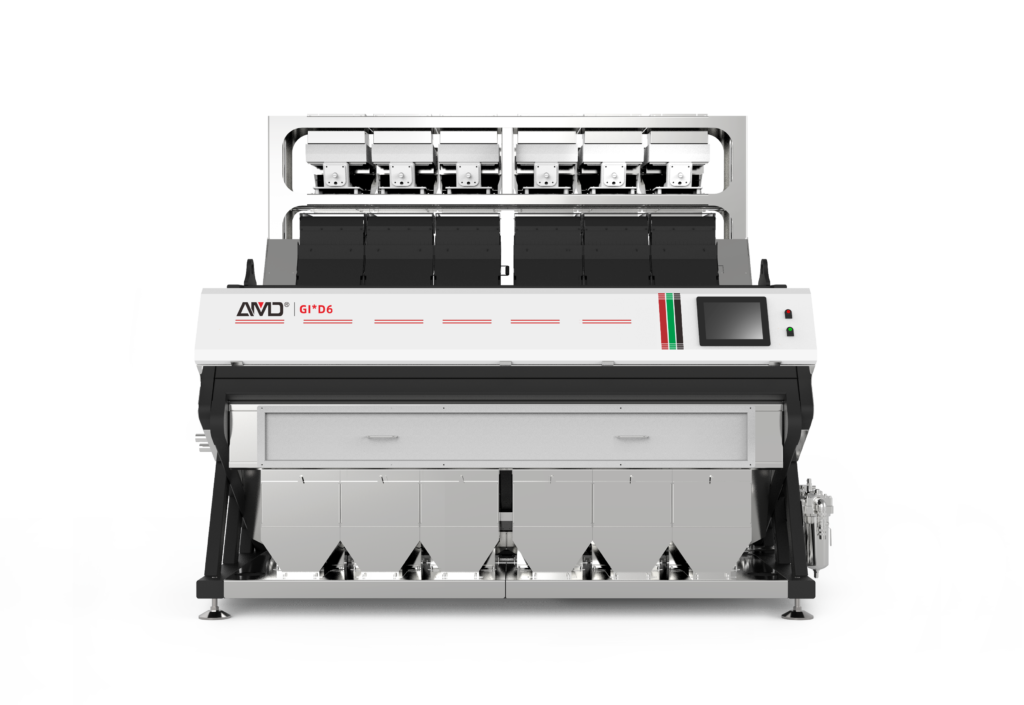
In a typical plastic recycling line, high-speed cameras scan the material while software analyzes the images in real time. Once the system detects unwanted materials, compressed air ejectors remove them from the product stream within milliseconds.
Optical sorting systems are widely used for:
- PET flake color separation
- Bottle color sorting
- Transparent vs. colored plastic separation
- Black spot removal
- PVC label detection
- Pellet sorting
- Foreign material rejection
Modern optical sorting machines use high-resolution cameras, LED lighting systems, and AI-assisted image recognition to improve sorting precision. Some systems can even distinguish subtle shade differences between light blue PET, green PET, and transparent PET flakes.
This technology performs especially well when recyclers focus on visual purity. For example, food-grade PET recycling lines often require strict color consistency because even small amounts of mixed-color flakes can reduce final product value.
Optical sorting is also commonly used in post-washing stages where materials are already relatively clean and dry. At this point, the machine can focus entirely on visual defects and color contamination.
For many small and medium recycling plants, optical sorting offers an affordable entry point into automated recycling because the system structure is simpler compared to full-spectrum NIR sorting systems.
What Is NIR Sorting Technology and Why Is It Important?
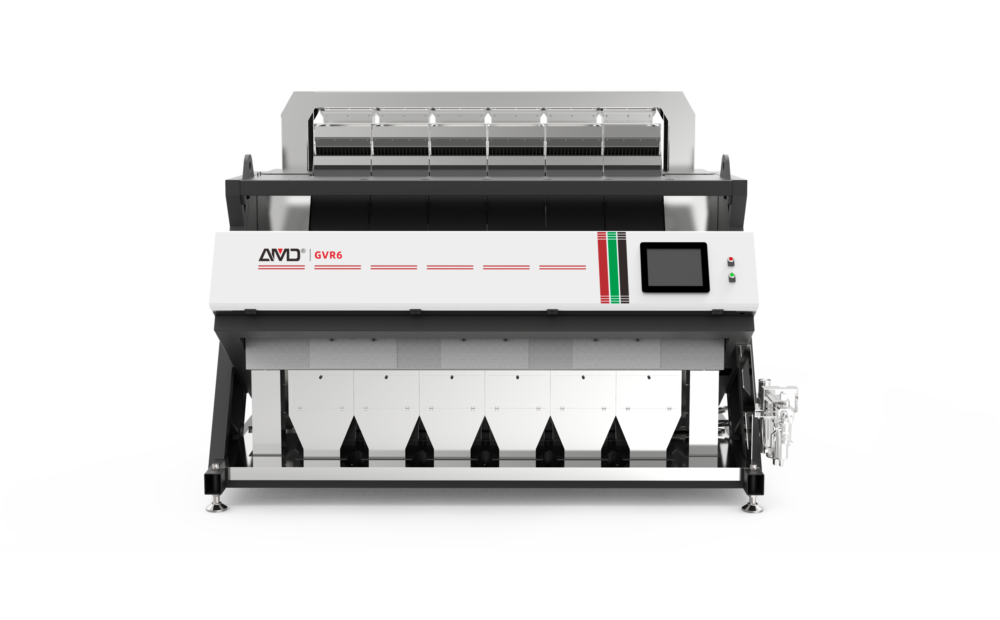
NIR sorting refers to Near-Infrared Sorting, a technology designed to identify materials based on their molecular composition rather than their visual appearance.
Unlike optical sorters that mainly “see” color, NIR systems analyze how materials reflect near-infrared light. Every polymer has its own spectral fingerprint, allowing the system to identify different plastic types even when they appear visually similar.
NIR sorting systems are widely used for separating:
- PET
- HDPE
- PP
- PE
- ABS
- PS
- PVC
- Engineering plastics
- Mixed household plastics
This capability is extremely important because many plastics cannot be accurately separated using color alone.
For example:
- Natural HDPE and PP may appear nearly identical visually.
- Transparent PET and PVC bottles can look similar.
- Mixed engineering plastics often share similar colors.
- Certain contaminants remain invisible to RGB cameras.
NIR technology solves these challenges by detecting polymer chemistry instead of relying only on visual inspection.
In modern recycling facilities, NIR sorting has become essential for producing high-purity recycled resin suitable for:
- Food-contact packaging
- Bottle-to-bottle recycling
- Automotive plastics
- Electronics plastics
- High-grade recycled pellets
Advanced NIR sorting systems also integrate AI algorithms, deep-learning analysis, and hyperspectral imaging to improve identification accuracy under difficult operating conditions. Some systems can simultaneously identify both polymer type and color, allowing recyclers to perform multiple sorting tasks in a single pass.
For recycling plants handling mixed plastic streams, NIR sorting is often the only practical way to achieve commercial-grade purity levels.
Optical Sorting vs. NIR Sorting: Understanding the Real Difference
Although both technologies are designed for automated separation, their core functions are completely different.
Optical Sorting Focuses on Appearance
Optical sorting systems mainly detect:
- Color differences
- Surface contamination
- Visual defects
- Shape variations
- Transparency levels
This makes them ideal for applications such as:
- PET flake color sorting
- Bottle color classification
- Pellet appearance inspection
- Removing burned flakes or black spots
Optical systems are usually faster to deploy and more affordable for operations focused mainly on visual quality control.
However, optical sorting has limitations. If two plastics share similar visual characteristics, the system may not reliably separate them.
NIR Sorting Focuses on Material Composition
NIR sorting identifies plastics by their polymer structure.
Instead of asking:
“What color is this material?”
NIR systems ask:
“What material is this plastic actually made from?”
This allows NIR sorters to separate:
- PET from PVC
- PE from PP
- ABS from PS
- Engineering plastics from commodity plastics
Even when the materials share similar colors.
This capability becomes increasingly important as recycling plants process more complex waste streams with higher contamination levels.
Which Technology Is More Accurate?
The answer depends entirely on the application.
If your goal is:
- Removing off-color flakes
- Producing visually clean PET
- Sorting transparent vs. colored plastics
Then, optical sorting may deliver excellent results.
But if your goal is:
- Separating polymer families
- Producing high-purity recycled resin
- Handling mixed plastics
- Reducing cross-polymer contamination
Then NIR sorting becomes far more effective.
Many advanced recycling facilities now combine both technologies in the same line because color sorting alone cannot solve polymer contamination issues.
Which Recycling Plants Should Choose Optical Sorting?
Optical sorting is often the best choice for plants focused on:
PET Bottle Recycling
PET bottle recycling lines frequently require:
- Transparent PET separation
- Blue PET removal
- Green PET classification
- Label contamination reduction
Optical sorting performs extremely well in these applications because visual differences are the main quality concern.
Plastic Flake Color Separation
After crushing and washing, flakes must often be separated by:
- Clear
- White
- Green
- Blue
- Mixed colors
Optical sorters provide high-speed color classification with relatively low operating costs.
Pellet Quality Inspection
Pellet sorting systems commonly use optical technology to detect:
- Black spots
- Burned pellets
- Foreign particles
- Color inconsistencies
This helps improve final pellet appearance and product consistency.
Small and Medium Recycling Plants
Plants with limited budgets often start with optical sorting because:
- Initial investment is lower.
- Maintenance is simpler.
- Training requirements are easier.
- Integration is faster.
For operations processing relatively clean and pre-sorted materials, optical sorting may already provide sufficient performance.
When Does Your Recycling Plant Need NIR Sorting?
NIR sorting becomes essential when recyclers handle more complex material streams.
Mixed Plastic Recycling
Municipal plastic waste usually contains:
- PET
- PP
- PE
- PS
- PVC
- ABS
- Multi-layer plastics
Visual sorting alone cannot reliably separate these polymers.
NIR technology dramatically improves material recovery and purity in mixed waste applications.
Food-Grade PET Recycling
Food-grade recycled PET requires extremely low contamination rates.
Even tiny amounts of PVC contamination can damage entire production batches during extrusion because PVC decomposes at PET processing temperatures.
NIR sorting helps remove polymer contaminants before extrusion, protecting both product quality and machinery.
Engineering Plastic Recovery
Automotive and electronics plastics often contain:
- ABS
- PA
- PC
- PMMA
- Modified polymers
These materials usually require high-purity separation to maintain commercial value.
NIR sorting allows recyclers to recover higher-value engineering plastics that would otherwise become low-grade mixed waste.
High-Purity Export Markets
Many global buyers now demand:
- Consistent polymer purity
- Reduced contamination
- Stable melt flow properties
- Food-contact compliance potential
NIR sorting helps recyclers meet these increasingly strict quality standards.
Is Combining Optical and NIR Sorting the Best Solution?
For many modern recycling plants, the answer is yes.
Today’s advanced recycling lines often combine:
- RGB optical cameras
- NIR sensors
- AI recognition systems
- Deep-learning algorithms
- Multi-sensor sorting platforms
This hybrid approach allows recyclers to:
- Separate polymers
- Remove visual contamination
- Improve product purity
- Reduce material loss
- Increase automation levels
For example, a PET recycling line may first use NIR sorting to separate PET from PVC and PE, followed by optical sorting to classify PET flakes by color.
This combination improves both polymer purity and visual consistency.
Many modern sensor-based recycling systems are specifically designed around this multi-stage sorting strategy because it delivers better long-term economic performance than relying on a single technology alone.
FAQ
What is the biggest difference between optical sorting and NIR sorting?
Optical sorting identifies materials based on visible appearance, such as color and brightness, while NIR sorting identifies plastics based on molecular composition and polymer type.
Can optical sorting separate PET from PVC?
Not reliably in many situations. PET and PVC can appear visually similar, especially when transparent. NIR sorting is much more effective for polymer separation.
Is NIR sorting more expensive?
Yes, NIR systems usually require a higher initial investment because they use advanced sensors and spectral analysis technology. However, they often deliver higher material purity and better long-term value.
Do small recycling plants need NIR sorting?
Not always. Small plants processing relatively clean and pre-sorted materials may achieve good results using optical sorting alone. Mixed waste processing usually benefits more from NIR technology.
Can one machine perform both optical and NIR sorting?
Yes. Many advanced recycling systems now combine optical cameras and NIR sensors within the same platform to improve sorting accuracy and reduce contamination.
Which technology is better for PET flakes?
It depends on the objective:
- Optical sorting is excellent for color separation.
- NIR sorting is better for polymer purity.
- Combining both usually produces the highest-quality recycled PET.
Final Thoughts
Choosing between optical sorting and NIR sorting is not simply about buying the newest technology. The right decision depends on your material stream, contamination level, purity targets, production scale, and final product requirements.
If your recycling operation mainly focuses on color separation and visual quality control, optical sorting may already provide strong performance with lower investment costs.
But if your plant handles mixed plastics, food-grade recycling, engineering polymers, or high-purity export materials, NIR sorting quickly becomes a critical part of the process.
As recycling standards continue to rise worldwide, more plants are moving toward integrated sensor-based sorting systems that combine optical imaging, NIR detection, and AI-driven analysis to maximize recovery rates and product value.