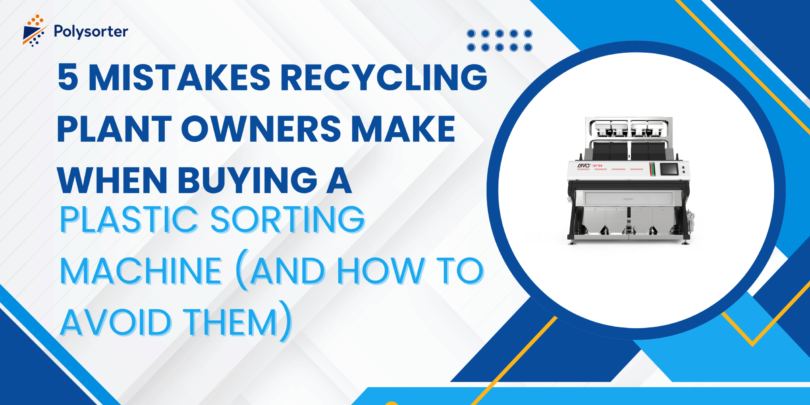
Investing in a plastic sorting machine is one of the most important capital decisions a recycling plant will make. Choosing the right plastic sorting machine affects everything from material purity and production efficiency to long-term profitability and return on investment (ROI). The right system can increase recovery rates, reduce labor costs, and open the door to higher-value recycled plastic markets. The wrong investment, however, can create production bottlenecks, increase operating costs, and require expensive upgrades far sooner than expected.
Many recycling businesses understandably focus on machine specifications and purchase price, but successful projects depend on much more than the equipment itself. Capacity planning, future production goals, technical support, and operator expertise all determine whether a sorting line delivers the expected return on investment.
Below are five of the most common mistakes recycling plant owners make when purchasing a plastic sorting machine—and practical ways to avoid them.
Mistake #1: Choosing a Plastic Sorting Machine Based on Price Alone
Price is often the first comparison buyers make, but it should rarely be the deciding factor.
A lower-priced sorting machine may appear attractive during procurement, yet the purchase cost represents only a portion of the total investment. Operating expenses—including maintenance, spare parts, energy consumption, downtime, labor requirements, and sorting accuracy—typically have a much greater impact over the machine’s service life.
For example, a machine with lower detection accuracy may leave more contaminants in the accepted material. If recycled PET flakes fall below a buyer’s required purity level, the processor may lose access to premium markets or receive lower selling prices. Over several years, this difference can far exceed the initial savings from purchasing a cheaper machine.
Likewise, systems built with lower-quality components may require more frequent maintenance or experience higher downtime, reducing plant productivity.
How to Avoid It
Evaluate the Total Cost of Ownership (TCO) instead of simply comparing purchase prices. Consider factors such as:
- Expected material recovery rate
- Sorting purity
- Operating stability
- Energy efficiency
- Maintenance intervals
- Spare parts availability
- Expected service life
- Software upgrade capability
A slightly higher initial investment often delivers significantly better long-term profitability while reducing operational risk throughout the machine’s lifecycle.
Mistake #2: Ignoring Throughput Capacity Planning
Many plants purchase equipment based only on today’s production volume without considering future growth.
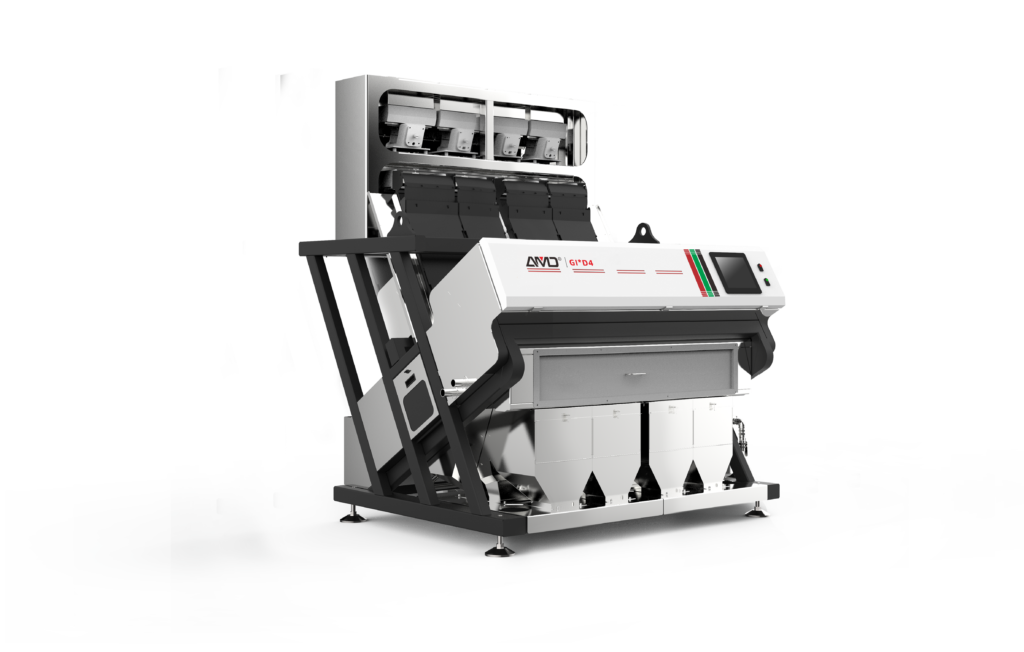
Imagine a recycling facility currently processing 2 tons per hour of mixed plastic flakes. Business grows quickly, new supply contracts are signed, and within two years the plant needs to process 4 or 5 tons per hour. If the installed sorting machine cannot accommodate the increased throughput, production becomes constrained by the sorter rather than upstream equipment.
The result is an expensive dilemma:
- Purchase an additional machine
- Replace the original sorter
- Run longer production shifts
- Accept reduced efficiency
None of these options is ideal.
Capacity planning should also consider upstream and downstream equipment. Even a high-speed sorter cannot achieve its rated performance if feeding systems, conveyors, crushers, or packaging stations become bottlenecks.
How to Avoid It
Develop a three-to-five-year production forecast before selecting equipment. Questions to ask include:
- Will processing volumes increase?
- Are additional plastic types planned?
- Will higher purity grades be required?
- Could new export customers require greater production capacity?
Selecting a machine with room for moderate expansion is often more economical than replacing equipment after only a few years.
Proper capacity planning also shortens the payback period by ensuring the sorting system continues to meet production requirements as your business grows.
PolySorter works with customers to size complete sorting solutions based on both current production and long-term business plans, helping plants avoid costly underinvestment while maximizing future ROI.
Mistake #3: Overlooking After-Sales Support
A plastic sorting machine is not a “set it and forget it” investment.
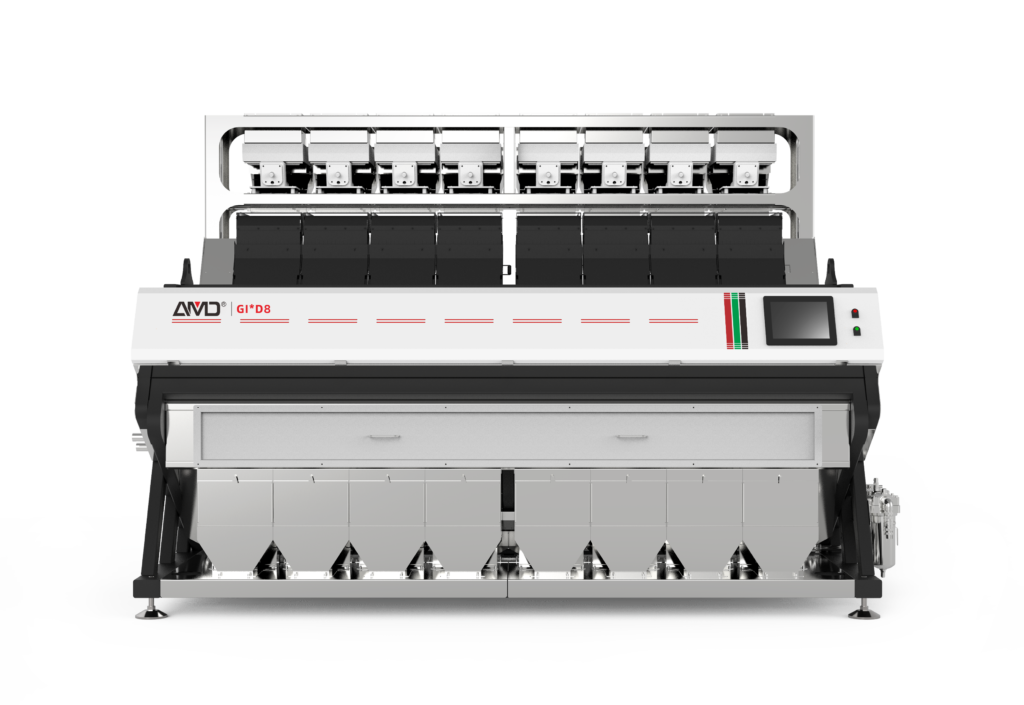
Like any sophisticated industrial equipment, optical sorting systems require periodic calibration, software updates, replacement wear parts, and occasional technical troubleshooting. Even the best equipment benefits from ongoing support throughout its operating life.
Unfortunately, some buyers focus exclusively on machine specifications while paying little attention to the supplier’s service capabilities. When problems arise, delayed technical assistance can translate directly into costly downtime and lost revenue.
Strong after-sales support becomes especially valuable during:
- New equipment commissioning
- Process optimization
- Recipe adjustments for new materials
- Sensor calibration
- Remote diagnostics and performance monitoring
- Spare parts replacement
- Software upgrades
Fast technical response often prevents minor issues from becoming costly shutdowns.
How to Avoid It
Before selecting a supplier, ask questions such as:
- How quickly are spare parts available?
- Is remote diagnostic support offered?
- Can engineers provide online troubleshooting?
- Is field service available if needed?
- How frequently are software improvements released?
The answers may have a greater impact on long-term productivity than small differences in machine price.
Mistake #4: Skipping Operator Training
Even the most advanced AI-powered sorting system depends on knowledgeable operators.
Many recycling plants assume that modern optical sorters are completely automatic. While automation has dramatically simplified operation, machine performance still depends on proper setup, material preparation, parameter adjustment, and routine maintenance.
Without sufficient training, operators may unknowingly reduce sorting efficiency by:
- Feeding excessive material depth
- Using incorrect belt speeds
- Applying unsuitable sorting recipes
- Failing to recognize early maintenance needs
- Misinterpreting rejection rates
Small operational mistakes can significantly reduce purity or recovery. Conversely, well-trained operators continuously optimize production and quickly adapt the machine to changing feedstock.
How to Avoid It
Treat operator training as part of the equipment investment rather than an optional extra. Effective training should cover:
- Machine operation
- Product recipe management
- Routine maintenance
- Performance optimization
- Troubleshooting procedures
- Safety practices
PolySorter supports customers through its Training Academy, combining classroom instruction, commissioning support, hands-on operation, and real production optimization. Together with ongoing technical guidance, this structured approach helps customers reach peak equipment performance faster and maintain consistent sorting quality throughout the machine’s service life.
Mistake #5: Failing to Plan for Future Material Mix Changes
The plastic recycling industry is evolving rapidly.
A facility that currently processes mostly PET bottles may soon receive increasing quantities of PP packaging, HDPE containers, multilayer plastics, engineering plastics, or post-consumer household waste. Regulatory changes and market demand can shift material streams much faster than many operators expect.
Buying equipment designed for only one narrow application may limit future business opportunities. Today’s leading recycling plants increasingly require sorting systems capable of handling:
- PET, HDPE, PP, PVC, ABS, and PS
- Mixed rigid plastics
- Colored flakes
- Engineering plastics
- Food-grade recycling streams
Modern sensor technologies—including Near-Infrared (NIR), visible light cameras, hyperspectral imaging, AI vision, and deep-learning algorithms—allow a single platform to support multiple applications through software updates, configurable AI models, and modular sensor upgrades.
How to Avoid It
Think beyond today’s production schedule. Ask suppliers:
- Can additional sensors be integrated later?
- Are new sorting recipes easily added?
- Can AI models be updated?
- Will the machine support different plastic types in the future?
- Can the equipment be expanded without replacing the entire line?
Flexible platforms protect your investment while allowing your recycling business to respond quickly to changing market opportunities.
Choosing a Long-Term Recycling Partner Matters
Purchasing a plastic sorting machine is more than selecting a piece of equipment—it is choosing a long-term production partner.
The best investment balances current needs with future growth, combining reliable hardware, advanced sensing technology, responsive technical support, and comprehensive operator training. Plants that evaluate suppliers from this broader perspective are far more likely to achieve higher recovery rates, consistent product quality, and faster returns on investment.
Rather than offering one-size-fits-all equipment, PolySorter develops customized sensor-based sorting solutions tailored to different plastic streams, production capacities, purity targets, and future expansion plans. Combined with engineering consultation, commissioning support, after-sales service, and comprehensive operator training, this approach helps recycling plants maximize the value of their investment while remaining prepared for future changes in the recycling market.
If you’re planning a new recycling line or upgrading an existing facility, PolySorter can help design a customized sorting solution based on your material stream, throughput requirements, and long-term production goals.
FAQs
How important is sorting accuracy compared to machine price?
Sorting accuracy directly affects the purity and market value of recycled materials. A machine with higher accuracy often generates greater long-term revenue, making it a better investment than simply choosing the lowest purchase price.
Should I buy a sorter sized for my current production or future expansion?
If your business expects growth within the next three to five years, selecting equipment with additional capacity or upgrade potential can reduce future capital costs and minimize production disruptions.
What kind of after-sales support should I expect?
Look for suppliers that provide installation assistance, remote diagnostics, spare parts availability, software updates, preventive maintenance guidance, and responsive technical support.
How much operator training is typically required?
Most operators become proficient after structured commissioning and hands-on instruction. Ongoing training is valuable when processing new materials or introducing updated sorting recipes.
Can one plastic sorting machine process multiple plastic types?
Many modern optical sorting platforms support multiple polymers and applications through configurable software, interchangeable sensors, AI models, and modular system designs. Choosing a flexible platform can help future-proof your recycling operation. Contact us today for a free consultation.