rPET plastic (recycled polyethylene terephthalate) is PET that manufacturers recover from used products—mainly beverage bottles and food packaging—and process into a new raw material. Instead of ending its life after one use, PET can go through collection, sorting, cleaning, and recycling before returning to the market as new packaging, textiles, or industrial products.
Today, rPET plays a much bigger role than simply reducing plastic waste. Governments continue to strengthen recycling regulations, while global brands increase the amount of recycled content in their packaging. As a result, demand for high-quality recycled PET has grown rapidly across the food, beverage, textile, and consumer goods industries.
However, not all rPET offers the same quality or value. Some recycled PET can safely return to food-grade packaging, while other material only meets the requirements for lower-value applications. The difference depends largely on the quality of the recycling process—and, more importantly, the purity achieved during sorting.
In this guide, you’ll learn what rPET plastic is, how manufacturers produce it, where it is used, and why advanced optical sorting technology has become essential for producing premium recycled PET.
What Is rPET Plastic?
rPET plastic stands for recycled polyethylene terephthalate. Recycling companies produce it by collecting, processing, and reusing post-consumer or post-industrial PET products. Instead of manufacturing new plastic from petroleum-based raw materials, recyclers transform existing PET into valuable secondary material.
PET is one of the world’s most widely used plastics because it combines excellent strength with low weight and high transparency. Manufacturers use PET extensively for:
- Drinking water bottles
- Soft drink bottles
- Juice containers
- Food trays
- Cosmetic packaging
- Pharmaceutical containers
- Polyester textile fibers
After consumers discard these products, recycling facilities collect them through municipal recycling programs, deposit-return systems, commercial waste streams, or industrial recovery channels.
Unlike many plastics that lose significant performance after repeated recycling, PET can maintain much of its original mechanical strength and chemical stability when recyclers process it correctly. Therefore, PET supports true closed-loop recycling, where an old beverage bottle can become a new beverage bottle instead of being downcycled into a lower-value product.
Today, manufacturers use premium rPET in far more applications than many people realize. Common end uses include:
- Beverage bottles
- Food packaging
- Cosmetic containers
- Thermoformed trays
- Automotive interior fabrics
- Premium polyester textiles
- Industrial packaging
- Injection-molded products
Ultimately, the market value of rPET depends on one critical factor: material purity. Higher purity allows recyclers to sell into premium markets, meet stricter regulations, and achieve significantly higher returns.
How Is rPET Plastic Made?
Many people think recycling simply means crushing plastic bottles into small flakes. In reality, manufacturers must complete a carefully controlled process before PET becomes high-quality recycled material. Every stage removes contaminants while protecting the polymer’s performance.
A typical industrial rPET production line follows this sequence:
Collection → De-baling & Pre-washing → Bottle Sorting → Label Removal → Crushing → Friction & Hot Washing → Flake Sorting (Color & Polymer) → Pelletizing
Although this workflow looks straightforward, every step influences the quality of the final product.
Step 1: Collect and Prepare Used PET Bottles
The process starts with collecting used PET bottles from multiple sources. These include household recycling programs, commercial waste collection, deposit-return systems, and industrial packaging recovery.
However, incoming material rarely contains only PET bottles.
Instead, recyclers often receive mixed loads containing:
- PVC bottles
- HDPE containers
- PP bottle caps
- Colored PET bottles
- Aluminum closures
- Paper labels
- Silicone
- Organic residue
- Dirt and sand
Therefore, recyclers must remove these contaminants before processing continues.
Step 2: Sort PET Bottles Before Processing
Bottle sorting is one of the most important stages in the entire recycling line. Removing contaminants early prevents quality problems later in production.
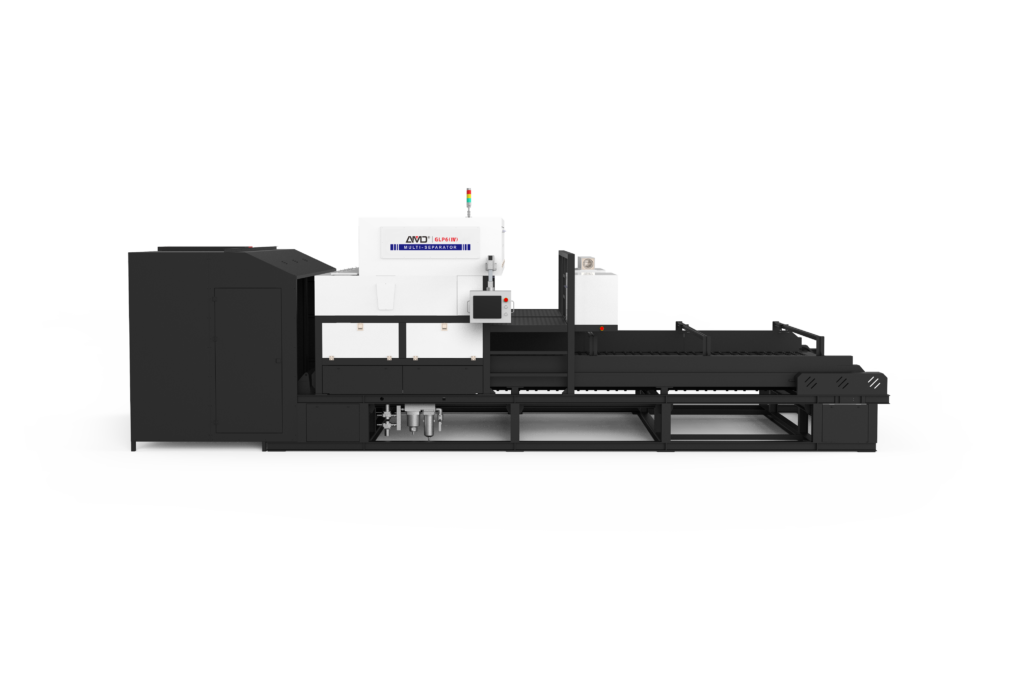
Modern optical sorting systems identify different materials at high speed. They separate PET bottles from other plastics while simultaneously distinguishing clear, blue, green, and mixed-color bottles.
Today’s most advanced systems combine several sensing technologies instead of relying on only one.
For example, many recycling plants integrate:
- High-resolution color cameras
- Near-Infrared (NIR) spectroscopy
- UV detection
- AI-powered image recognition
Each technology performs a different task. Together, they improve sorting accuracy, reduce manual labor, and increase recovery rates, even when facilities process highly mixed waste streams.
Step 3: Wash, Crush, and Purify PET Flakes
After sorting, recycling lines remove labels and bottle caps before shredding the bottles into PET flakes.
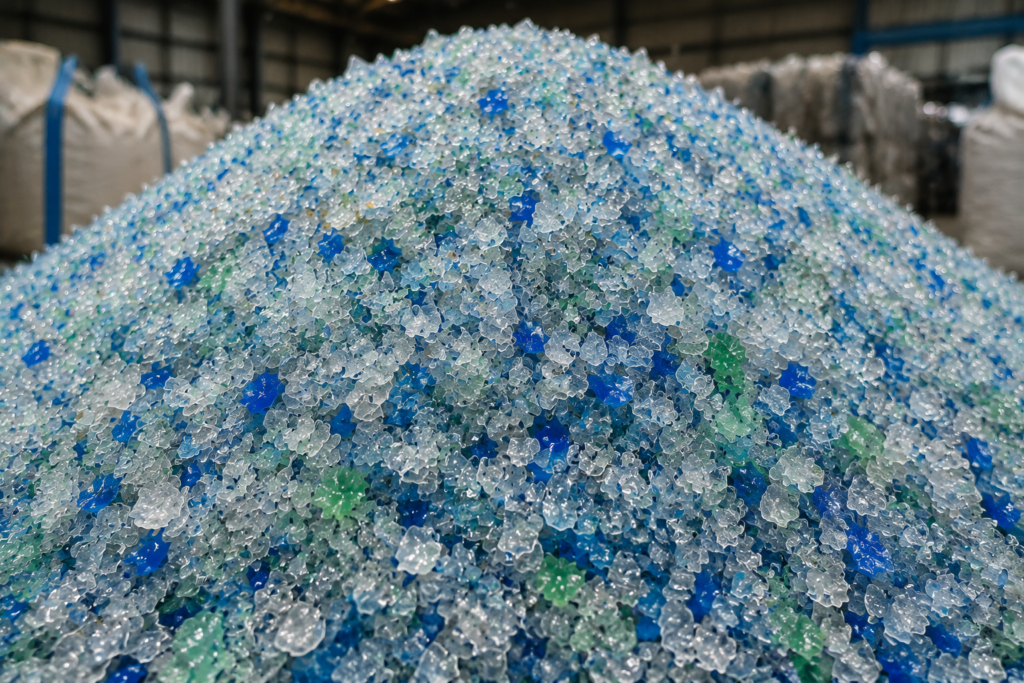
Next, the flakes pass through several cleaning stages. Hot washing, friction washing, rinsing, and drying remove glue, food residue, paper, dirt, and other surface contaminants.
Even after intensive washing, the material still contains unwanted particles. Small amounts of PVC, PP, PE, PS, colored flakes, and other foreign polymers often remain mixed with the PET.
Although these contaminants are difficult to see, they can seriously reduce product quality.
For this reason, recyclers perform another critical step: flake sorting.
Modern flake sorting systems inspect every individual particle. They identify color defects, foreign plastics, and remaining contaminants before pelletizing begins. Many facilities combine color sorting with polymer sorting to achieve much higher purity levels.
This additional purification stage becomes especially important when manufacturers produce food-grade rPET or supply bottle-to-bottle recycling applications. Even tiny amounts of contamination can reduce product value or prevent compliance with strict customer specifications.
Why High-Purity Sorting Matters for rPET Plastic
Producing rPET is only the beginning. Producing high-purity rPET is what creates real commercial value.
At first glance, two batches of recycled PET flakes may look almost identical. However, one batch may qualify for food-contact packaging, while the other may only be suitable for fibers or industrial strapping. The difference often comes down to contamination levels measured in fractions of a percent.
PVC Is the Biggest Threat to rPET Quality
Among all contaminants, PVC (polyvinyl chloride) creates the greatest risk during PET recycling.
PET typically melts at 250–260°C, while PVC begins to degrade at approximately 170–200°C. Because of this difference, PVC breaks down much earlier during extrusion. It releases corrosive hydrochloric acid (HCl), which attacks PET polymer chains and damages the material.
As a result, recyclers may experience:
- Yellow discoloration
- Black specks
- Reduced intrinsic viscosity (IV)
- Lower mechanical strength
- Poor transparency
- Higher rejection rates
Even tiny amounts of PVC can create serious problems. Research and industry experience show that contamination levels as low as 50 ppm may downgrade or even reject an entire batch of premium rPET.
For this reason, leading recyclers treat PVC removal as one of the highest priorities in the recycling process.
Other Contaminants Also Reduce Material Value
PVC is not the only concern. Several other materials can reduce product quality and limit where recycled PET can be used.
Common contaminants include:
- HDPE and PP from bottle caps and closures
- Colored PET mixed with clear PET
- PS, ABS, and engineering plastics from mixed waste streams
- Paper labels and adhesive residue
- Aluminum foil and metal particles
- Silicone, rubber, and other foreign materials
Each contaminant creates different challenges. For example, colored PET reduces the value of clear recycled flakes, while HDPE and PP may leave unmelted particles inside finished pellets.
Individually, these defects may seem minor. Together, however, they can significantly reduce both product quality and selling price. Leading industry organizations emphasize the importance of minimizing these contaminants at the design and sorting stages to ensure compatibility with modern recycling systems.
Advanced Optical Sorting Solves These Challenges
Mechanical separation alone cannot consistently remove every contaminant. Therefore, modern recycling plants increasingly rely on advanced optical sorting technologies.
Near-Infrared (NIR) technology identifies different polymers according to their spectral signatures. Consequently, the system can distinguish PET from PVC, PP, PE, PS, and many engineering plastics with high accuracy.
At the same time, high-resolution cameras detect color differences that are difficult to identify manually. UV sensors can identify specific contaminants, while AI-powered image recognition improves detection on dirty, damaged, or irregularly shaped materials.
Instead of depending on a single sensor, today’s most advanced recycling lines combine multiple detection technologies.
This multi-sensor approach delivers several important benefits:
- Higher PET purity
- Lower material loss
- Better recovery rates
- More stable product quality
- Higher finished-product value
Even a small improvement in purity can make a noticeable commercial difference. For many recyclers, increasing PET purity by only 0.2%–0.5% allows them to access higher-value bottle-to-bottle markets and improve overall profitability.
Where Is rPET Plastic Used?
Demand for rPET continues to grow every year. Environmental policies certainly play an important role, but they are no longer the only driving force. Today, brand owners, packaging manufacturers, and consumers all expect higher recycled content in plastic products.
Consequently, premium recycled PET has become a valuable raw material across multiple industries.
Bottle-to-Bottle Recycling
Bottle-to-bottle recycling represents the highest-value application for rPET.
Instead of producing lower-value products, recyclers convert used beverage bottles into food-grade PET resin. Manufacturers then use this material to produce new beverage bottles, creating a true closed-loop recycling system.
Because food-contact applications require extremely high purity, bottle-to-bottle recycling also places the highest demands on sorting technology.
Packaging and Consumer Products
Manufacturers also use rPET in a wide range of packaging applications, including:
- Food trays
- Thermoformed packaging
- Cosmetic bottles
- Personal care containers
- Pharmaceutical packaging
- Household product packaging
These applications require consistent color, transparency, and mechanical performance.
Textile and Industrial Applications
Not every recycled PET product returns to food packaging.
Manufacturers also process rPET into:
- Polyester clothing
- Carpet fibers
- Automotive interior fabrics
- Industrial strapping
- Packaging films
- Injection-molded products
- 3D printing filament
Although these applications generally tolerate slightly higher impurity levels, manufacturers still benefit from cleaner raw materials because they improve production efficiency and finished-product quality.
As demand continues to rise, many recyclers are shifting from commodity-grade PET flakes toward premium bottle-grade rPET. This strategy allows them to increase profit margins without dramatically expanding production capacity.
Choosing the Right Plastic Sorting Machine for rPET Production
Not every recycling plant requires the same sorting solution. The best equipment depends on your raw materials, production capacity, purity targets, and final products.
Therefore, buyers should evaluate an entire sorting system rather than focusing on a single machine.
If You Process Whole PET Bottles
Bottle sorting should become the first priority.
An AI-assisted optical sorter can identify PET bottles while simultaneously removing PVC, HDPE, PP, colored containers, and other unwanted materials before shredding begins.
Removing contaminants at this early stage protects every downstream process.
If You Produce Washed PET Flakes
After washing, many recyclers install dedicated flake sorting systems.
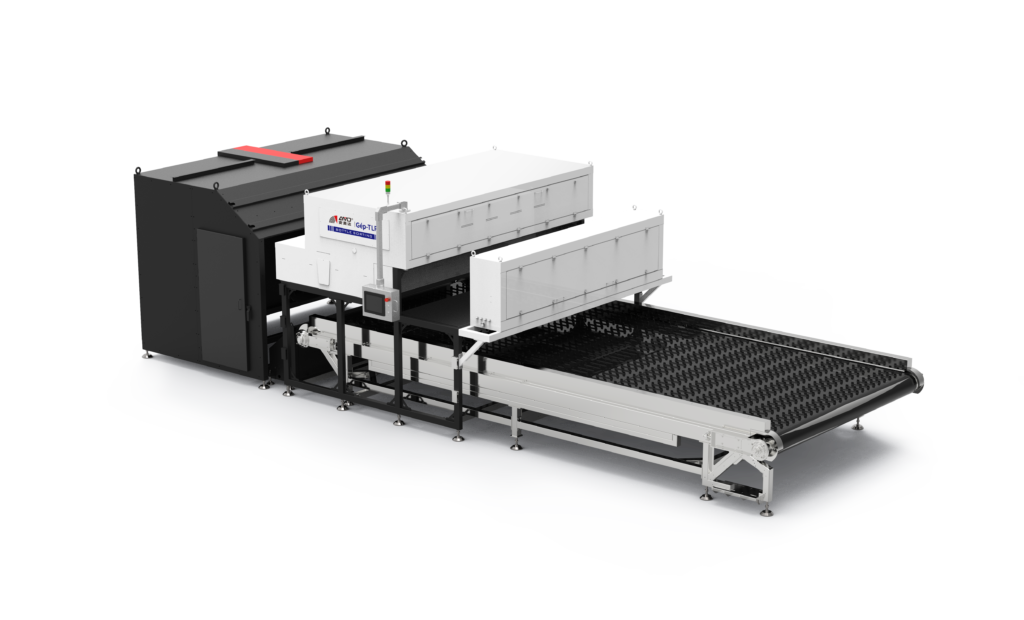
Color sorters remove yellow flakes, black specks, metals, and visual defects. Polymer sorters equipped with NIR technology then eliminate remaining PVC, PP, PE, PS, and other foreign plastics.
Together, these systems significantly improve product purity before pelletizing.
If You Produce Food-Grade rPET
Bottle-to-bottle recycling usually requires multiple purification stages.
Instead of relying on one sorting pass, manufacturers often combine:
- Bottle sorting
- Color sorting
- Polymer sorting
- Final purification sorting
This layered approach delivers higher consistency and helps meet strict food-grade quality requirements.
What Should Buyers Look For?
When comparing plastic sorting machines, ask the following questions:
✔ Can the machine accurately distinguish PET from PVC?
✔ Does it support both color sorting and polymer sorting?
✔ Can it process wet or lightly contaminated flakes?
✔ Does it use AI learning for complex material streams?
✔ Is the throughput suitable for future production expansion?
✔ How easy is calibration and daily maintenance?
✔ Does the supplier provide software upgrades and technical support?
✔ Can the machine integrate with existing recycling equipment?
The lowest purchase price does not always deliver the lowest operating cost. In many cases, higher sorting accuracy reduces material loss, improves finished-product quality, and shortens the return on investment.
FAQs
What is rPET plastic made from?
Manufacturers produce rPET from recycled PET products such as beverage bottles, food containers, and industrial packaging. After sorting, washing, purification, and pelletizing, the recycled material becomes a valuable raw material for new products.
Is rPET the same as PET?
Chemically, yes. Both materials are polyethylene terephthalate. The difference is that virgin PET comes from new raw materials, while recyclers recover rPET from existing PET products.
Is rPET safe for food packaging?
Yes. Manufacturers can safely use food-grade rPET for beverage bottles and food packaging after it meets applicable regulatory requirements and passes approved decontamination processes.
Why does PVC cause so many problems during PET recycling?
PVC degrades long before PET melts. Consequently, it releases hydrochloric acid during processing, which damages PET and reduces product quality. Even extremely small amounts of PVC can contaminate an entire production batch.
Which sorting technology works best for rPET?
Most advanced recycling plants combine several technologies, including NIR polymer identification, high-resolution color cameras, UV detection, AI-powered image recognition, and high-speed air ejection systems. Together, these technologies deliver much higher purity than mechanical separation alone.
Why is high-purity rPET more valuable?
Higher purity allows manufacturers to produce food-grade packaging, bottle-to-bottle recycled resin, and other premium products. Cleaner material also improves processing stability, reduces waste, and increases market value.
Final Thoughts
rPET has become one of the most important materials in today’s circular economy. However, successful PET recycling depends on much more than collecting and washing used bottles. Every stage of the process influences the quality of the final product.
More importantly, sorting determines value. Better sorting removes more contaminants, increases purity, improves recovery rates, and opens the door to higher-value applications such as bottle-to-bottle recycling and food-grade packaging.
Whether you are building a new PET recycling facility or upgrading an existing production line, investing in the right optical sorting technology can improve efficiency, reduce contamination, and maximize long-term profitability.
At Polysorter, we design customized bottle sorting, flake sorting, and polymer sorting solutions for modern PET recycling plants. Our AI vision and NIR sorting technologies help recyclers achieve higher purity, greater recovery, and stronger returns on every ton of recycled PET. Contact our team today to discuss the right solution for your recycling project.