Comminution—the crushing and grinding stages used to reduce ore particle size—is one of the most energy-intensive parts of mineral processing. Yet run-of-mine ore rarely consists entirely of valuable mineral-bearing rock. It may also contain low-grade material and barren gangue. If this waste continues through grinding and downstream beneficiation, the plant spends energy, capacity, water-handling resources, and equipment life on material that may eventually be rejected.
This is the main reason for ore pre-concentration. By identifying and removing suitable waste rock after crushing but before grinding, a processing plant can reduce the mass entering the mill and send a more concentrated feed downstream.
The principle is simple:
Less waste to the mill → less material to grind → higher-value mill feed → lower downstream processing load.
However, successful pre-concentration is not simply about rejecting as much rock as possible. The waste must be distinguishable at a practical particle size, while valuable-mineral losses must remain acceptable. Therefore, the real question is not whether an ore sorting machine can reject material. It is whether early waste rejection improves the economics and efficiency of the entire mineral processing flowsheet.
What Is Ore Pre-Concentration?
Ore pre-concentration is an early beneficiation step that removes a portion of barren or low-value material before energy-intensive downstream processing.
A simplified flowsheet may look like this:
Mining → Crushing → Screening → Pre-Concentration → Grinding → Flotation / Leaching / Other Beneficiation
The exact position depends on the deposit and processing route. In sensor-based sorting applications, crushed ore is normally screened into a controlled particle-size range before entering the sorter. Sensors analyze individual particles or pieces, while the control system determines which material should continue as the selected product and which should enter the reject stream.
The timing of this separation matters.
Grinding reduces ore to smaller particle sizes to support mineral liberation. However, if a coarse particle can already be reliably identified as barren waste, grinding that particle first provides little processing value.
Removing suitable gangue earlier changes both the quantity and quality of the feed entering the mill.
This can become particularly relevant as mines process lower-grade resources. Lower feed grades often mean that more total material must move through the plant to recover a given amount of valuable mineral. If a meaningful portion of that mass can be rejected before fine grinding, pre-concentration may reduce unnecessary downstream work.
However, not every ore is suitable. Mineralized particles and gangue must provide a sufficiently reliable separation opportunity at a practical sorting size.
Why Remove Waste Rock Before Grinding?
The strongest argument for pre-concentration is straightforward: do not spend intensive downstream processing resources on material that can already be identified as waste.
The benefits can extend well beyond the grinding circuit.
Reduce the Mass That Must Be Ground
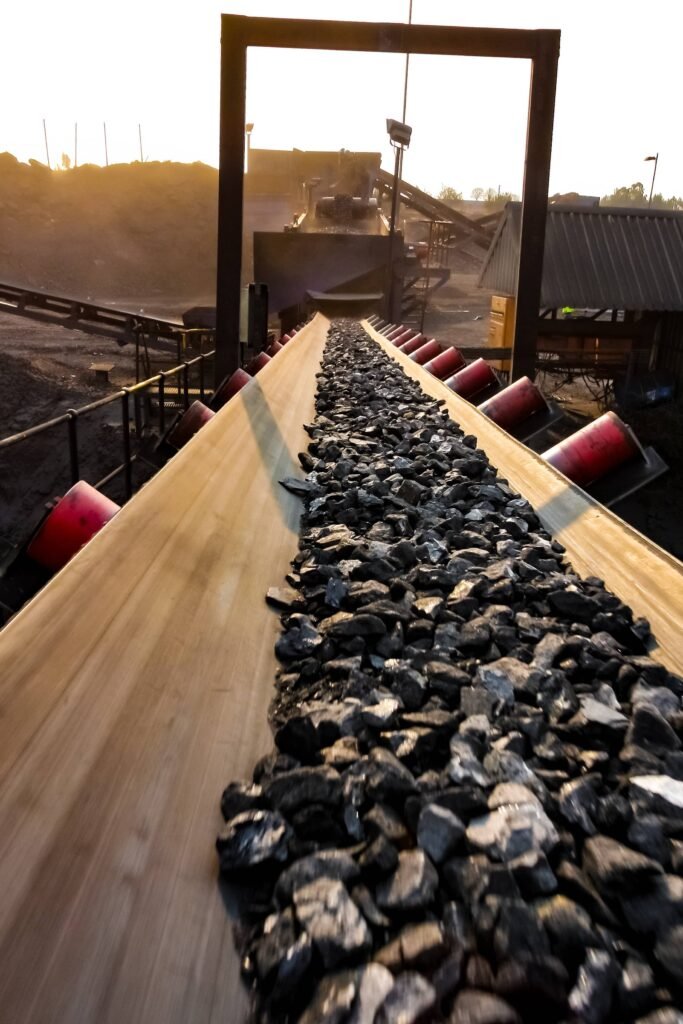
Consider 100 tonnes of crushed feed approaching a grinding circuit. If testing shows that a portion of barren rock can be removed while keeping valuable-mineral losses within an acceptable range, fewer tonnes need to enter the mill.
The mill then spends more of its available energy processing mineralized material instead of identifiable waste.
The potential reduction cannot be predicted from feed tonnage alone. Mineral distribution, particle size, liberation, sorting response, and the required recovery target all influence how much material can realistically be rejected.
For this reason, a waste rejection percentage achieved at another mine should never be treated as a guaranteed result for a new deposit.
Use Existing Mill Capacity More Effectively
A grinding circuit has finite throughput.
When a significant portion of the feed consists of low-value or barren material, that waste occupies capacity that could otherwise be used for more valuable ore. Successful pre-concentration reduces this competition.
This does not mean an ore sorter mechanically increases the rated capacity of the mill. Instead, it can allow a larger proportion of the available throughput to be devoted to mineralized feed.
For operations where grinding is already a bottleneck, this distinction can be economically important.
Upgrade the Feed Before Beneficiation
Rejecting gangue reduces dilution. As a result, the material continuing downstream may contain a greater proportion of valuable mineral than the original feed.
A more concentrated mill feed may improve the conditions for subsequent flotation, gravity separation, magnetic separation, leaching, or other beneficiation stages.
However, grade improvement should never be considered alone.
A sorter that produces a high-grade concentrate by rejecting too much valuable material may not improve overall project economics. Concentrate grade, waste rejection, reject grade, and valuable-mineral recovery must be evaluated together.
Reduce Water and Downstream Processing Demand
Every tonne removed before grinding is also a tonne that does not need to pass through at least part of the subsequent processing route.
Depending on the flowsheet, this may reduce material passing through grinding, classification, pumping, flotation, dewatering, and other wet-processing stages. Where downstream operations rely heavily on slurry transport and water, reducing the mass entering those stages can also reduce associated water-handling requirements.
The actual effect depends on the process. An ore sorter should therefore not be presented as a fixed-percentage water-saving technology. Instead, the potential benefit comes from preventing unnecessary waste mass from entering water- and energy-intensive downstream operations.
Reduce Fine Tailings Generation
Early waste rejection can also change the form in which waste leaves the processing route.
Waste rock removed at a coarse sorting stage may remain as relatively coarse material rather than being ground into fine particles and transferred through the full wet beneficiation circuit. This can reduce the quantity of material eventually converted into fine tailings.
Depending on mineralogy, geochemical characteristics, engineering properties, local regulations, and site design, coarse reject material may follow different waste-management routes. In suitable cases, options can include coarse waste-rock storage, dry handling, or potential reuse in appropriate construction applications.
However, coarse sorter rejects should not automatically be assumed to be suitable aggregate or environmentally benign material. Acid-generation potential, metal leaching, geotechnical behavior, and other site-specific factors still need to be evaluated.
The broader advantage is that pre-concentration gives the operation an opportunity to remove suitable waste before it becomes finely ground process tailings.
How Sensor-Based Ore Sorting Enables Pre-Concentration
Sensor-based ore sorting makes separation decisions while the ore is still relatively coarse.
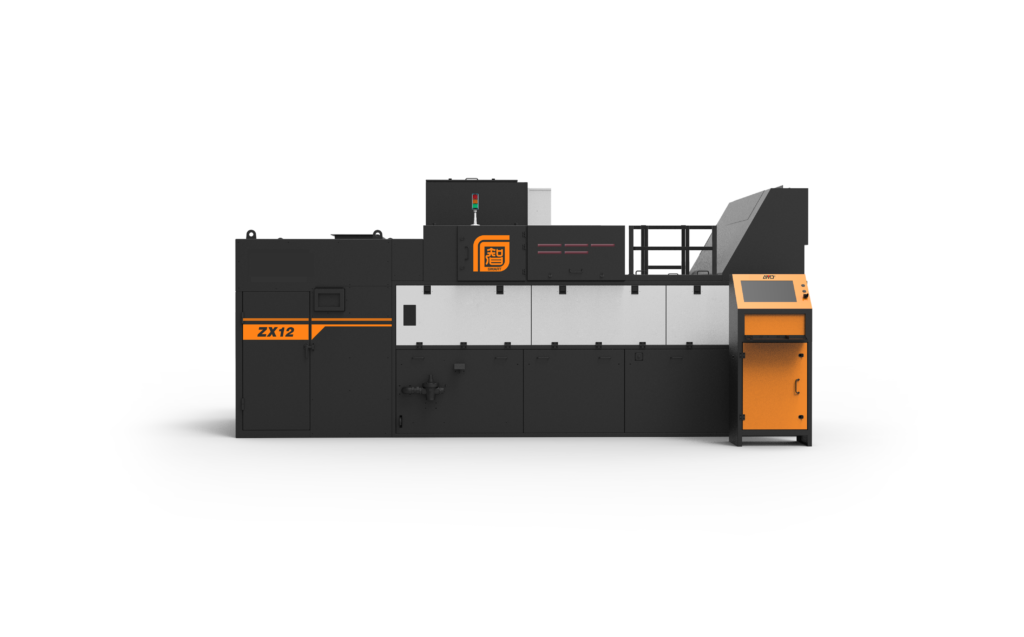
After crushing and size classification, material is presented to the detection system in a controlled manner. Sensors collect information from individual particles. Recognition software evaluates those signals according to the sorting criteria, and the separation system directs selected material into the appropriate product or reject stream.
The key question is:
Which measurable property distinguishes valuable ore from waste?
Different ores provide different answers.
Optical Ore Sorting for Surface Differences
Camera-based optical sorting evaluates visible characteristics such as color, brightness, texture, shape, and surface features.
This method can be effective when mineralized material and gangue show repeatable visual differences. Certain industrial minerals, for example, may contain contrasting waste rock or visible impurities that can be recognized at a coarse particle size.
However, optical recognition depends primarily on detectable surface information. Two particles can look similar externally while having different internal characteristics.
When surface appearance does not provide sufficient contrast, another sensing method may be required.
XRT Ore Sorting for X-Ray Attenuation Differences
X-ray transmission (XRT) sorting evaluates differences in X-ray attenuation as radiation passes through individual particles.
The measured attenuation is influenced by factors that include material density, particle thickness, and effective atomic composition. This allows XRT systems to distinguish certain material differences that may not be obvious from surface color alone.
Importantly, XRT should not be confused with XRF. XRT evaluates transmitted X-ray attenuation, while XRF analyzes characteristic fluorescent X-rays associated with elemental composition. They provide different types of information and serve different sorting requirements.
Depending on mineralogy and the measurable contrast available, other sensing technologies may also be considered. The correct sensor is ultimately determined by the property that most reliably distinguishes valuable mineralization from gangue.
Therefore, choosing between optical, XRT, or another approach should begin with the ore characteristics and separation objective, not with a preference for a particular machine technology.
When Does Ore Pre-Concentration Make Economic Sense?
Not every mine benefits equally from pre-concentration. A practical evaluation can be built around five questions:
Can the waste be detected? →Can it be separated at a practical particle size? →Can enough waste mass be rejected? →Are valuable-mineral losses acceptable? →Do the downstream savings justify the sorting step?
1. Can Valuable Ore and Gangue Be Distinguished?
There must be a measurable difference between the material that should be accepted and rejected.
That difference might involve color, surface characteristics, X-ray attenuation, or another sensor-detectable property. The contrast does not necessarily need to be visible to the human eye, but it must be consistent enough for reliable machine recognition.
2. Is the Ore Sufficiently Heterogeneous?
Pre-concentration generally becomes more attractive when valuable and barren material occur in sufficiently distinct particles after crushing.
If valuable minerals are finely and uniformly disseminated throughout the host rock, coarse-particle sorting may offer limited opportunity to remove gangue without losing valuable material.
The relationship between mineral distribution and particle size is therefore critical.
3. Is the Feed Size Suitable for Sorting?
Particle-size control is an important but sometimes overlooked part of sensor-based ore sorting.
A sorter is normally designed around a defined operating size range. Screening is therefore used to create a more controlled sortable fraction before the material reaches the detection zone.
Oversize material may require additional crushing. At the other end of the size distribution, undersize fines that fall outside the selected sorter’s effective operating range are normally screened out or bypassed according to the plant flowsheet, rather than being forced through a sorting stage that was not designed for them.
This does not mean there is one universal fines limit for every ore sorter. The practical lower and upper size limits depend on the sensor technology, equipment design, ore characteristics, and required separation performance.
Consistent sizing also helps improve particle presentation. Very broad size distributions, excessive fines, unstable feed, dust, and moisture can all interfere with detection or physical separation.
Therefore, screening and feed preparation should be treated as part of the sorting system itself.
4. How Much Mass Can Be Rejected Without Losing Too Much Value?
This is one of the most important questions in any ore sorting test.
A high waste rejection rate is only useful when valuable-mineral losses remain acceptable.
For example, rejecting 50% of the feed may sound attractive. But if that reject stream contains an unacceptable proportion of valuable mineral, the result may be economically poor.
Conversely, a lower mass rejection rate can still create substantial value if the rejected material is genuinely low grade and removing it significantly reduces downstream processing requirements.
This is why mass rejection, reject grade, concentrate grade, and recovery should be reviewed together.
There is no universal “ideal” waste rejection percentage.
5. Do the Downstream Benefits Justify Sorting?
Finally, the sorting stage has its own capital and operating requirements.
Its value should therefore be compared with the benefits created downstream. These may include reduced grinding mass, better use of mill capacity, lower downstream material load, reduced fine-tailings generation, changes in water-handling demand, improved feed grade, or the ability to process resources that were previously uneconomic.
The strongest business case comes from improving the economics of the whole flowsheet, not from maximizing one sorting metric.
How to Choose an Ore Sorting Machine for Pre-Concentration
Selecting an ore sorting machine should begin with the processing problem rather than a list of equipment specifications.
First, define the objective. Is the operation trying to reject barren rock after coarse crushing? Upgrade feed before grinding? Recover value from low-grade stockpiles? Or stabilize the material entering downstream beneficiation?
Next, evaluate representative ore samples.
A useful test program should reflect the expected variability of the deposit rather than relying on a few unusually clean samples. Important factors include feed particle-size distribution, raw ore grade and variability, mineral and gangue characteristics, moisture and surface condition, sensor response, waste rejection, reject grade, concentrate grade, valuable-mineral recovery, and expected production throughput.
Sensor selection should follow these results.
Strong and consistent surface differences may support optical sorting. If useful separation depends on internal X-ray attenuation differences, XRT may be more appropriate. Other measurable ore characteristics may point toward another sensing approach.
Only then should capacity and machine configuration become the main discussion.
Nominal tonnes per hour alone cannot describe real sorting performance. Particle size, belt loading, feed presentation, moisture, compressed-air demand, upstream screening, and the required separation quality can all influence practical throughput.
Most importantly, compare potential machines according to their effect on the complete process.
An ore sorter should not be judged only by sorting accuracy or maximum capacity. The more useful question is:
How much economically useful waste can this system remove before grinding while maintaining an acceptable recovery of valuable material?
For operations considering sensor-based pre-concentration, PolySorter can evaluate representative material and help determine which sensing approach and sorting configuration better match the ore characteristics and processing objective.
FAQ About Ore Pre-Concentration
What is ore pre-concentration?
Ore pre-concentration removes a portion of barren or low-value material before intensive downstream beneficiation. In sensor-based applications, it is often positioned after crushing and screening and before grinding when suitable particle-level differences are available for separation.
Why should waste rock be removed before grinding?
Waste rock consumes grinding energy and occupies processing capacity even though it contributes little or no recoverable value. Removing suitable waste earlier can reduce the mass entering the mill and decrease unnecessary downstream processing.
Can ore pre-concentration increase mill capacity?
It can improve the effective use of existing mill capacity. If less waste enters the grinding circuit, a greater proportion of the mill’s available throughput can be used for mineralized material. The actual improvement depends on achievable mass rejection and valuable-mineral recovery.
How much waste rock should be rejected before grinding?
There is no universal target. The appropriate rejection rate depends on ore characteristics, reject grade, valuable-mineral recovery, downstream processing costs, and the economic objective of the operation. A higher discard rate is not automatically better.
What happens to fines before sensor-based ore sorting?
The answer depends on the selected equipment and flowsheet. Material is normally screened into a controlled size fraction suitable for the sorter. Fines below the practical operating range may bypass that sorting stage and continue through another processing route, while oversize material may require further crushing.
Is XRT always the best technology for ore pre-concentration?
No. XRT can be effective when X-ray attenuation provides a reliable distinction between target materials. However, some ores can be separated through optical characteristics, while others may require different sensing methods. Representative testing should guide sensor selection.
How can I determine whether my ore is suitable for sensor-based pre-concentration?
Representative material testing is the best starting point. Testing should determine whether ore and waste can be reliably distinguished at a practical particle size and quantify waste rejection, reject grade, concentrate upgrade, valuable-mineral recovery, and expected throughput.
Turn Waste Rock Into an Early Processing Decision
Ore pre-concentration challenges a costly assumption in mineral processing: not every mined tonne needs to travel through every processing stage.
When barren material can be identified reliably at a coarse particle size, rejecting it before grinding can reduce unnecessary comminution and concentrate downstream capacity on more valuable feed. It can also keep part of the rejected waste in a coarse form rather than sending all of that material through grinding and into the fine-tailings stream.
However, the goal is not simply to maximize waste rejection.
A successful pre-concentration strategy balances mass rejection, reject grade, concentrate quality, recovery, particle size, throughput, and downstream savings. The result must improve the overall process, not just the performance statistics of the sorter.
That is why equipment selection should follow material evaluation.
If you are considering pre-concentration for an existing or planned mineral processing line, talk with a PolySorter expert about your ore characteristics, feed size, and separation objective. Representative material testing can help determine whether optical, XRT, or another sensor-based sorting approach is technically and economically worth pursuing.