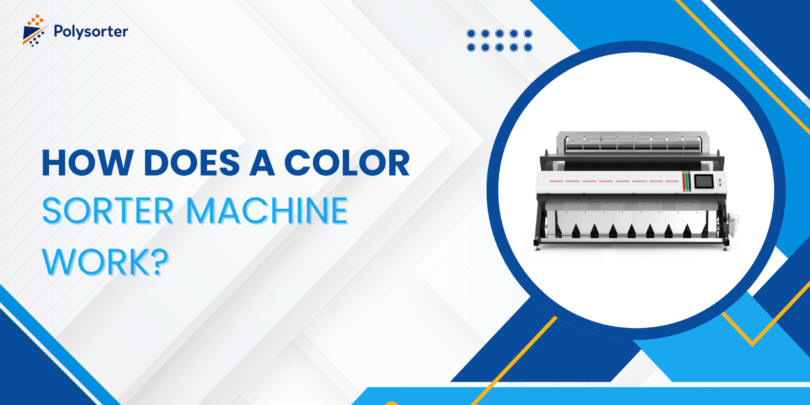
A color sorter machine separates materials by examining their visible characteristics and removing items that do not meet preset quality standards. During operation, the machine controls the material flow, illuminates each particle, captures optical information, processes the resulting signals, and activates high-speed ejectors to divide accepted and rejected materials.
However, the answer to “How does a color sorter machine work?” involves more than a camera finding an unusual color. Reliable sorting requires stable feeding, controlled illumination, accurate classification, precise target tracking, and correctly timed air ejection. A weakness at any stage can reduce final purity or cause the unnecessary loss of acceptable material.
Understanding this complete process helps buyers compare color sorting machines according to actual performance rather than isolated specifications.
What Does a Color Sorter Machine Detect?
A color sorter classifies individual particles according to detectable optical differences. Depending on its feeding structure and sensor configuration, it can process plastic flakes, grains, beans, seeds, minerals, and other free-flowing materials.
Common sorting criteria include:
- Overall color and color shade
- Brightness differences
- Discoloration and dark spots
- Surface marks and visible contamination
- Particle shape or size
- Transparent and opaque appearance
- Other recognizable surface characteristics
The operator creates a sorting recipe that defines acceptable and unwanted material. Therefore, the machine does not simply remove every particle that looks “different.” Instead, it compares each target with the selected criteria and decides whether that target should remain in the product stream.
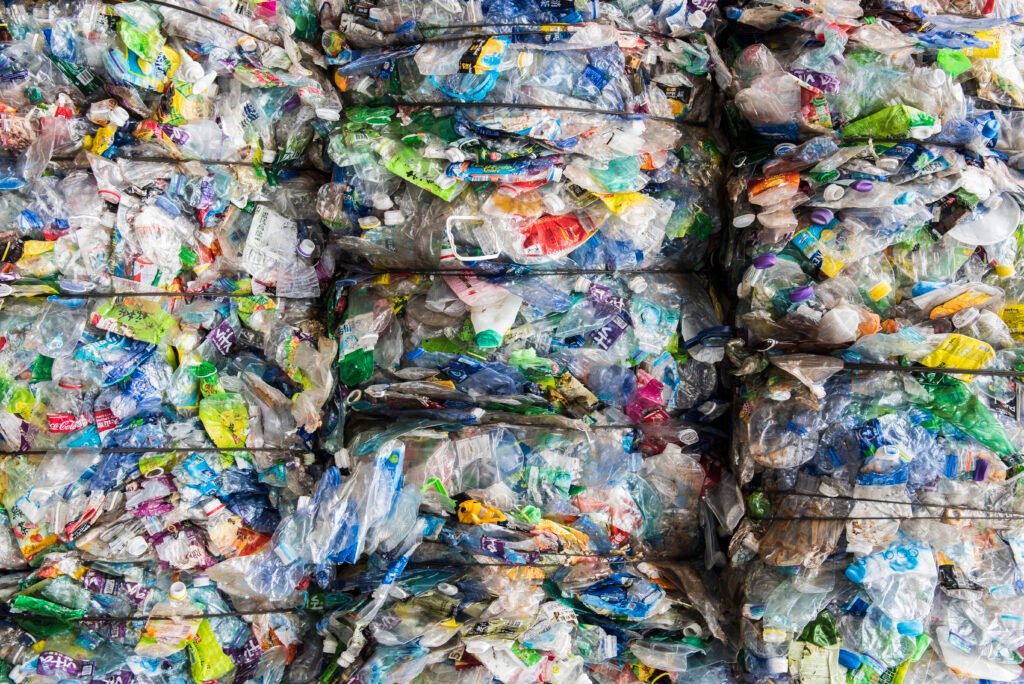
For example, a recycling plant may configure a color sorter to remove blue, green, yellow, black, or opaque flakes from clear PET flakes. A grain processor may use the same basic sorting principle to reject discolored kernels, visible mold damage, stones, or foreign matter.
Modern machines may combine full-color imaging, shape analysis, intelligent algorithms, and several optical channels. However, buyers should distinguish visible-light color sorting from technologies designed to identify material composition.
A color sorter mainly answers:
“What does this particle look like?”
An NIR sorter analyzes characteristic spectral responses and is better suited to answering:
“What material is this particle made from?”
This difference is important in plastic recycling. Color sorting can separate visibly different flakes, while NIR technology may be required when two polymers look similar but have different chemical compositions.
How Does a Color Sorter Machine Work Step by Step?
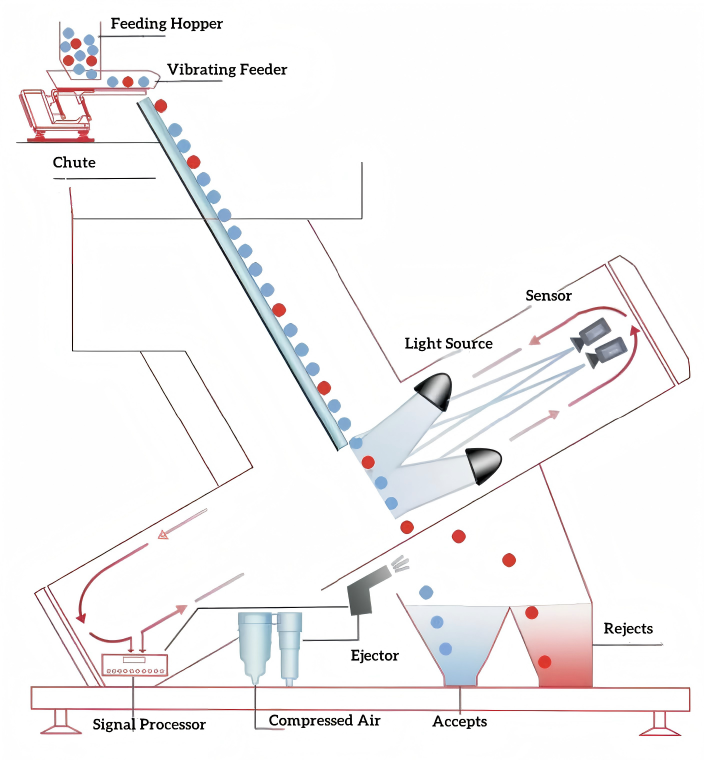
The complete process can be summarized as:
Feed → Distribute → Present → Inspect → Analyze → Decide → Eject → Collect
Although these actions occur in fractions of a second, each stage contributes to the final result.
1. Material Enters the Feeding Hopper
Unsorted material first enters the feeding hopper. The hopper temporarily stores the product and supplies it to the machine at a controlled rate.
A stable supply prevents sudden surges from overloading the inspection area. Before sorting, the material may also require screening, crushing, washing, drying, or dust removal. The exact preparation method depends on the application.
Good preparation makes individual defects easier to detect. Heavy dust, excessive moisture, and a very wide particle-size range can create unstable flow and reduce optical contrast.
2. The Vibrating Feeder Distributes the Material
The vibrating feeder transfers material from the hopper toward the chute or belt. Controlled vibration spreads the product and creates a more even layer.
This stage directly affects sorting quality. Optical sensors need a clear view of individual particles. When pieces overlap, a contaminant may remain hidden. The ejector may also remove acceptable pieces located beside the actual target.
Stable feeding therefore supports both purity and recovery. Even a sophisticated inspection system cannot deliver consistent results if the incoming material layer is too dense or irregular.
3. The Chute or Belt Presents the Material
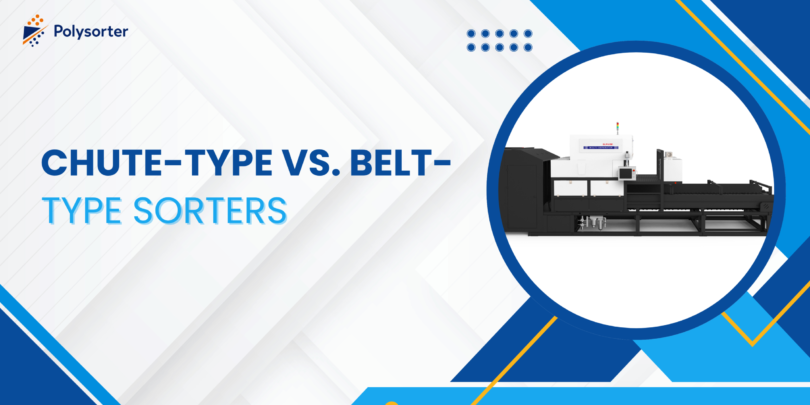
In a chute-type sorter, gravity accelerates the material along smooth channels. The particles leave the chute and pass through the inspection area in a predictable trajectory.
Chute systems usually suit dry, free-flowing materials with a reasonably consistent size range. Common applications include plastic flakes, grains, seeds, beans, and small mineral particles.
A belt-type sorter carries material through the inspection area on a conveyor. This structure can be more suitable for large, wet, fragile, heavy, or irregularly shaped pieces that do not flow consistently through chutes.
The correct structure depends on material behavior, particle size, moisture, required capacity, and the defects that must be removed. Neither feeding method is ideal for every application.
4. Controlled Light Illuminates the Material
When particles enter the inspection zone, controlled light sources illuminate their surfaces. Stable lighting allows the optical system to detect differences in color, shade, brightness, transparency, and surface condition.
Industrial color sorters also use calibrated optical backgrounds. The background creates contrast between the material and the inspection area, helping the sensors recognize subtle differences. A setting suitable for dark particles may not provide enough contrast for pale, reflective, or transparent materials.
Lighting, background selection, and camera exposure must therefore work together. When the processed material changes, operators may need to recalibrate these settings instead of using the same recipe for every product.
5. Optical Sensors Capture Material Information
High-speed optical sensors inspect the moving particles. Depending on the machine configuration, the system may use full-color cameras, CCD or CMOS imaging components, or other optical detection technologies.
The sensors record the position and visible features of each target. Systems that inspect material from more than one direction can reduce blind areas and detect defects that appear on only one side.
Camera resolution is important, but it does not determine performance by itself. Effective detection also depends on lighting, field of view, material speed, calibration, software, and the size of the target defect.
6. The Signal Processor Classifies Each Target
The signal processor compares captured information with the programmed sorting criteria. These criteria may cover permitted color ranges, unwanted shades, minimum defect sizes, shape limits, transparency, or several visual characteristics at the same time.
Advanced color sorters may use AI-assisted or deep-learning recognition to distinguish subtle variations, irregular spots, and complex foreign objects. Instead of relying on one fixed color threshold, intelligent algorithms can evaluate color, shape, area, texture, and edge characteristics together.
However, AI does not replace good material preparation or calibration. Recognition still depends on representative samples, stable feeding, suitable lighting, and clear optical differences. An algorithm cannot reliably classify a defect that the installed sensor cannot see.
Sorting sensitivity also requires balance. A setting that is too low may allow defects into the accepted stream. An overly aggressive setting may reject acceptable material and reduce product recovery.
7. The System Tracks the Rejected Particle
After identifying an unwanted particle, the machine must calculate when and where it will reach the ejection zone.
The processor connects the inspection result to the appropriate ejector position. Because the material continues moving after inspection, the system must account for its speed and trajectory.
Accurate detection alone is therefore not enough. The machine must also activate the correct ejector at precisely the right moment.
8. Compressed Air Ejects the Target
When the unwanted particle reaches the ejection zone, the controller activates a high-speed valve. A short pulse of compressed air changes the target’s trajectory and directs it into the reject outlet. Acceptable material continues along its normal path into the accept outlet.
Valve response, nozzle position, air stability, material speed, and processor timing all influence the result. If the air pulse arrives too early or too late, the contaminant may remain in the product or acceptable material may be removed with it.
The compressed-air system must meet the pressure, flow, cleanliness, and dryness requirements of the selected machine. Unstable pressure can weaken ejection, while moisture, oil, and particles in the air line may reduce valve life and sorting consistency.
What Can a Modern Color Sorter Remove?
A properly configured color sorter can remove many visible defects and contaminants. Its actual capability depends on optical contrast, particle size, defect size, feed density, and sensor configuration.
In plastic recycling, typical applications include:
- Removing colored flakes from a clear flake stream
- Dividing mixed colors into separate grades
- Rejecting black, burnt, aged, or discolored pieces
- Separating opaque material from transparent flakes
- Detecting visible labels, residues, and foreign particles
- Improving color consistency before extrusion or pelletizing
In agricultural processing, a color sorter may reject:
- Discolored or weathered kernels
- Visibly mold-damaged material
- Insect-damaged grains
- Dark spots and surface defects
- Broken or malformed particles
- Stones and visually distinct foreign matter
Mineral processors may use visible differences in color, brightness, texture, or surface patterns to separate ore particles from unwanted material.
However, no color sorter can identify every contaminant. If accepted and rejected materials look almost identical under visible light, another sensing technology may be necessary. NIR, X-ray, or other spectral systems can address characteristics that conventional color imaging cannot distinguish.
Buyers should therefore start by asking whether the target impurity produces a detectable optical difference. Physical sample testing provides a more reliable answer than photos or general product descriptions.
What Determines Color Sorting Performance?
Manufacturers may describe performance with a single purity or accuracy figure. In practice, sorting results depend on several connected conditions.
Incoming Material
Dry, clean, and consistently sized particles are generally easier to inspect. Dust, moisture, heavy contamination, and overlapping pieces can make classification and ejection less reliable.
Defect Visibility and Size
A large particle with a tiny surface spot presents a different challenge from a particle that is entirely discolored. Buyers should confirm whether the machine can detect the relevant defect under realistic production conditions.
Feed Density
A controlled, single-layer flow helps sensors inspect individual particles and allows ejectors to target defects precisely. Increasing the feed rate too far can create overlap, even when the machine has unused nominal capacity.
Sorting Sensitivity
More sensitivity does not always mean better performance. Aggressive rejection may improve product purity while increasing the amount of acceptable material in the reject stream.
Three outcomes should be evaluated together:
- Accepted-product purity
- Recovery of acceptable material
- Processing capacity
Ejection Performance
Fast valves and precise timing help remove the correct target without disturbing too many surrounding particles. Worn or blocked ejectors can reduce performance even when the optical system identifies defects correctly.
Number of Sorting Passes
Some products reach the required quality in one pass. More demanding applications may require a second pass or separate recovery of usable material from the reject stream.
Multiple passes can improve purity or recovery, but they also affect overall capacity, compressed-air consumption, energy use, and production-line design.
For meaningful comparison, buyers should evaluate machines under similar test conditions. The test should record incoming contamination, accepted-stream purity, reject composition, good-material loss, and hourly throughput.
How to Choose the Right Color Sorter Machine
The best machine is not automatically the model with the highest camera resolution or largest published capacity. It is the system that can meet the required purity and recovery targets with the buyer’s actual material.
Before selecting equipment, define the following information.
Material Type and Particle Size
Specify the material, particle-size range, shape, bulk density, moisture level, and surface condition. These characteristics determine whether a chute or belt structure is more suitable.
Target Defects
List the exact colors, impurities, and surface defects that must be removed. Representative samples are more useful than broad requests such as “remove all bad material.”
Detectable Difference
Confirm whether the difference is visible or related to material composition. A color sorter may be suitable for visible variation, while NIR or another sensor may be necessary for chemically different materials with a similar appearance.
Required Purity and Recovery
Define measurable quality targets. Buyers should state both the desired accepted-product purity and the maximum acceptable loss of good material.
Production Capacity
Published capacity ranges may change according to particle size, contamination, feed density, and quality requirements. Ask whether the stated capacity applies to your actual material and target purity.
Sample Testing and Technical Support
A representative test allows buyers to inspect the accepted and rejected fractions before making a decision. It also helps the supplier select the feeding structure, optical configuration, software recipe, and machine capacity.
After installation, operator training, recipe adjustment, cleaning, calibration, spare parts, and valve maintenance will influence long-term performance. These services should be considered alongside the initial equipment price.
Frequently Asked Questions About Color Sorter Machines
How accurate is a color sorter machine?
Accuracy depends on material condition, optical contrast, defect size, feed density, contamination level, and machine settings. Any performance percentage should include defined test conditions. Final purity and acceptable-material recovery should always be measured together.
Can a color sorter detect characteristics other than color?
Yes. Depending on its sensors and software, a machine may analyze brightness, shape, size, transparency, dark spots, and surface patterns. Capabilities vary between configurations.
What is the difference between a color sorter and an NIR sorter?
A color sorter classifies visible characteristics. An NIR sorter analyzes spectral responses associated with material composition. In plastic recycling, color sorting separates visibly different flakes, while NIR sorting can distinguish different polymer types that may look similar.
Can one machine sort different materials?
Some machines can store multiple recipes and process several materials within their supported size and feeding range. Operators must select the correct recipe and adjust the feeding, lighting, background, and sensitivity for each product.
What affects color sorter capacity?
Capacity depends on particle size, bulk density, material flow, contamination level, target purity, moisture, and the number of sorting passes. It should be confirmed through representative material testing.
Does a color sorter require compressed air?
Most ejector-based color sorters require clean, dry, and stable compressed air. The exact pressure and flow requirements depend on the machine configuration and should follow the manufacturer’s technical specifications.
Conclusion: Turning Optical Detection into Precise Separation
So, how does a color sorter machine work? It controls the material flow, inspects individual particles, compares their visible characteristics with programmed standards, tracks unwanted targets, and activates precisely timed air ejectors to separate them.
The sensor is only one part of the system. Consistent results come from the coordination of feeding, illumination, background calibration, signal processing, target tracking, and air ejection.
Buyers should therefore avoid comparing machines through one specification alone. Start with the material, target contaminants, required purity, acceptable product loss, and actual production capacity. Then verify the result through sample testing.
Send PolySorter your material description, particle-size range, target defects, capacity requirement, photos, or representative samples. Our team can evaluate the sorting task and recommend a color sorter configuration based on your processing needs.