Black plastic is one of the most difficult materials in modern recycling streams. While optical sorting technologies have dramatically improved the recovery of PET, HDPE, PP, and engineering plastics, black materials continue to present unique challenges. Many recycling facilities discover that even advanced sorting equipment struggles to identify certain black plastic items accurately.
This raises an important question: Can a NIR sorting machine sort black plastics? The answer is yes—but with limitations, specialized technologies, and increasingly sophisticated solutions. Understanding the role of carbon black is key to understanding why black plastic sorting remains one of the industry’s most discussed topics.
Why Black Plastic Sorting Is Difficult
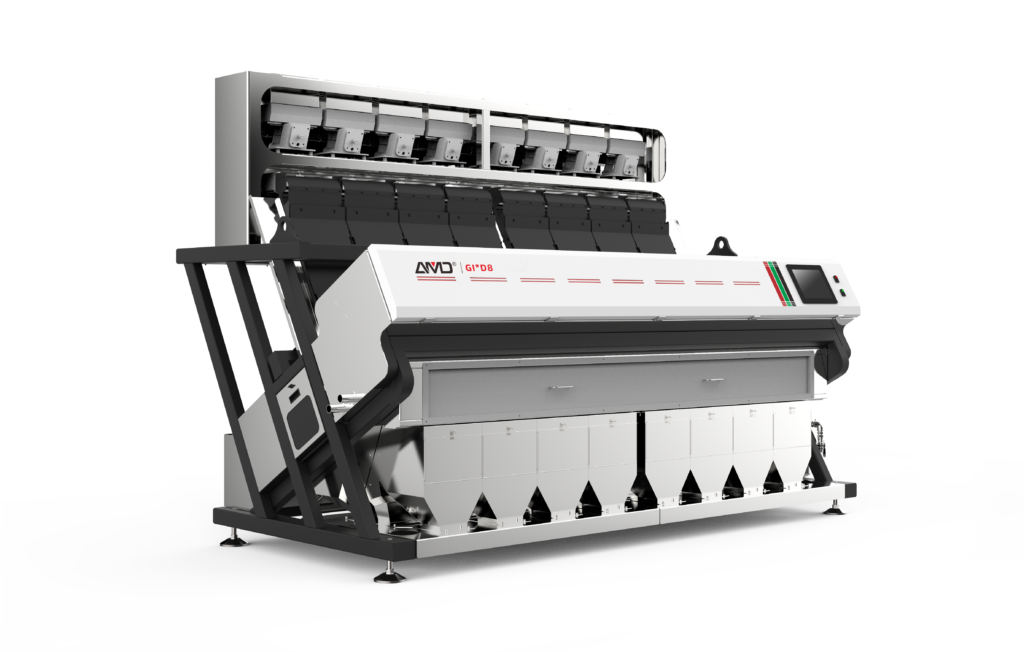
Most modern recycling facilities rely on a NIR sorting machine (Near-Infrared sorting machine) to identify different polymer types. NIR technology works by shining near-infrared light onto plastic materials and analyzing the reflected spectral signature. Each polymer reflects NIR light differently, allowing the system to distinguish PET from HDPE, PP, PVC, ABS, and many other plastics.
The problem begins when black pigments enter the equation.
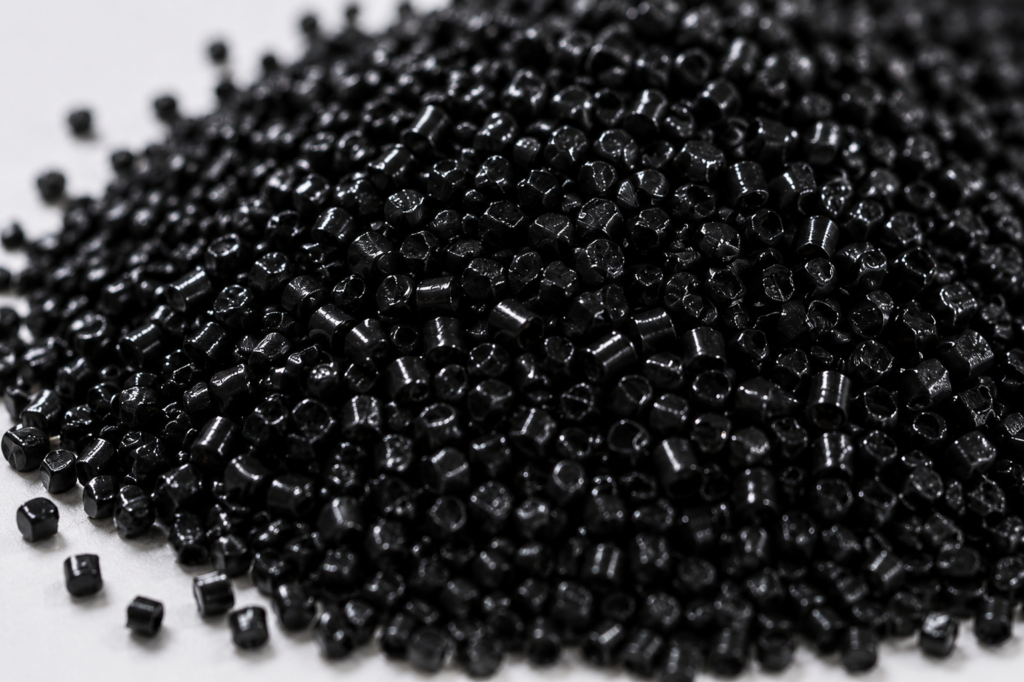
Traditional black plastics often contain carbon black, a pigment widely used because it provides deep color, UV resistance, electrical conductivity, and low manufacturing cost. However, carbon black also absorbs a broad range of electromagnetic wavelengths, including visible light, near-infrared (NIR), and much of the short-wave infrared (SWIR) spectrum. This absorption prevents conventional optical sensors from capturing the spectral signatures needed for accurate polymer identification, creating one of the most persistent challenges in black plastic recycling.
As a result, when a NIR sensor shines light onto a carbon-black-containing plastic item, very little infrared energy is reflected back to the detector. The sensor receives insufficient spectral information to determine the polymer type accurately.
In simple terms:
- Standard plastics reflect NIR light.
- Carbon black absorbs NIR light.
- No reflection means no reliable polymer identification.
This is one of the most significant plastic recycling challenges facing material recovery facilities today.
How Carbon Black Affects Polymer Detection
The challenge is not the plastic itself. PET, PP, HDPE, ABS, and PS all have unique spectral fingerprints that NIR systems can recognize.
The issue is that carbon black effectively hides those fingerprints.
Imagine trying to identify a person in a completely dark room. The person is still there, but the camera cannot collect enough information to recognize them. The same principle applies to NIR-based polymer detection.
Black plastic packaging can include:
- Food trays
- Cosmetic containers
- Automotive components
- Electronic housings
- Consumer product packaging
Many of these products contain valuable recyclable polymers. However, without sufficient spectral data, conventional NIR sorters may classify them as “unknown” materials or reject them entirely.
To address these issues, organizations like The Association of Plastic Recyclers (APR) have established testing protocols to evaluate the NIR sorting potential of packaging.
For years, this limitation resulted in large volumes of black plastics being diverted to landfill, incineration, or lower-value recovery streams.
Can a NIR Sorting Machine Sort Black Plastics?
The short answer is: sometimes.
Not all black plastics are created equal.
In recent years, masterbatch manufacturers have introduced alternative black pigments specifically designed to be detectable by NIR systems. These pigments provide a black appearance while allowing sufficient infrared reflection for polymer recognition.
This shift is heavily supported by global initiatives, such as WRAP’s black plastic packaging guidelines, which encourage the transition away from traditional carbon black pigments.
When recyclable packaging uses NIR-detectable black pigments, modern NIR sorting systems can successfully identify and separate the material.
However, many post-consumer waste streams still contain traditional carbon-black formulations. These materials remain difficult for conventional NIR sensors to classify reliably.
For recycling operators, the reality is that standard NIR technology alone often struggles to achieve high recovery rates when processing streams containing significant quantities of carbon-black plastics. This is why equipment manufacturers continue developing complementary technologies to improve identification performance.
Advanced Solutions for Black Plastic Sorting
The recycling industry has made significant progress in overcoming carbon black limitations. Several technologies now offer practical workarounds.
1. SWIR Technology
Some recycling equipment manufacturers have explored SWIR (Short-Wave Infrared) technology as a way to improve black plastic detection. Because SWIR operates at slightly different wavelengths than conventional NIR systems, it can sometimes recover additional spectral information from dark-colored materials.
However, traditional carbon-black plastics still absorb a significant portion of SWIR wavelengths. While SWIR may improve identification rates for certain applications, it is generally not considered a complete solution for heavily carbon-black-loaded plastics. As a result, many advanced sorting systems combine SWIR with additional sensing technologies.
2. MWIR and Hyperspectral Imaging
While near-infrared (NIR) and short-wave infrared (SWIR) wavelengths are heavily absorbed by carbon black, Mid-Wave Infrared (MWIR, 3–5 μm) systems operate in a different spectral band.
At these longer wavelengths, the absorption effect of carbon black decreases significantly, allowing the fundamental molecular signatures of different polymers to become more visible. Hyperspectral imaging systems operating in the MWIR range can distinguish between materials such as HDPE, LDPE, PET, PP, and PS, even when they contain substantial amounts of carbon black.
Although MWIR technology is currently more expensive than conventional NIR systems, it offers promising possibilities for future black plastic sorting applications where high material purity is required.
3. AI Vision Systems
Artificial intelligence is transforming black plastic sorting.
Instead of relying solely on spectral signatures, AI-powered vision systems analyze:
- Shape and geometry
- Texture and surface characteristics
- Product branding and packaging features
- Historical classification patterns
While AI vision cannot directly identify the chemical composition of a polymer, it can infer likely material types by recognizing specific products and packaging formats. For example, the system may learn that certain black food trays are typically manufactured from PP.
When combined with traditional optical sensors in a multi-sensor platform, machine learning algorithms significantly improve sorting accuracy and recovery performance.
4. Raman Spectroscopy
Raman spectroscopy is a powerful laser-based detection technology that provides an alternative approach to polymer identification.
The technology works by directing a monochromatic laser at the plastic surface and measuring the unique scattering pattern generated by the material. Unlike traditional NIR reflection methods, advanced Raman systems can sometimes overcome the challenges created by carbon black by using specialized laser wavelengths.
This makes Raman spectroscopy particularly useful for identifying complex engineering plastics, including ABS, PS, and PC/ABS blends found in automotive and electronic waste streams.
As laser hardware continues to improve, Raman-based systems are becoming increasingly attractive for high-value plastic recycling applications.
How PolySorter Approaches Black Plastic Sorting
At PolySorter, we recognize that no single sensor technology can solve every black plastic sorting challenge.
Material composition, contamination levels, particle size, moisture content, and throughput requirements all influence sorting performance. For this reason, relying on a single detection method is rarely the most effective strategy.
Modern sorting platforms increasingly combine multiple sensing technologies, including:
- NIR polymer recognition
- High-resolution optical imaging
- AI-powered visual analysis
- Hyperspectral imaging
- Advanced data fusion algorithms
By integrating multiple sources of information, recycling facilities can improve recovery rates, reduce false rejects, and maximize the value of difficult waste streams containing dark-colored or carbon-black plastics.
For processors seeking higher-purity recycled materials, selecting the right combination of detection technologies is often more important than selecting a single sensor type.
The Future of Black Plastic Recycling
The good news is that black plastic recycling is improving rapidly.
Brand owners are increasingly adopting NIR-detectable pigments. Packaging regulations are encouraging recyclability-focused design. At the same time, sensor manufacturers continue advancing MWIR, AI vision, Raman spectroscopy, and other innovative technologies to make them more accessible and cost-effective.
As these developments converge, black plastics that were once considered difficult or impossible to recover are becoming increasingly valuable resources within the circular economy.
The future of black plastic sorting will not depend on one sensor alone. Instead, success will come from intelligent combinations of NIR sorting machines, hyperspectral imaging, AI vision, and advanced spectroscopy working together to maximize material recovery and improve recycling economics.
Facilities that can efficiently sort black plastics, improve polymer detection, and recover valuable materials from challenging waste streams will gain a significant competitive advantage as demand for high-quality recycled plastics continues to grow.
FAQs
Can NIR detect all black plastics?
No. Traditional carbon-black plastics absorb most NIR wavelengths, making polymer identification difficult. However, some modern black packaging uses NIR-detectable pigments that allow successful sorting.
Why is carbon black a problem for plastic recycling?
Carbon black absorbs infrared light that sorting machines use to identify polymer types. Without sufficient reflected light, the system cannot reliably determine the material composition.
What technologies can identify black plastics?
Advanced solutions include SWIR sensors, MWIR hyperspectral imaging, AI vision systems, Raman spectroscopy, and multi-sensor sorting platforms.
Can AI sort black plastics without NIR?
AI can improve recognition by analyzing object shape, texture, and packaging characteristics, but it is generally most effective when combined with polymer detection technologies.
What is the future of black plastic sorting?
The future lies in combining multiple technologies—including NIR, AI vision, hyperspectral imaging, and advanced spectroscopy—to improve recovery rates and enable more efficient black plastic recycling.