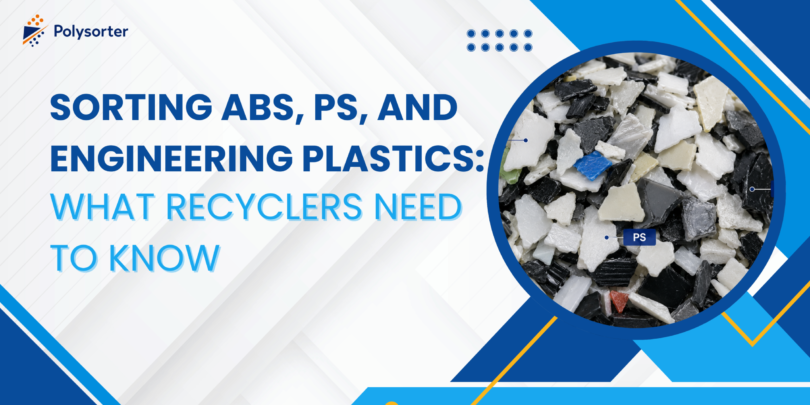
As global demand for recycled engineering plastics continues to rise, recyclers are moving beyond traditional PET and HDPE recovery into more complex material streams. Electronic waste, appliance scrap, automotive plastics, and mixed industrial waste contain valuable polymers such as ABS, PS, HIPS, PC, and PA. However, these materials present significantly greater sorting challenges than beverage bottles or packaging plastics [1].
For recyclers seeking to improve material value and meet increasingly strict buyer specifications, investing in advanced ABS plastic sorting systems has become an important step toward producing high-purity engineering plastic fractions. Modern sensor-based sorting systems increasingly combine Near-Infrared (NIR) spectroscopy and AI-powered vision technologies to address these challenges and unlock new opportunities in engineering plastic recycling.
Why ABS and PS Are More Difficult to Sort Than PET and HDPE
PET and HDPE recycling streams are relatively mature. Their distinct chemical structures create clear NIR spectral signatures, making identification straightforward for most optical sorting systems.
ABS (Acrylonitrile Butadiene Styrene) and PS (Polystyrene), however, create a more difficult sorting environment for several reasons.
Similar NIR Spectral Characteristics
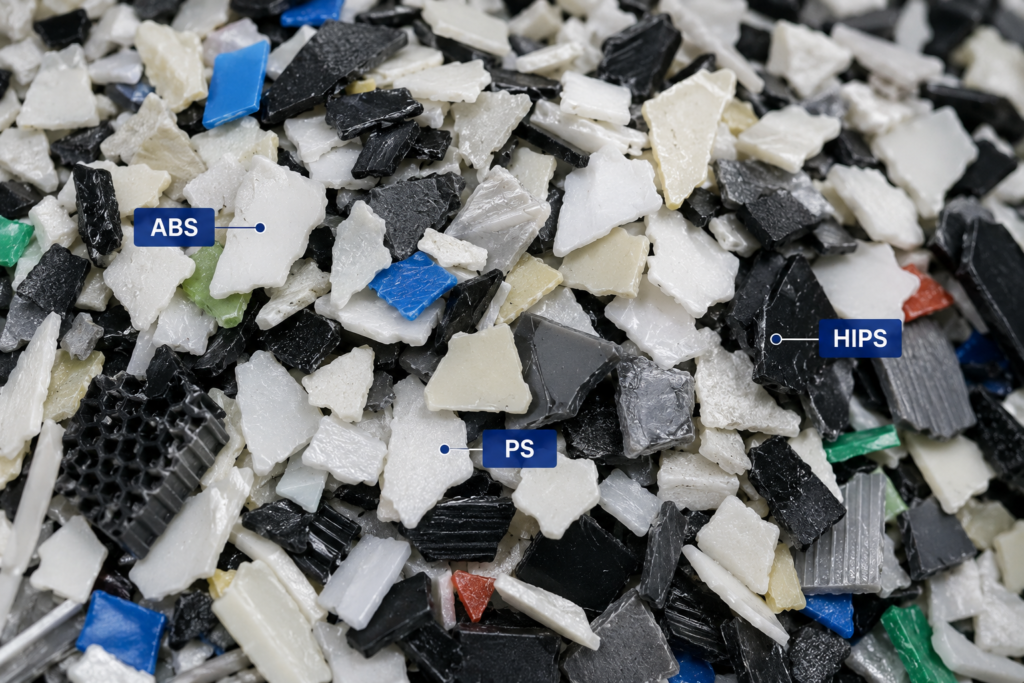
One of the primary challenges is the spectral similarity among ABS, PS, and HIPS (High Impact Polystyrene). Because HIPS is polystyrene modified with polybutadiene rubber, both ABS and HIPS share styrene and butadiene monomer structures. This chemical overlap results in highly similar NIR spectral profiles.
Without advanced spectral analysis and machine learning algorithms, conventional optical sorters often struggle to distinguish between these materials consistently. This challenge becomes even more significant when recyclers process mixed streams from electronics and appliance recycling operations.
Density Overlap
Density separation is commonly used in plastic recycling, but ABS and PS have overlapping density ranges:
- PS: approximately 1.04–1.06 g/cm³
- HIPS: approximately 1.03–1.08 g/cm³
- ABS: approximately 1.03–1.08 g/cm³
Because these materials float and sink similarly in standard sink-float separation processes, density-based systems alone cannot achieve the purity levels required by modern end-users.
Dark and Black Plastics
Electronic housings, appliance casings, and automotive interior components frequently contain black ABS and HIPS compounds.
Traditional black pigments typically contain carbon black, which absorbs almost all NIR radiation. This prevents the sensor from receiving a usable reflectance spectrum, rendering standard optical sorting equipment ineffective for these fractions.
While newer sensor technologies can improve identification rates, dark engineering plastics remain one of the most technically challenging fractions in recycling operations. This is one reason why advanced ABS plastic sorting systems increasingly incorporate multiple sensing technologies rather than relying solely on conventional NIR detection.
Where Recycled ABS, PS, and HIPS Are Used
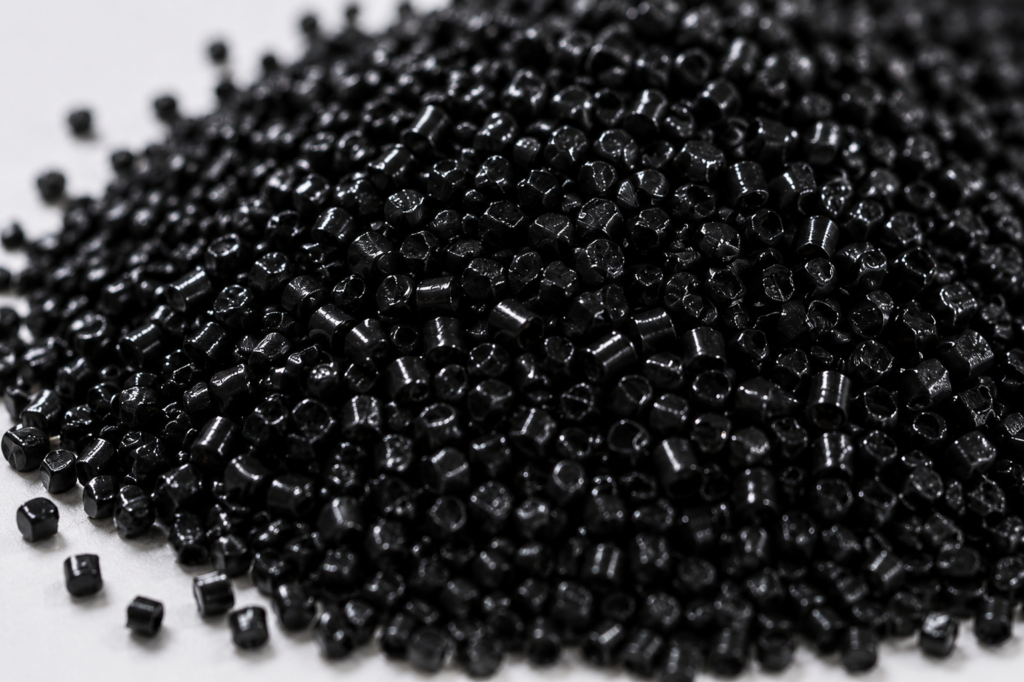
Despite the sorting challenges, recycled ABS and PS command strong demand in several industries.
Automotive Applications
Automotive manufacturers increasingly incorporate recycled ABS into:
- Interior trim components
- Dashboard structures
- Glove box assemblies
- Air duct systems
- Non-structural exterior parts
Because automotive suppliers require consistent mechanical properties, contamination from other polymers can significantly reduce mechanical performance and the material’s market value.
Electronics Manufacturing
Recycled ABS remains one of the most important materials recovered from waste electrical and electronic equipment (WEEE).
Applications include:
- Printer housings
- Computer accessories
- Small appliance components
- Consumer electronics enclosures
Many manufacturers now incorporate post-consumer recycled content to meet sustainability targets while reducing virgin resin consumption.
White Goods Industry
Refrigerators, washing machines, air conditioners, and other household appliances contain significant quantities of ABS and HIPS.
White goods manufacturers often purchase recycled engineering plastics for:
- Internal structural components
- Rear covers
- Control panel housings
- Non-visible molded parts
This sector has become one of the fastest-growing markets for high-quality recycled engineering plastics.
Growing Demand for Recycled HIPS
Recycled HIPS is widely used in refrigerator liners, appliance housings, signage products, display panels, and consumer goods. As manufacturers increase recycled-content targets, HIPS has become one of the most valuable styrenic fractions recovered from e-waste and white goods streams.
The growing demand for HIPS further strengthens the business case for investing in advanced engineering plastic recycling technologies capable of separating ABS, PS, and HIPS into individual high-value streams.
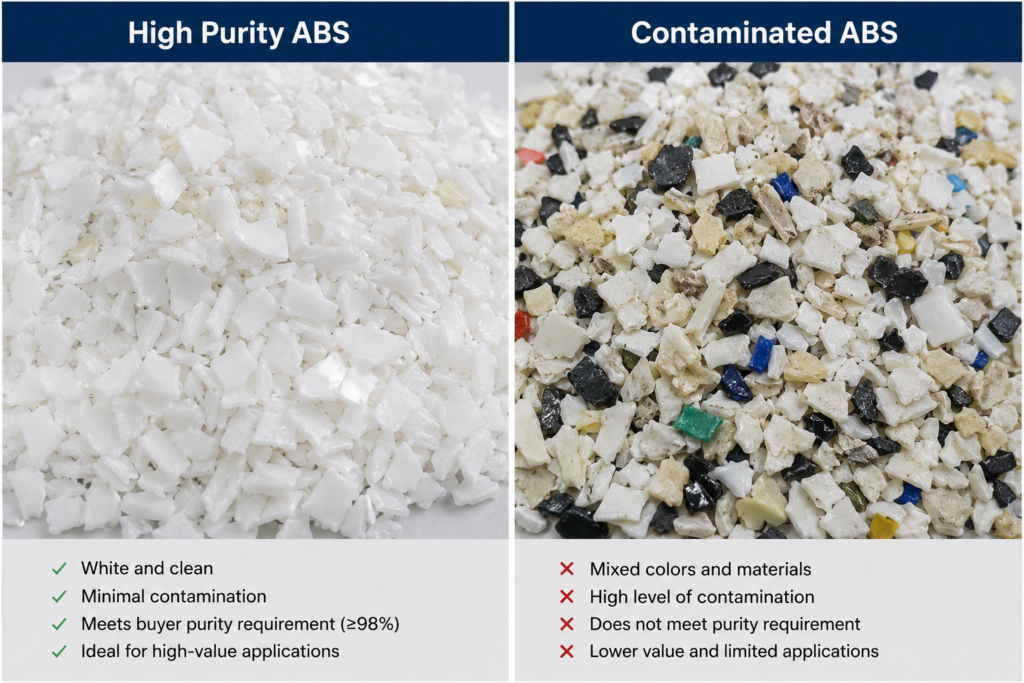
What Purity Levels Do Buyers Require?
Engineering plastic buyers generally maintain stricter specifications than buyers of commodity plastics.
| Material | Typical Buyer Requirement |
| Recycled ABS | 95–99% Purity |
| Automotive-Grade ABS | 98–99%+ Purity |
| Recycled PS | 95–98% Purity |
| HIPS Regrind | 95–98% Purity |
| Engineering Plastic Compounds (e.g., PC/ABS) | Often above 98% Purity |
Even small amounts of contamination can create significant processing problems. For example:
- PS contamination in ABS can reduce impact resistance.
- ABS contamination in PS can affect melt flow characteristics.
- PVC contamination can cause thermal degradation and corrosive gas emissions during extrusion.
- Mixed engineering plastics can produce inconsistent molding performance.
As a result, many recyclers now target 98%+ purity levels to access premium markets and secure long-term supply contracts.
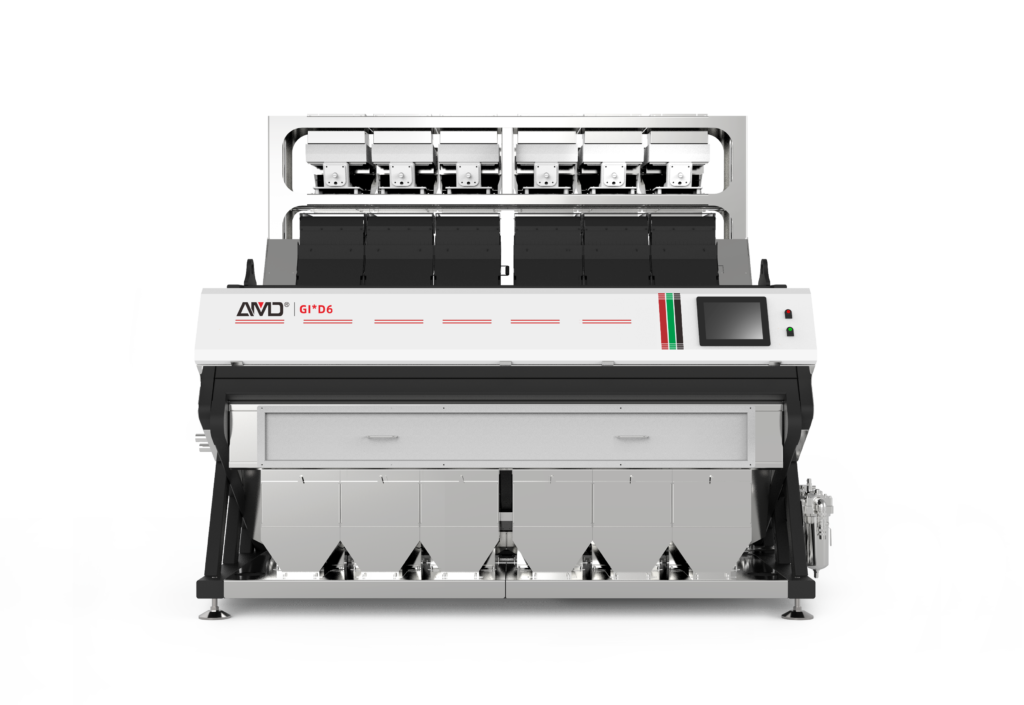
NIR Sorting of ABS and PS: Why Sensor Quality Matters
Modern NIR sorting systems for ABS and PS analyze reflected near-infrared wavelengths from individual plastic particles moving on high-speed conveyors. The process typically follows four steps:
1. Material Presentation
Shredded plastics are evenly distributed into a single layer using vibratory feeders and acceleration conveyors to prevent overlapping and ensure accurate detection.
2. Spectral Identification
NIR sensors scan every particle and compare the reflected spectrum against a polymer database. Modern polymer sorters can identify a wide range of materials simultaneously, including:
- Styrenics: ABS, PS, HIPS
- Engineering plastics: PC, PA, PMMA
- Commodity plastics: PET, PP
A high-performance ABS plastic sorting machine can rapidly classify thousands of particles per second while maintaining high sorting accuracy.
3. AI-Based Classification
Artificial intelligence algorithms analyze additional information beyond spectral data, including:
- Surface texture and gloss characteristics
- Shape and particle morphology
- Color distribution
- Fragment geometry
- Reflectivity patterns
This additional layer of analysis significantly improves separation accuracy when materials exhibit highly similar NIR signatures.
4. High-Speed Ejection
Compressed-air valves remove target materials with millisecond precision, creating highly purified output streams suitable for downstream extrusion, compounding, and pelletizing operations.
Separating ABS from PS and HIPS with AI Vision
The newest generation of NIR sorting systems for ABS and PS combines NIR sensors with AI vision technology. This hybrid approach is particularly effective when separating:
- ABS from PS
- ABS from HIPS
- HIPS from GPPS (General Purpose Polystyrene)
- Engineering plastics from mixed e-waste streams
While NIR provides chemical identification, AI vision examines visual and physical characteristics that are difficult to detect using spectroscopy alone. Machine learning models trained on millions of plastic particles can recognize subtle differences in:
- Surface finish
- Mold patterns
- Particle geometry
- Reflectivity profiles
- Texture characteristics
This dramatically improves sorting performance in complex recycling environments where traditional optical methods reach their limits.
Real-World Applications in Engineering Plastic Recycling
E-Waste Recycling Lines
Modern e-waste facilities process materials from computers, printers, monitors, televisions, and consumer electronics. After metal recovery, the remaining plastic fractions often contain complex mixtures of ABS, HIPS, PS, PC, and PC/ABS blends.
An advanced ABS plastic sorting machine enables recyclers to produce dedicated, single-polymer streams rather than selling low-value mixed plastics. The result is significantly higher material revenue, improved product consistency, and greater market flexibility. As electronics manufacturers continue increasing recycled-content requirements, demand for highly purified recycled ABS and HIPS is expected to grow further.
White Goods Disassembly Operations
Appliance recycling facilities generate large volumes of engineering plastics from refrigerators, washing machines, dryers, and air conditioners. These streams typically contain substantial quantities of ABS and HIPS.
A dedicated PS sorting system integrated with NIR and AI technologies can separate these materials into clean fractions that meet the quality requirements of compounders and manufacturers. The recovered materials can then be reintroduced into appliance production and other industrial applications. As appliance recycling volumes continue growing worldwide, the ability to recover engineering plastics efficiently is becoming a major competitive advantage.
The Future of Engineering Plastic Recycling
The economics of engineering plastic recycling are improving rapidly. Demand for recycled ABS, PS, and HIPS continues to increase as manufacturers pursue sustainability goals, circular economy initiatives, and recycled-content mandates. At the same time, buyers are demanding higher purity standards, greater traceability, and more consistent material performance.
For recyclers processing e-waste, appliance scrap, or mixed engineering plastic streams, advanced NIR and AI-based sorting systems provide a practical path toward producing premium-grade recycled resins. Facilities that successfully separate ABS from PS and HIPS can access higher-value markets, improve recovery rates, and strengthen their competitive position.
As purity requirements continue to rise, recyclers that invest in advanced ABS plastic sorting technologies will be better positioned to supply premium-grade recycled resins, secure long-term supply agreements, and maximize profitability from modern engineering plastic recycling operations.