As recycling markets become more quality-driven, choosing the right plastic sorting machine has become one of the most important investment decisions a recycling facility can make. Buyers are no longer simply purchasing a machine—they are investing in material purity, operational efficiency, labor reduction, and long-term profitability.
Whether you process PET bottles, HDPE containers, mixed rigid plastics, engineering polymers, or plastic flakes, selecting the wrong sorting technology can result in lower recovery rates, excessive manual labor, and missed revenue opportunities. Modern recycling facilities now have access to a wide range of sensor-based sorting technologies, including optical color sorting, near-infrared (NIR) polymer identification, AI-driven object recognition, and multi-sensor systems designed for increasingly complex waste streams. Sensor-based plastic sorting systems commonly support applications ranging from bottle sorting and flake purification to mixed polymer recovery and pellet inspection.
This guide outlines five critical factors every plant manager should evaluate before purchasing a plastic sorting machine.
1. Start with Your Material Type and Throughput Volume
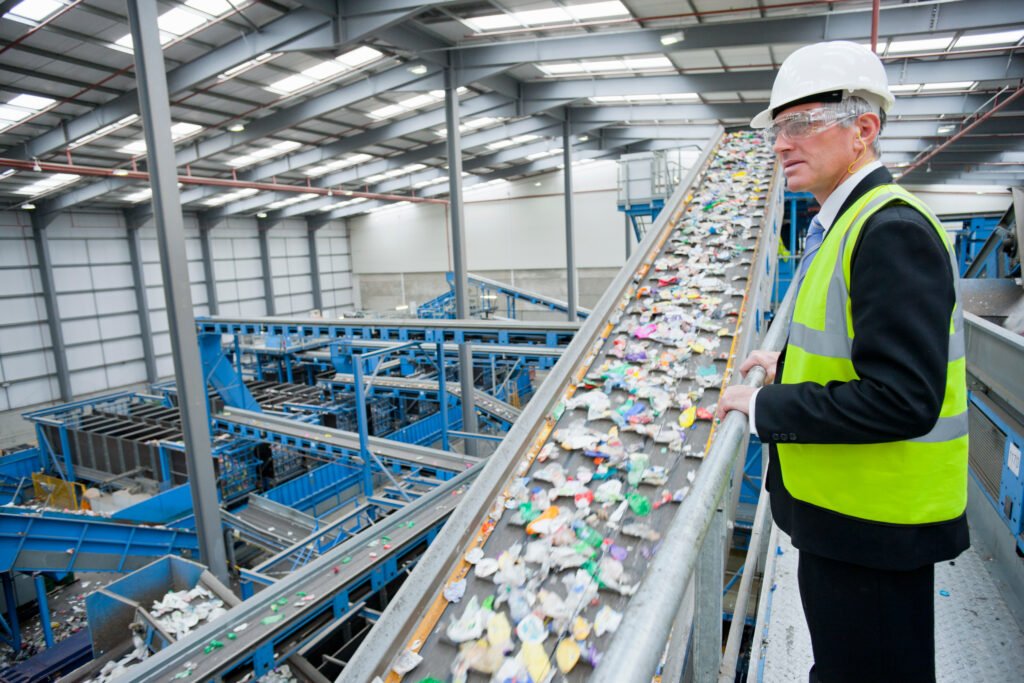
The first step in choosing a sorting machine is understanding exactly what materials enter your recycling line and how much material must be processed each hour.
Different recycling operations handle very different feedstocks:
- PET bottles
- HDPE bottles and containers
- Mixed rigid plastics
- Post-consumer packaging waste
- PET flakes
- Mixed polymer flakes
- Engineering plastics
- Plastic pellets
A machine optimized for PET bottle sorting may not perform efficiently when processing shredded flakes or mixed polymers. For example, bottle sorting systems often focus on object recognition, shape detection, label identification, and polymer classification. Flake sorting systems require higher-resolution detection because contaminants are significantly smaller and more difficult to identify.
Throughput requirements are equally important. Many facilities underestimate future production growth and purchase systems sized only for current capacity. This often creates bottlenecks within a few years.
Before selecting equipment, determine:
- Current hourly throughput
- Projected throughput over the next 3–5 years
- Seasonal volume fluctuations
- Planned expansion projects
- Desired purity specifications
A machine operating constantly at maximum capacity may experience higher wear, reduced sorting accuracy, and increased maintenance costs. Selecting equipment with moderate excess capacity often delivers better long-term performance and flexibility.
The goal is not simply to maximize throughput. The objective is to achieve the highest combination of throughput, purity, and recovery rate.
2. Understand the Difference Between Color Sorting and NIR Sorting
One of the most common mistakes buyers make is assuming all optical sorting machines perform the same task.
In reality, color sorting and NIR sorting solve very different problems.
Color Sorting
Color sorting systems use high-resolution cameras and visible-light imaging to identify materials based on:
- Color
- Brightness
- Surface appearance
- Visual defects
- Foreign color contamination
These systems are highly effective for:
- Clear PET purification
- Color separation of plastic flakes
- Removal of colored contaminants
- Pellet inspection
- Quality control applications
For example, a color sorter can separate:
- Clear PET from blue PET
- White flakes from colored flakes
- Natural HDPE from mixed-color HDPE
However, color sorting cannot reliably distinguish polymers that appear visually identical.
NIR Sorting
Near-Infrared (NIR) technology identifies materials based on their molecular composition rather than appearance.
NIR systems can distinguish:
- PET
- HDPE
- PP
- PVC
- ABS
- PS
- PC
- POM
- PMMA
- Other engineering plastics
Even when two materials share the same color, NIR technology can identify the polymer type and sort accordingly.
This capability becomes critical when producing high-purity recycled resin for demanding end markets such as:
- Food-grade packaging
- Beverage bottles
- Automotive applications
- Consumer products
- Engineering plastic compounds
Which Technology Should You Choose?
If your primary challenge involves color contamination, a color sorting system may be sufficient.
If your operation processes mixed polymer streams, NIR technology is typically essential.
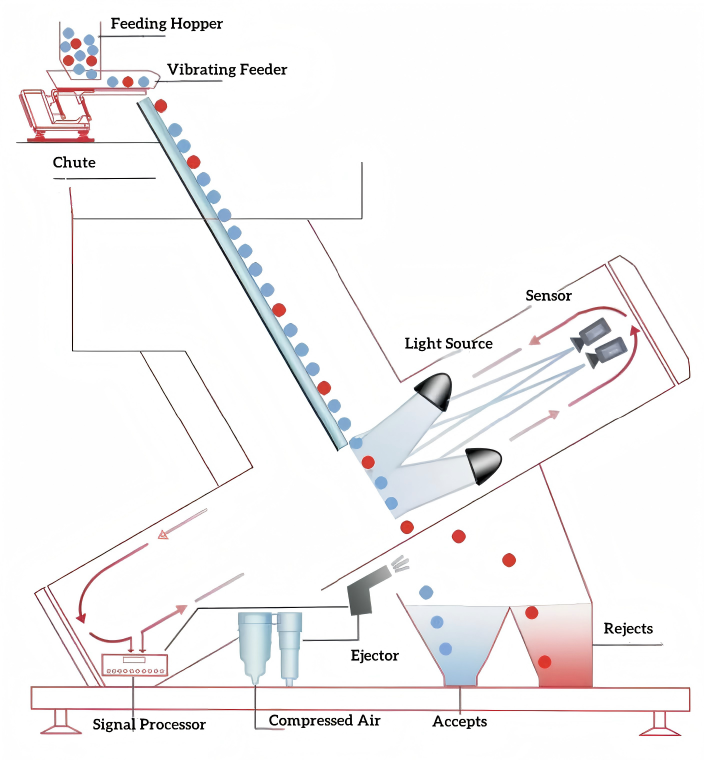
Many advanced recycling plants now deploy both technologies together. Multi-sensor systems combine color recognition, NIR detection, and AI algorithms to maximize purity and recovery rates across complex material streams. Modern sorting platforms increasingly integrate visible-light cameras with NIR sensors and AI-based recognition for this reason.
3. Evaluate Single-Pass vs. Multi-Pass Sorting Setups
Another key purchasing decision involves system configuration.
Should you achieve your target purity in a single pass, or should you design a multi-stage sorting process?
Single-Pass Sorting
Single-pass systems offer:
- Lower capital investment
- Simpler layouts
- Smaller installation footprint
- Easier operation
These systems work well when:
- Feedstock quality is relatively consistent
- Contamination levels are low
- Purity requirements are moderate
For some bottle sorting applications, a single-pass configuration can produce acceptable results while minimizing equipment costs.
Multi-Pass Sorting
Facilities producing premium recycled materials often use multiple sorting stages.
A typical configuration may include:
- Pre-sorting
- Polymer identification
- Color purification
- Final quality inspection
Each stage removes a different category of contamination.
Advantages include:
- Higher purity rates
- Increased contaminant removal
- Better recovery performance
- Reduced customer complaints
- Higher resale value of recycled materials
The tradeoff is higher capital expenditure and greater system complexity.
Making the Right Choice
The decision should be based on product specifications and market requirements.
If customers require ultra-high purity recycled resin, multi-pass systems often provide the most reliable path to achieving consistent quality.
If material is sold into less demanding applications, a well-designed single-pass solution may provide a faster return on investment.
The most successful plants design sorting lines around final product specifications rather than machine specifications alone.
4. Ensure Integration with Existing Equipment
A sorting machine does not operate in isolation.
Its performance depends heavily on upstream and downstream equipment.
Before purchasing any sorter, evaluate how it will integrate with:
- Conveyors
- Feed hoppers
- Shredders
- Granulators
- Wash lines
- Drying systems
- Air classifiers
- Metal separators
- Packaging systems
Poor integration can reduce sorting accuracy regardless of how advanced the sorting technology may be.
For example, inconsistent material presentation often causes detection problems. Overlapping materials, uneven feed distribution, or excessive material depth can significantly reduce sorting efficiency.
When reviewing equipment proposals, ask suppliers:
- What feed conditions are required?
- What material moisture level is acceptable?
- What particle size range is recommended?
- What conveyor speed is supported?
- What compressed air requirements exist?
- What electrical requirements are needed?
- How will the sorter communicate with existing plant controls?
Modern facilities increasingly seek automated integration that allows sorters to exchange data with central plant management systems. This can improve production monitoring, maintenance planning, and operational visibility.
A machine that fits seamlessly into your process often delivers more value than a higher-specification machine that requires major infrastructure changes.
5. Calculate Total Cost of Ownership—Not Just Purchase Price
The lowest-priced machine is rarely the least expensive machine over its lifetime.
Plant managers should evaluate the total cost of ownership (TCO) rather than focusing solely on initial capital expenditure.
Key cost factors include:
Energy Consumption
Sorting systems operate continuously, often across multiple shifts. Small differences in power consumption can create significant long-term operating costs.
Compressed Air Usage
Many sensor-based sorters use air ejectors to remove unwanted materials. Excessive air consumption can become a major operating expense.
Maintenance Requirements
Consider:
- Sensor maintenance
- Camera cleaning
- Valve replacement
- Filter replacement
- Software updates
- Service availability
Labor Savings
Advanced automated sorting often reduces manual inspection and hand-sorting requirements.
Lower labor costs frequently become one of the largest sources of return on investment.
Material Recovery Improvements
Even small increases in recovery rates can generate substantial revenue gains.
For example:
- Higher PET recovery
- Reduced good material loss
- Improved bale quality
- Better flake purity
These improvements often create greater financial benefits than labor savings alone.
Equipment Lifespan
When evaluating competing systems, estimate ownership costs across a 7–10 year period rather than focusing only on the first year.
A more expensive machine that delivers higher recovery rates and lower maintenance costs may generate significantly better long-term profitability.
Need a tailored solution for your plant? [Contact Polysorter’s technical team] to request a free equipment layout design and sorting capacity evaluation!
Final Thoughts
Choosing the right plastic sorting machine requires more than comparing specifications and purchase prices. Successful projects begin with a detailed understanding of material composition, throughput requirements, product quality targets, and future growth plans.
Plant managers should carefully evaluate whether color sorting, NIR sorting, or a multi-sensor solution best matches their feedstock. They should also determine whether single-pass or multi-pass processing aligns with customer purity requirements and ensure that any new sorter integrates efficiently with existing equipment.
Most importantly, decisions should be based on the total cost of ownership and long-term operational performance rather than initial acquisition cost alone.
The right sorting system can improve recovery rates, increase product purity, reduce labor dependence, and create a stronger competitive position in an increasingly demanding recycling market.