For many years, plastic sorting relied heavily on color recognition. Optical sorters used cameras to separate clear PET from blue PET, or white HDPE from colored containers. While this approach worked reasonably well for clean and well-prepared recycling streams, today’s recycling facilities face a very different reality.
Modern waste streams contain compressed bottles, partially crushed containers, dirty plastic flakes, food-contaminated packaging, faded labels, adhesive residues, and mixed polymer materials. In these situations, color becomes only one small piece of the identification puzzle.
This challenge has accelerated the adoption of AI Vision in Plastic Sorting, allowing recycling plants to analyze shape, texture, surface contamination, object geometry, and material characteristics simultaneously. Instead of simply asking, “What color is this object?”, advanced sorting systems ask, “What exactly is this object, and should it remain in the product stream?”
As recycling quality requirements continue to rise, understanding how AI vision handles compressed and dirty plastics has become essential for recycling operators evaluating new sorting technologies.
How AI Vision Goes Beyond Traditional Color Recognition
Traditional optical sorting systems primarily focus on pixel color values. If a bottle appears blue, it enters the blue product stream. If a flake appears green, it enters the green fraction.
However, compressed and contaminated plastics often create false readings.
A crushed PET bottle may appear darker because of shadows. A dirty HDPE container may appear brown because of soil contamination. Labels can cover large portions of a container, making color-based identification unreliable.
Modern AI Vision in Plastic Sorting addresses these limitations through multiple layers of analysis:
Object Shape Recognition
Deep-learning algorithms analyze the overall geometry of an object rather than only its surface color.
For example:
- Crushed PET beverage bottles
- Flattened detergent containers
- Deformed HDPE packaging
- Compressed PP food trays
Even when heavily compressed, the system can identify characteristic structural patterns that remain visible.
Texture Analysis
AI models learn the surface characteristics of different materials.
Examples include:
- Smooth PET bottle surfaces
- Rough detergent containers
- Woven PP materials
- Film plastics with reflective properties
These texture signatures help distinguish materials even when dirt partially obscures the surface.
Context-Based Identification
Instead of evaluating a single pixel, AI evaluates thousands of visual features simultaneously.
This enables the system to recognize an object despite:
- Dust
- Mud
- Labels
- Scratches
- Surface wear
- Printing graphics
The result is significantly higher identification accuracy under real-world recycling conditions.
AI Vision for Identifying Compressed Plastics
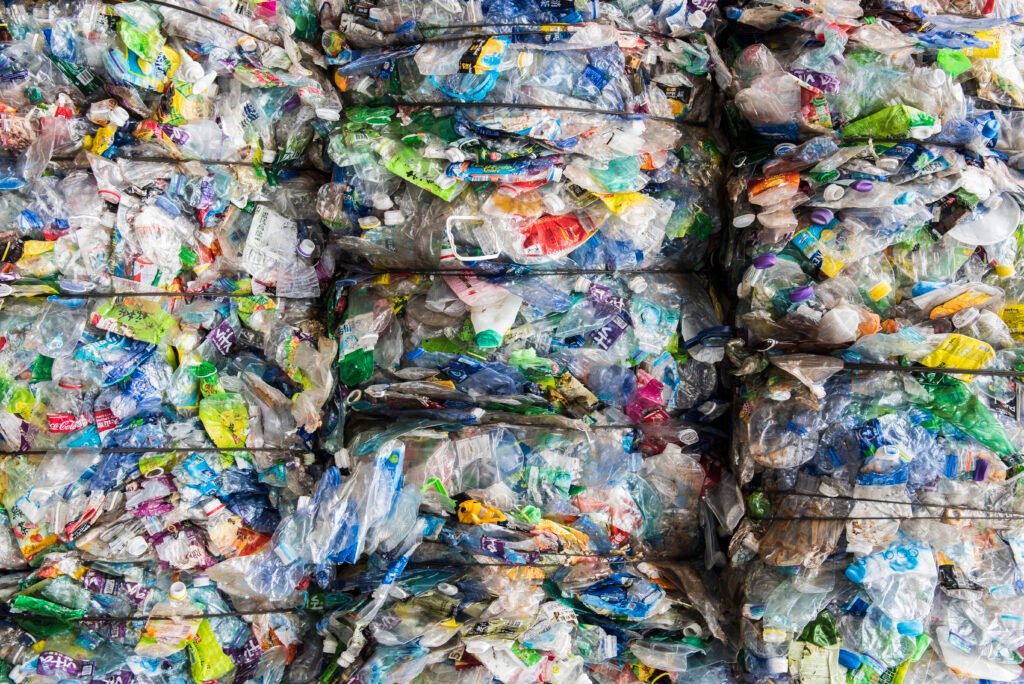
Compressed plastics represent one of the biggest challenges in modern recycling operations.
Transportation and baling processes often deform bottles and containers long before they reach a sorting facility. Traditional systems may struggle because the object’s original shape is no longer visible.
AI Vision in Plastic Sorting solves this problem through deep-learning object recognition.
Instead of searching for a perfect bottle profile, the algorithm compares compressed objects against millions of learned visual patterns.
Recognizing Crushed PET Bottles
A flattened PET bottle may look completely different from an intact bottle.
AI systems evaluate:
- Neck geometry
- Remaining contour structure
- Surface reflection patterns
- Compression characteristics
This allows accurate recognition even when bottles are severely deformed.
Detecting Mixed Compression States
Recycling facilities rarely receive uniformly compressed materials.
A conveyor may contain:
- Fully intact bottles
- Partially crushed containers
- Heavily compacted packaging
- Fragmented plastic pieces
AI-based systems continuously adapt to these variations without requiring manual sorting adjustments.
Reducing Valuable Material Loss
Misidentifying compressed PET as residue can significantly reduce plant profitability.
By accurately recognizing compressed recyclable materials, AI vision helps:
- Increase recovery rates
- Improve product purity
- Reduce waste disposal costs
- Enhance overall plant efficiency
For facilities processing large PET bottle volumes, these improvements can translate into substantial annual revenue gains.
The Role of AI Vision in Detecting Dirty Plastics
Dirty plastics present an even greater challenge than compressed materials.
Plastic containers often arrive with:
- Food residue
- Oil contamination
- Soil and dust
- Beverage remnants
- Adhesive labels
- Glue residues
Traditional optical sorters frequently misclassify these materials because contamination alters their visual appearance.
Separating Dirt from Material Identity
AI systems learn to distinguish between temporary contamination and permanent material characteristics.
For example:
A PET bottle covered with mud still exhibits:
- Specific reflection patterns
- Structural features
- Material signatures
The AI model recognizes these characteristics and classifies the object correctly despite surface contamination.
Improving Sorting Consistency
Manual sorting quality often fluctuates depending on operator fatigue and material complexity.
AI Vision in Plastic Sorting maintains consistent inspection performance throughout continuous operation.
This consistency becomes especially important when processing:
- Municipal solid waste
- Post-consumer plastic streams
- Curbside recycling collections
- Mixed packaging waste
Supporting Higher-Purity Recycled Materials
Recycled plastic buyers increasingly demand higher purity standards.
When dirty plastics are accurately identified and directed into the correct processing stream, facilities can achieve:
- Higher PET purity
- Better HDPE quality
- Improved flake value
- Stronger market competitiveness
This is particularly valuable for food-grade recycling applications.
Combining AI Vision with NIR Technology for Maximum Accuracy
Although AI vision provides powerful object recognition capabilities, the most advanced sorting systems combine AI with Near-Infrared (NIR) technology.
AI answers the question:
“What does this object look like?”
NIR answers:
“What polymer is this object made of?”
When both technologies operate together, recycling facilities gain a more complete understanding of each item on the conveyor.
Examples include:
PET vs PVC Identification
These materials may appear visually similar.
AI recognizes shape and object characteristics.
NIR confirms polymer composition.
The combination dramatically reduces contamination risks.
Dirty Bottle Recognition
AI identifies the object despite contamination.
NIR verifies the underlying polymer through spectral analysis.
Label-Covered Containers
Large labels can obscure visual features.
AI analyzes remaining visible characteristics while NIR detects the actual plastic beneath the label.
This multi-sensor approach has become increasingly important for modern recycling plants pursuing premium-grade recycled materials.
Choosing an AI Vision Plastic Sorting Machine: What Buyers Should Look For
When evaluating an AI Vision Plastic Sorting Machine, buyers should focus on more than advertised sorting accuracy.
Several factors determine real-world performance.
Deep-Learning Capabilities
Look for systems capable of continuously improving recognition models for new waste stream conditions.
Multi-Sensor Integration
Machines combining:
- AI Vision
- RGB Cameras
- NIR Sensors
- Multi-spectral Imaging
Typically, deliver better results than single-sensor solutions.
Performance with Dirty Materials
Request testing using your actual feedstock rather than laboratory-clean samples.
Real-world performance matters far more than ideal-condition demonstrations.
Adaptability to Material Variations
A good system should handle:
- Crushed bottles
- Dirty containers
- Mixed polymers
- Labels
- Colored plastics
- Irregular shapes
without extensive manual adjustments.
Facilities that prioritize these capabilities generally achieve better sorting efficiency and higher recycled material value over the long term.
FAQ: AI Vision in Plastic Sorting
Can AI vision identify plastics that are covered in dirt?
Yes. Modern AI models analyze shape, texture, and structural characteristics rather than relying solely on visible color. This allows accurate recognition even when plastics are partially covered by dirt, dust, or food residue.
Is AI vision better than traditional color sorting?
For complex recycling streams, yes. Traditional color sorting works well for clean materials, while AI vision performs significantly better when handling compressed, dirty, labeled, or irregular plastics.
Can AI vision distinguish PET from HDPE?
AI can help identify object characteristics, but combining AI vision with NIR technology provides the highest accuracy because NIR directly identifies polymer composition.
Does AI vision reduce manual sorting requirements?
Yes. Advanced AI sorting systems can automate many identification tasks that previously required manual labor, helping facilities improve efficiency and reduce operating costs.
What types of recycling facilities benefit most from AI vision?
Facilities processing post-consumer plastics, municipal waste, PET bottles, HDPE containers, mixed packaging waste, and contaminated recycling streams typically see the greatest benefits.
Summary
The future of plastic recycling extends far beyond simple color recognition. As recycling streams become more complex, facilities must identify materials that are crushed, contaminated, labeled, or visually inconsistent. This is where AI Vision in Plastic Sorting delivers its greatest value.
By combining deep-learning recognition, object analysis, and advanced sensor technologies, modern sorting systems can identify compressed and dirty plastics with a level of precision that traditional optical sorters cannot achieve. For recycling plants seeking higher purity, greater recovery rates, and stronger profitability, AI-powered vision technology is rapidly becoming an essential component of next-generation sorting operations.
If you are evaluating advanced plastic sorting solutions for PET flakes, plastic bottles, mixed polymers, or contaminated recycling streams, exploring modern AI-driven sorting technologies can help your facility achieve higher product quality and long-term operational efficiency.