Choosing a rice color sorter is not simply a matter of comparing machine prices, camera specifications, or the number of chutes. The right machine needs to match your actual rice, production capacity, defect profile, finished-product standard, and processing line.
This matters because two rice mills with similar output may require very different sorting solutions. One processor may mainly need to remove yellow and chalky kernels from polished white rice, while another may handle brown rice, glutinous rice, parboiled rice, or batches with more complex defects and foreign materials.
A machine that performs well with one raw material does not automatically deliver the same result with another.
For buyers comparing several machines, the practical question is therefore not “Which rice color sorter has the highest specification?” but rather:
“Which machine can achieve my required finished-rice quality at my actual production capacity while minimizing good-rice loss?”
This guide explains how to choose the right rice color sorter by looking at the factors that matter most in real production.
Define Your Rice Color Sorting Requirements
Before comparing machines, define exactly what goes into the sorter and what you expect to come out.
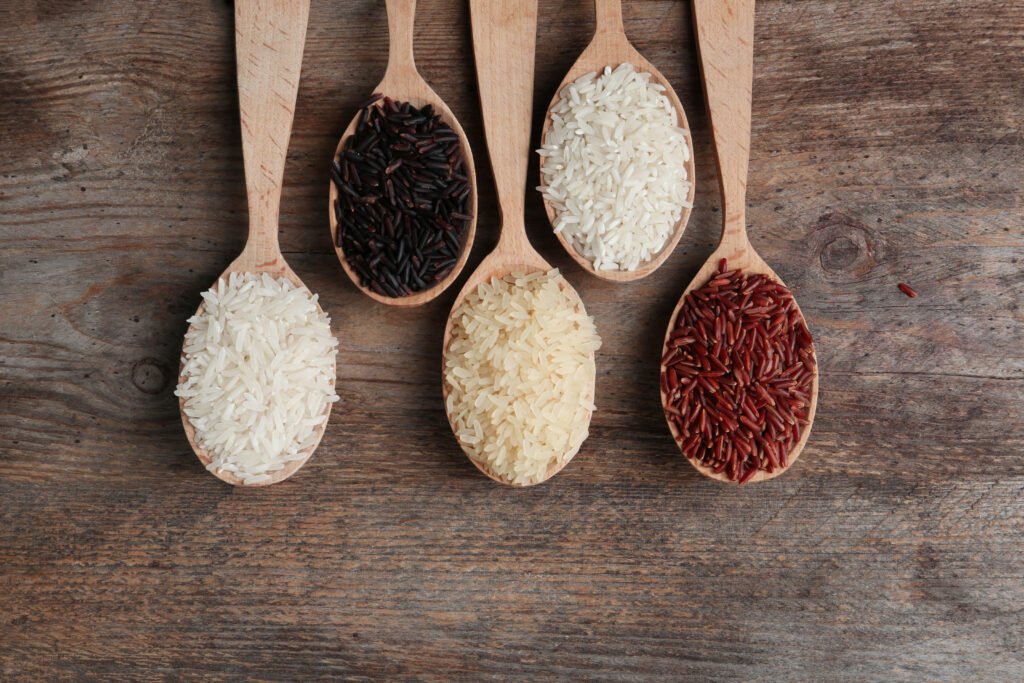
Rice can vary considerably according to variety, processing stage, moisture condition, origin, storage environment, and milling process. Paddy, brown rice, polished white rice, glutinous rice, long-grain rice, and other varieties can present different sorting challenges.
More importantly, processors rarely need to remove just one type of defect.
Typical sorting targets may include:
- Yellow and dark yellow kernels
- Chalky rice
- Black or discolored grains
- Broken or abnormal kernels
- Red or differently colored rice
- Mold-related surface defects
- Paddy remaining in processed rice
- Stones and other visually distinguishable foreign impurities
- Material that does not meet a specific finished-product grade
Modern optical sorting systems can analyze multiple characteristics instead of relying only on a simple light-versus-dark threshold. Depending on the machine configuration, recognition may involve color, shape, texture, area, edge characteristics, and other visible features.
This becomes particularly important when the difference between accepted and rejected rice is subtle.
For example, removing obviously dark kernels from white rice is relatively straightforward. Separating lightly yellowed rice or partially chalky kernels from acceptable grains can require much more precise imaging and classification.
Therefore, before requesting a quotation, prepare representative raw-rice samples and define the defects you want to reject. Tell the supplier what you process, what should remain in the accepted stream, and what needs to be removed.
The clearer these requirements are, the easier it becomes to recommend a suitable sorting configuration.
Choose the Right Rice Color Sorter Capacity
Capacity is one of the first specifications buyers compare, but it is also one of the easiest to misunderstand.
A larger machine is not automatically a better investment.
The sorter should match the actual flow of your rice processing line. If your upstream equipment supplies 4 tons per hour, purchasing a machine designed for dramatically higher production may add unnecessary capital cost, floor-space requirements, power consumption, and maintenance complexity.
On the other hand, undersizing the sorter can create a bottleneck and force operators to increase the feed rate beyond the ideal operating range.
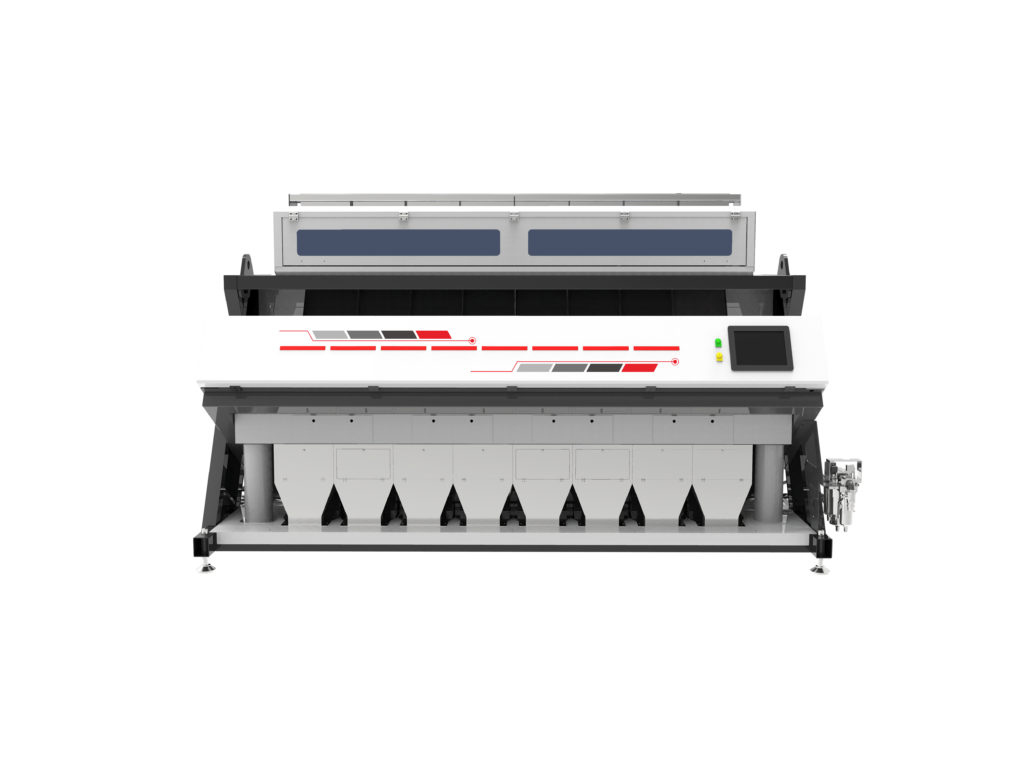
Rice color sorters are available across a wide capacity range. Compact machines can serve small processors, farms, cooperatives, or specialty production, while multi-chute systems can support commercial rice mills processing several tons per hour. Higher-throughput configurations are more appropriate for large industrial processing lines.
When comparing capacity, ask the supplier:
What throughput can this machine maintain with my rice while still achieving the required sorting result?
That question is much more useful than asking only for maximum rated capacity.
Actual throughput can change according to rice variety, impurity percentage, defect difficulty, required purity, number of sorting passes, feed uniformity, and machine settings.
For example, a relatively easy separation between white rice and clearly dark defects may allow a higher throughput than a demanding application involving slight discoloration or subtle chalkiness.
It is also wise to leave reasonable capacity headroom. If your mill currently operates close to its maximum output and production is expected to grow, choosing a sorter with some additional capacity can reduce the need for another equipment upgrade later.
However, avoid oversizing simply for the sake of buying a larger machine. The goal is to find the capacity range that provides stable sorting performance under your real operating conditions.
Evaluate Rice Color Sorter Recognition and Ejection Performance
Once you know what needs to be sorted and how much material the machine must process, the next question is whether the sorter can actually identify and remove the target defects reliably.
This requires looking beyond a single camera specification.
Optical Recognition System
The vision system needs to capture clear and consistent information while rice moves rapidly through the inspection area.
High-resolution imaging can help distinguish small spots, slight discoloration, chalkiness, surface differences, and other subtle characteristics. However, resolution alone does not determine sorting performance.
Lighting stability, optical lenses, image-processing speed, material presentation, software algorithms, and calibration all contribute to the final result.
When comparing machines, avoid choosing one simply because its brochure lists a higher camera resolution. Ask what types of defects the complete optical system can recognize in your rice.
AI and Intelligent Sorting Algorithms
Modern rice sorting systems may use AI, deep learning, or other intelligent image-recognition technologies to analyze more than basic color differences.
Depending on the system, algorithms can evaluate combinations of:
- Color
- Shape
- Texture
- Area
- Edge characteristics
- Surface patterns
This can be useful when accepted and rejected grains look similar or when a processor needs to separate several defect categories.
Intelligent recognition can also provide greater flexibility when raw-material conditions change between batches.
Still, “AI” should never become the main reason for choosing a machine.
High-resolution cameras, AI, deep learning, and intelligent algorithms are useful only when they improve the actual separation of your target defects.
Ejection Precision and Good-Rice Loss
Detection is only half of the process. Once the sorter identifies an unwanted grain, the ejection system must remove it at the correct moment.
High-frequency ejector valves use compressed air to separate targeted material from the accepted stream. Accurate timing matters because an unnecessarily broad or poorly timed air pulse can remove acceptable grains together with the defect.
This creates good-rice carryover—acceptable rice unintentionally entering the reject stream.
For a rice mill, that loss matters financially. Even if the finished product looks clean, excessive good rice in the reject stream reduces overall recovery and can affect profitability.
For this reason, evaluate three results together:
Finished-product purity + throughput + good-rice loss
A strong sorting system should balance all three rather than maximizing one at the expense of the others.
Check the Complete Rice Color Sorting System
A color sorter does not operate in isolation. Its performance depends on how well it integrates with the surrounding rice processing line.
Feeding Stability
Rice should enter the optical inspection zone in a controlled and relatively uniform flow.
If grains overlap excessively or the feed fluctuates significantly, the vision system receives a less consistent view of the material. Stable feeding therefore contributes directly to sorting performance.
When comparing equipment, look at how the machine distributes rice across its channels and whether the feeding system can remain stable as production conditions change.
Compressed Air Requirements
Air consumption is easy to overlook during purchasing.
The ejectors depend on clean and stable compressed air to remove defective kernels. The required compressor capacity, operating pressure, air treatment, piping, and local installation should therefore be confirmed before purchasing the sorter.
Do not assume that the machine price represents the complete installation cost.
Ask the supplier for the required air pressure and consumption so that the compressor and air-treatment system can be sized appropriately.
Power, Space, and Line Layout
Check the machine dimensions, electrical requirements, feeding height, discharge arrangement, maintenance clearance, and connection with existing conveyors or elevators.
A machine may have excellent sorting specifications but still create unnecessary installation problems if it does not fit the current production layout.
This becomes especially important when upgrading an existing mill, where available floor space and equipment height may already be fixed.
Operation and Maintenance
Daily usability also affects long-term performance.
Operators need to adjust recipes, change sorting standards, monitor results, clean optical components, and maintain consumable or moving parts. Ejector valves also operate at high frequency and should be accessible for inspection and maintenance.
A clear interface and accessible machine design can reduce downtime and make routine adjustments easier.
Remote monitoring, parameter storage, diagnostic functions, and technical support can become particularly valuable for larger plants or companies operating several production lines.
Compare Rice Color Sorter Suppliers and Long-Term Support
The purchase price matters, but a rice color sorter should be evaluated over years of production rather than on the day the purchase order is signed.
A lower-priced machine can become expensive if it causes excessive good-rice loss, unstable sorting, frequent downtime, difficult calibration, or slow access to spare parts.
Before selecting a supplier, ask about:
- Installation and commissioning
- Operator training
- Remote technical support
- Spare-parts availability
- Ejector and consumable replacement
- Software and sorting-recipe support
- Troubleshooting response
- Warranty terms
- Local or international service capability
You should also discuss whether the machine can adapt if your product changes.
A rice mill may initially process standard polished rice but later add brown rice, glutinous rice, parboiled rice, or different quality grades. Flexible software and an appropriate machine configuration can make that expansion easier.
Test the Rice Color Sorter with Your Own Material
For serious equipment procurement, one of the most useful comparison methods is a sorting test using your own rice.
Rather than relying entirely on prepared demonstration samples, provide material that represents normal production conditions.
During the test, compare:
- Raw rice before sorting
- Accepted rice after sorting
- Reject material
- Remaining defects in the accepted stream
- Good rice entering the reject stream
- Actual throughput during the test
- Number of sorting passes required
If you are comparing two or more suppliers, try to use the same rice batch and similar sorting requirements for each test.
This makes the comparison much more meaningful.
A machine that produces an excellent result at a very low feed rate should not automatically be considered better than a machine maintaining similar quality at your required commercial throughput.
Likewise, extremely clean accepted rice means less if the reject stream contains an excessive amount of valuable good rice.
For this reason, the best rice color sorter is rarely the cheapest machine or simply the machine with the largest capacity. It is the system that delivers the required finished-rice quality consistently, protects product yield, fits the processing line, and remains practical to operate and maintain.
When comparing equipment for your rice processing project, PolySorter can evaluate your raw material, target defects, production capacity, and finished-product requirements to help determine an appropriate sorting configuration.
FAQs About Choosing a Rice Color Sorter
What size rice color sorter do I need?
Start with your actual hourly production rather than the largest model available.
The sorter should handle your normal production rate without becoming a bottleneck while retaining enough capacity for reasonable production fluctuations or future growth. Rice variety, defect percentage, sorting difficulty, and required finished-product quality can all influence practical throughput.
What defects can a rice color sorter remove?
Depending on its optical configuration and software, a modern machine can identify yellow rice, dark kernels, chalky grains, differently colored rice, broken or abnormal grains, and various visually distinguishable foreign impurities.
The exact sorting capability depends on the difference between accepted and rejected material and the recognition technology used by the machine.
Should I choose a small or large rice color sorter?
Choose according to your production line rather than assuming that larger equipment is always better.
Small-capacity machines can suit farms, cooperatives, specialty processors, and smaller mills. Multi-chute machines are generally more appropriate for commercial and industrial processing. Oversizing increases investment and operating requirements, while undersizing can restrict overall production.
Is AI important when choosing a rice color sorter?
AI and deep-learning technologies can help distinguish subtle or complex defects by analyzing multiple characteristics instead of relying only on simple color thresholds.
However, AI should not be treated as a guarantee of better performance. The most important question is whether the complete sorting system can identify your target defects accurately at the required throughput without excessive good-rice loss.
How do I compare two rice color sorters?
Whenever possible, test both machines with the same representative rice sample and define the same target defects and finished-product standard.
Compare actual throughput, accepted-rice purity, remaining defects, good-rice loss in the reject stream, and the number of passes required. Also consider installation requirements, ease of operation, spare-parts availability, and technical support.
This provides a much more useful comparison than looking at specification sheets alone.
Why should I send rice samples before buying a sorter?
Testing your own material shows how the machine performs with the rice varieties, defect levels, and impurities found in your real production.
It also allows you to examine both the accepted and rejected streams. This helps determine whether the sorter can achieve the required quality while keeping good-rice loss within an acceptable range.
Final Thoughts
Learning how to choose the right rice color sorter comes down to matching the sorting technology with your real production conditions.
Begin with your rice variety and target defects. Then determine the required throughput, evaluate the optical recognition and ejection performance, and check feeding stability, compressed-air requirements, installation conditions, maintenance, and long-term technical support.
Most importantly, do not make the final decision from a specification sheet alone.
A practical sorting test using your own rice can show whether the machine can achieve your required finished-product quality at the required production rate while keeping good-rice loss within an acceptable range. That evidence provides a much stronger basis for investment than comparing camera resolution, chute numbers, advertised accuracy, or AI features in isolation.
If you are planning a new rice sorting line or upgrading an existing system, contact PolySorter with your rice samples, required capacity, target defects, and finished-product quality requirements. We can help evaluate the application and recommend a rice sorting configuration suited to your processing line.