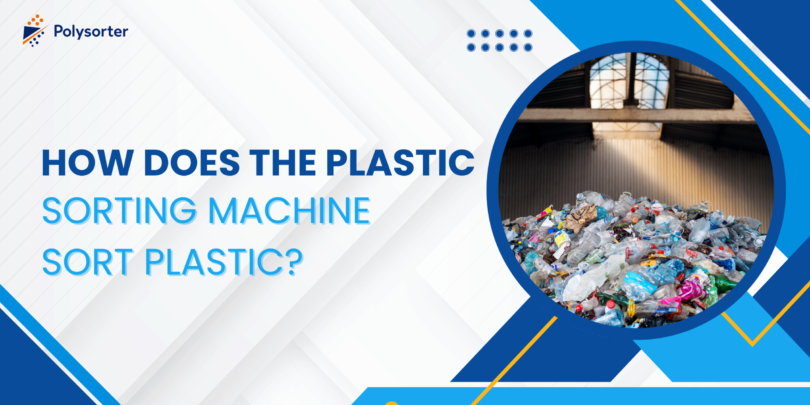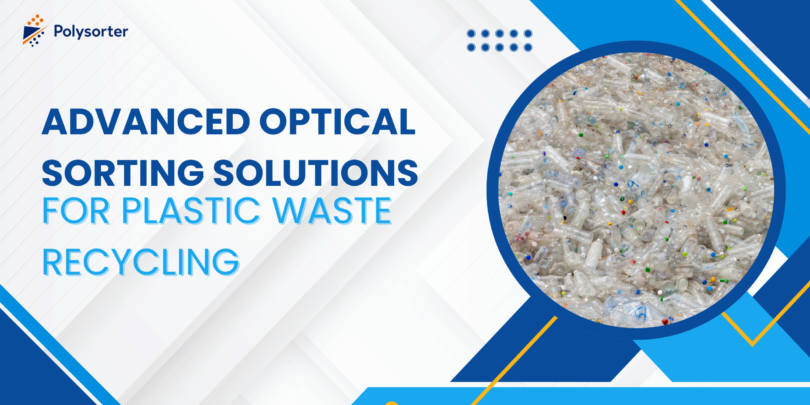
Knowing how to sort bottles for recycling may sound simple: separate recyclable bottles from general waste and send them to a recycling facility. At industrial scale, however, bottle recycling is much more complex.
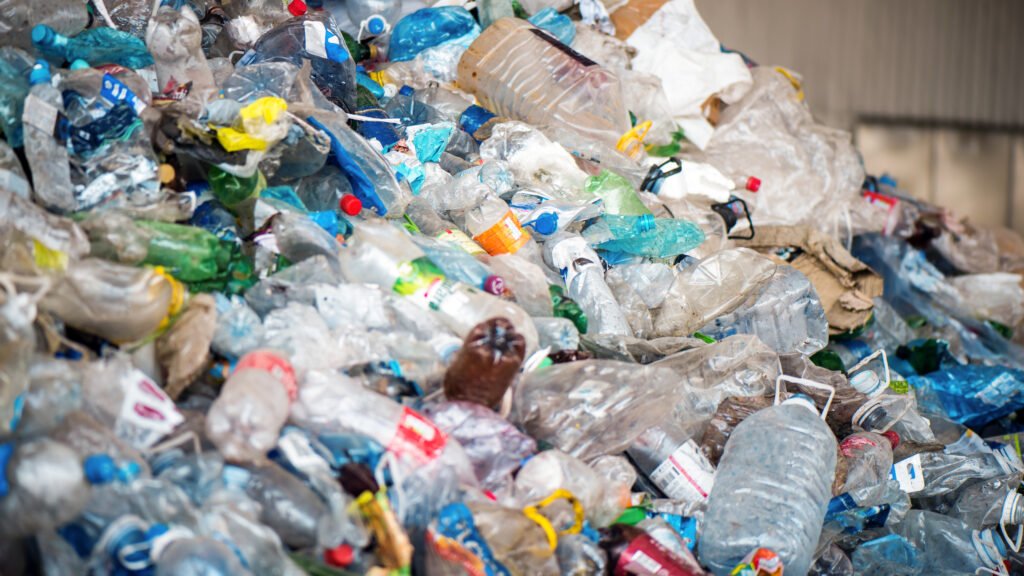
A single stream of post-consumer bottles may contain clear PET beverage bottles, colored PET, HDPE detergent containers, PP components, PVC bottles, labels, caps, metals, residual liquids, and other contaminants. Even bottles that look almost identical may be made from different polymers.
For recycling plants, the goal is not simply to collect as many bottles as possible. The real challenge is to separate them into clean, consistent material streams that can move efficiently into washing, shredding, flake purification, and recycled resin production.
This guide explains how bottles are sorted for recycling, what happens inside a modern recycling facility, and what recyclers should consider when choosing an automated plastic bottle sorting system.
How to Sort Bottles for Recycling by Material Type
The first important principle is that plastic bottles should not be classified only by appearance.
Two transparent bottles may look similar but contain different polymers. At the same time, bottles made from the same polymer can appear in different colors, shapes, and packaging formats.
Common bottle-related plastics include:
| Material | Common Applications | Sorting Consideration |
| PET | Water and beverage bottles | Commonly separated by polymer type and then by color to improve recycled PET consistency |
| HDPE | Milk, detergent, and household containers | Must be separated from PET, PP, and other polymers to maintain a clean recycling stream |
| PP | Caps, closures, and some containers | May enter bottle streams as a separate polymer and often requires downstream separation |
| PVC | Certain packaging and containers | An undesirable contaminant in PET recycling that should be removed effectively |
| LDPE / Other Plastics | Squeeze bottles, films, and mixed packaging | Require identification according to the target recycling stream |
Professional bottle recycling therefore considers several characteristics at the same time:
- Polymer type
- Bottle color
- Transparency or opacity
- Bottle shape and packaging format
- Labels and closures
- Foreign materials
- Contamination level
If a plant wants to produce a clean PET stream, accepting every transparent bottle is not enough. Non-PET polymers and incompatible materials must be removed before they affect downstream processing or recycled resin quality.
Certain visually similar plastics may also become difficult contaminants in a PET recycling stream, which is why material identification is more reliable than appearance alone.
For smaller volumes, workers can perform part of this process manually. Once throughput increases, however, identifying thousands of bottles consistently becomes far more difficult. This is where sensor-based bottle sorting becomes increasingly important.
How Are Plastic Bottles Sorted in a Recycling Plant?
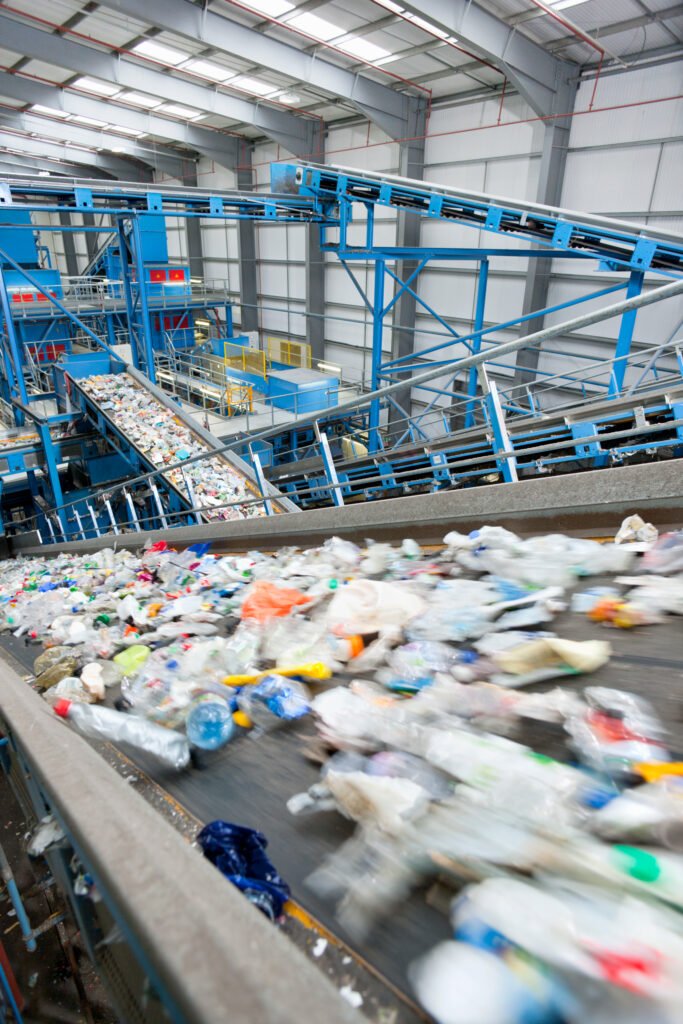
Industrial bottle sorting normally operates as one stage within a larger recycling line rather than as an isolated process.
Plant layouts vary according to incoming material, contamination level, required throughput, and final product specifications, but the overall process usually follows several key stages.
1. Receiving and Opening the Bottle Stream
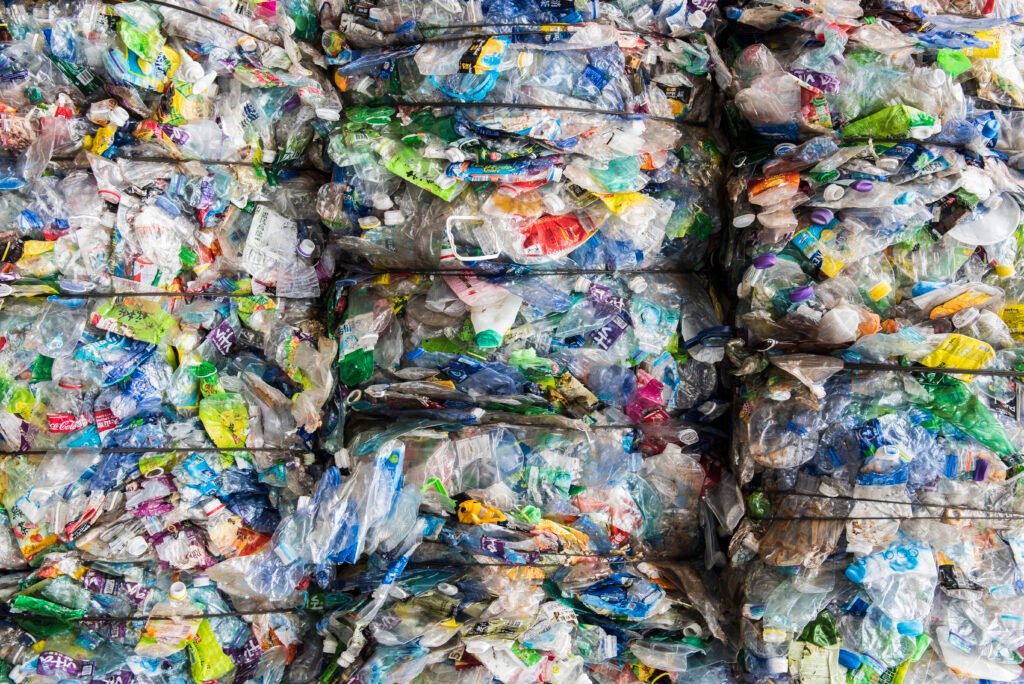
Post-consumer bottles often arrive compressed into bales. A bale-opening system releases the material so that individual containers can move more freely through the line.
Effective separation begins here. Bottles that remain tightly compressed together are harder for downstream sensors to inspect individually.
2. Removing Large Foreign Materials
Before precise optical sorting, recycling lines may remove oversized contaminants, ferrous metals, films, loose waste, and other unwanted materials.
This reduces unnecessary material entering the precision sorting stage and helps protect downstream equipment.
3. Spreading Bottles for Detection
Bottles should pass through the detection area in a controlled and relatively even material layer.
If bottles overlap heavily, one object may hide another from the sensors. Stable feeding and good material distribution therefore have a direct effect on sorting consistency.
4. Identifying the Bottle Material
Modern recycling plants increasingly use sensor-based systems to determine what each bottle is made from.
Near-infrared technology is particularly valuable because different polymers interact with near-infrared wavelengths differently. The sorter analyzes these spectral characteristics and classifies bottles according to material type.
A PET bottle can therefore be distinguished from HDPE, PP, PVC, and other detectable plastics even when color alone cannot provide enough information.
5. Sorting Bottles by Color
After or alongside polymer identification, visible-light cameras can classify bottles according to color.
A PET recycling line, for example, may need to separate clear PET from blue, green, or other colored PET bottles. This helps recyclers create more consistent feedstock for downstream applications.
6. Ejecting the Selected Bottles
Once the system identifies an object, software calculates its position and sends a command to the ejection system.
High-speed air jets then direct the selected bottle into the required output stream while the remaining material follows another path.
Depending on the recycling objective, the system can recover the desired bottle type or reject unwanted contaminants.
How NIR and AI Help Sort Bottles for Recycling
Manual bottle sorting still plays a useful role in some recycling facilities, especially for final quality control. However, relying entirely on workers becomes increasingly difficult as throughput and purity requirements rise.
A worker can easily recognize an obvious difference such as a green bottle versus a clear bottle. Determining the polymer composition of visually similar packaging is much harder.
This is where modern optical sorting technology becomes valuable.
NIR Polymer Recognition
Near-infrared spectroscopy analyzes how materials interact with near-infrared wavelengths.
Different polymers produce different spectral responses. The sorting system captures this information and compares it with predefined material classifications.
Instead of asking only:
“What color is this bottle?”
the system can effectively determine:
“What material is this bottle made from?”
That distinction is essential when separating PET from non-PET plastics.
Visible-Light and Color Detection
NIR identifies material composition, while visible-light imaging provides additional information about appearance.
High-resolution cameras can help identify characteristics such as:
- Clear versus colored bottles
- Different color groups
- Bottle shape
- Surface appearance
- Certain labels
- Visible contaminants
Combining polymer recognition and visual information gives the sorting system a more complete understanding of each object.
AI-Based Recognition
AI and deep-learning systems can further analyze complex visual patterns that conventional rules may find difficult to classify.
This can be useful when processing crushed containers, unusual bottle shapes, varying labels, damaged packaging, and changing waste streams.
AI vision does not replace polymer identification. Instead, it can complement sensor-based material detection by providing additional information about the physical appearance and category of the object.
For mixed post-consumer bottle streams, combining multiple sensing methods can provide greater flexibility than relying on a single sorting characteristic.
The Challenge of Sorting Black Plastic Bottles
Some dark and carbon-black plastics can be difficult for conventional NIR sorting because the pigment may absorb much of the near-infrared light used for material identification.
Advanced sorting systems may combine different sensors and intelligent recognition technologies to improve the detection of difficult materials. However, the most suitable solution depends on the polymer, pigment formulation, bottle characteristics, and required sorting objective.
For recycling plants processing significant quantities of black or dark bottles, representative material testing is especially important before selecting sorting equipment.
How to Improve Plastic Bottle Sorting Before and After the Sorter
Buying an advanced sorter does not automatically guarantee a high-quality recycling stream. Feedstock condition and line design matter just as much as the sorter itself.
One common mistake is to evaluate a bottle sorting machine only by its advertised sorting accuracy.
In real production, several operating factors influence results.
Control Material Overlap
Sensors need sufficient visibility to identify individual bottles. An overloaded belt increases overlap and can reduce sorting consistency.
The feeding system should therefore match the sorter capacity and maintain stable material distribution.
Define the Target Material Clearly
Before choosing equipment, recyclers should determine exactly what they want to recover.
“Sorting plastic bottles” is too broad.
A more useful target might be:
- Recover clear PET from mixed bottles
- Separate PET from non-PET plastics
- Recover HDPE containers
- Remove PVC from a PET stream
- Separate colored PET from clear PET
- Remove foreign packaging from bottle feedstock
The required sorting configuration depends heavily on this target.
Consider Labels, Sleeves, and Caps
A plastic bottle is rarely made from only one material.
The bottle body, label, cap, adhesive, and sleeve can all have different compositions. Large labels or full-body shrink sleeves may also reduce how much of the bottle surface is directly visible to some sensors.
Recyclers handling heavily labeled or sleeved material should evaluate whether pre-treatment is needed and should test representative feedstock rather than relying on clean demonstration samples.
Use Multiple Sorting Stages When Necessary
High-purity recycling does not always end after one sorting pass.
A plant may first separate PET bottles from mixed containers and then classify PET bottles by color. After washing and shredding, another sorting stage can inspect the resulting flakes and remove remaining foreign polymers, unwanted colors, or other contaminants.
This creates an important distinction:
Bottle sorting improves feedstock quality before shredding, while flake sorting provides additional purification later in the recycling process.
The two processes should be viewed as complementary rather than competing technologies.
How to Choose a Bottle Sorting Machine for Recycling
For recyclers researching how to sort bottles for recycling at industrial scale, equipment selection should begin with the actual material stream rather than with a machine specification sheet.
Start by collecting representative samples of your real feedstock.
Determine the approximate proportion of PET, HDPE, PP, PVC, colored bottles, labels, metals, and other contaminants. Then define the purity, recovery, and throughput targets required by the downstream process.
When comparing bottle sorting systems, pay particular attention to the following factors.
Detection Technology
If polymer separation is required, color recognition alone is not enough.
An NIR-based bottle sorting system can identify different polymer types, while visible-light imaging can provide additional information about color and appearance. For complex mixed bottle streams, combining multiple sensing technologies may provide greater sorting flexibility.
Sorting Objectives
Confirm whether the equipment can perform the separation you actually need, such as:
- PET from non-PET
- HDPE from mixed containers
- Clear PET from colored PET
- Target polymer recovery
- Removal of specific contaminants
A machine should be selected around the required output stream, not simply around the number of available sensors.
Real Feedstock Performance
Whenever possible, ask the supplier to test your own bottles.
Real post-consumer feedstock provides much more useful information than perfectly clean samples because it includes the labels, contamination, deformation, colors, and packaging variations that the machine will encounter in production.
Throughput
The sorter should handle the required tons per hour without becoming a bottleneck elsewhere in the recycling line.
Higher nominal throughput is not always better if material loading becomes too dense for accurate detection.
Recovery and Purity
Recovery rate and purity should be evaluated together.
A very aggressive rejection setting may increase final purity but also eject valuable recyclable material. The ideal configuration should balance product quality with material yield.
Feed Requirements
Understand how bottles should enter the sorter, including:
- Belt loading
- Material distribution
- Bottle size range
- Contamination conditions
- Required pre-treatment
Good machine performance depends heavily on stable feed conditions.
Integration with the Recycling Line
A sorter must work together with conveyors, bale opening, metal separation, washing, shredding, and downstream purification equipment.
For this reason, buyers should evaluate the complete recycling process rather than treating the sorter as an isolated machine.
Technical Support
Operator training, spare parts availability, remote diagnostics, maintenance guidance, and application support can influence long-term production stability.
For plants evaluating a new sorting line, representative material testing is one of the most useful steps before final equipment selection.
PolySorter provides sensor-based solutions for plastic bottle recycling, including systems designed for polymer and color separation. Our team can evaluate your bottle samples, sorting objective, and required throughput to help determine a suitable sorting configuration.
FAQs About How to Sort Bottles for Recycling
Should plastic bottles be sorted by color or material?
Both matter, but they serve different purposes. Material sorting separates polymers such as PET, HDPE, PP, and PVC, while color sorting divides bottles within a material stream into categories such as clear, blue, or green. Industrial recycling lines may use both methods.
How do recycling machines identify PET bottles?
Modern bottle sorting machines can use near-infrared sensors to analyze the spectral characteristics of plastic materials. Because different polymers produce different spectral responses, the system can distinguish PET from many other detectable plastics.
Can bottles with labels be automatically sorted?
Yes, many modern systems can process labeled bottles. However, label size, material, bottle coverage, and feed conditions can influence detection. Plants with heavily sleeved or unusually labeled bottles should test representative samples before selecting equipment.
Are bottle caps removed before sorting?
This depends on the recycling process. Caps are commonly made from PP or HDPE, while many beverage bottle bodies are PET. Some lines separate these materials during later washing and density-separation stages, while other systems may remove certain components earlier.
Is manual sorting enough for a bottle recycling plant?
Manual sorting can work for low-volume operations or final quality control. As throughput grows, however, maintaining consistent polymer identification becomes more difficult. Automated sensor-based sorting can reduce dependence on manual inspection and improve classification consistency.
What is the difference between a bottle sorter and a plastic flake sorter?
A bottle sorter processes whole or compressed containers before shredding. A flake sorter works later in the recycling process after bottles have been shredded and can remove remaining foreign polymers, unwanted colors, or other contaminants from the flakes.
Building a Better Bottle Recycling Process
Understanding how to sort bottles for recycling means looking beyond the recycling symbol printed on a container.
At industrial scale, successful bottle recycling depends on identifying the correct polymer, controlling color contamination, removing unwanted materials, presenting bottles properly to the detection system, and matching sorting technology to the plant’s actual feedstock.
For relatively simple streams, manual and mechanical separation may handle part of the job. As material mixtures become more complex and purity requirements increase, NIR polymer identification, visible-light imaging, AI recognition, and automated ejection give recyclers more precise control over recovered materials.
The most effective approach is to design the sorting process around the required recycling result rather than simply choosing the most complex machine available.
If you are planning a new plastic bottle recycling line or upgrading an existing process, PolySorter can evaluate your bottle samples, target materials, purity requirements, and throughput to recommend a suitable plastic bottle sorting solution. Contact our team to discuss your material and arrange a sorting evaluation.