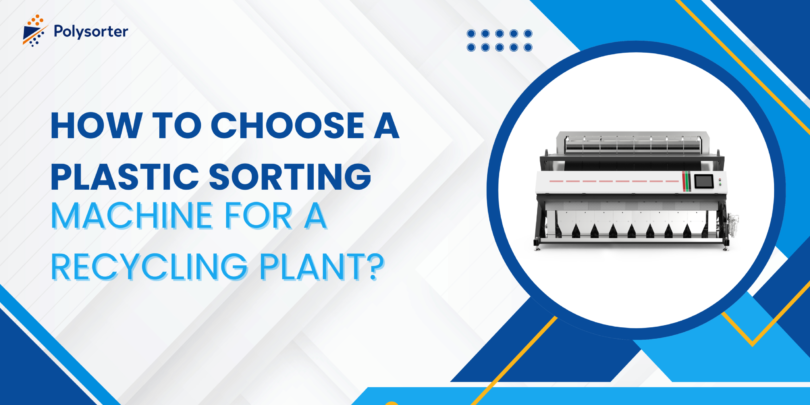
Choosing a plastic sorting machine for a recycling plant can be more complicated than comparing capacity, cameras, or equipment prices. Two sorting machines may look similar on a specification sheet but perform very differently once they process real recycling material.
The reason is simple: plastic sorting is not a single task.
A plant processing clear PET flakes has different requirements from a facility separating PP and PE. A mixed-plastic recycling line may need to identify several polymer types, while another processor may only need to remove unwanted colors from an already separated stream. Particle size, contamination, throughput, required purity, and the position of the sorter in the recycling line can all affect equipment selection.
That is why choosing the right machine should not begin with “Which model has the highest capacity?”
It should begin with four questions:
What material are you processing? What needs to be separated? How much material must be processed? What output quality do you need?
Once these questions are clear, it becomes much easier to select the appropriate sorting technology and machine configuration.
Choose a Plastic Sorting Machine Based on Your Material
The first step in choosing a plastic sorting machine is to define exactly what will enter the equipment.
“Plastic waste” is too broad to describe a sorting application. A machine supplier needs much more specific information before recommending a suitable solution.
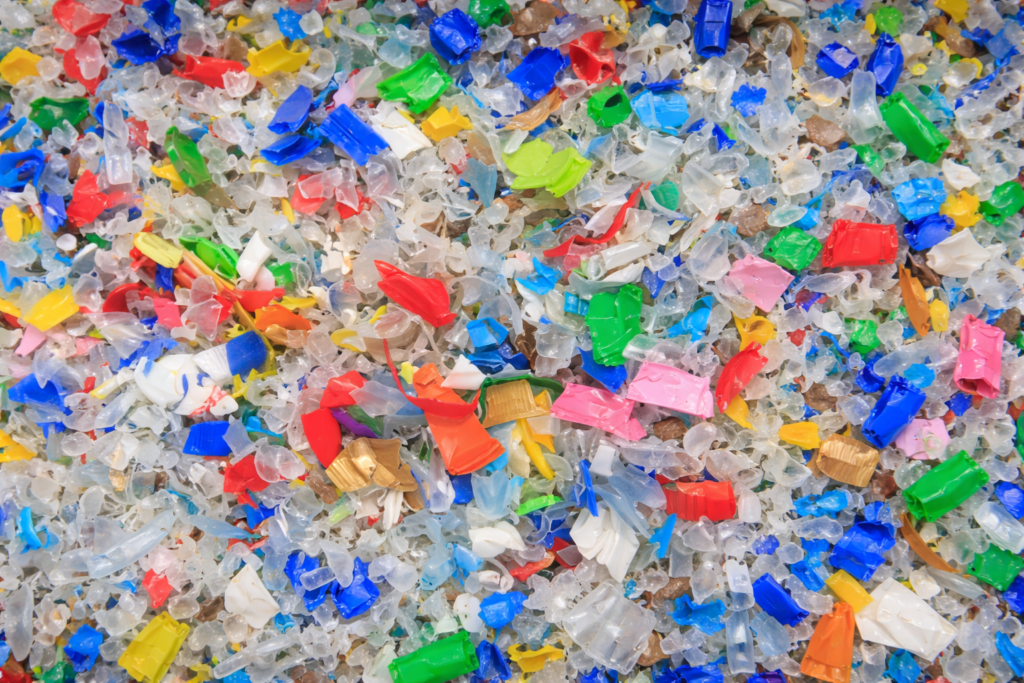
For example, a recycling plant may process:
- PET bottle flakes
- HDPE flakes
- PP or PE flakes
- Mixed rigid plastics
- ABS, PS, PC, PA, or other engineering plastics
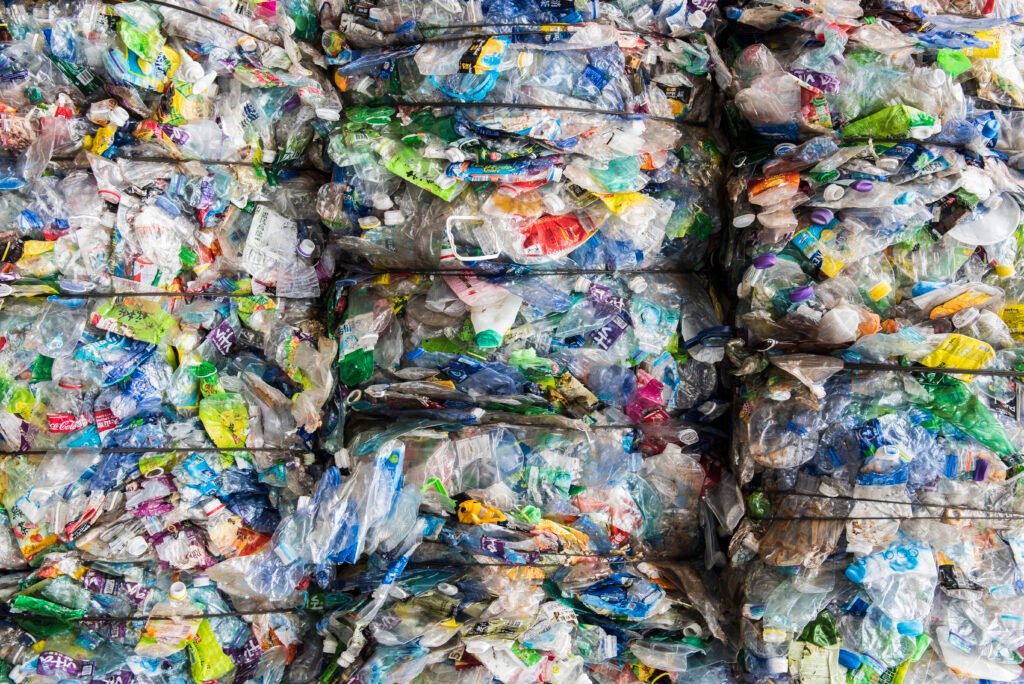
- Whole plastic bottles
- Plastic pellets
- Post-consumer mixed plastics
These materials differ in size, shape, composition, surface condition, and flow behavior. As a result, they may require different feeding methods, sensor configurations, and sorting processes.
Material Form Matters
Whole bottles and small plastic flakes should not automatically use the same sorting configuration.
Large, irregular objects are often transported on a belt, where individual pieces can pass through the detection area. Smaller free-flowing flakes may require a different feeding structure that creates a controlled and relatively uniform material flow.
Plastic sorting systems are therefore designed for different applications, including bottles, flakes, mixed plastics, engineering plastics, and pellets. The available equipment configurations also use different sensing technologies depending on the material and separation target.
Particle Size Also Affects Sorting
Do not tell a supplier only that your plant processes “PET flakes.”
Provide the actual particle-size range.
Very small particles create different detection and ejection challenges from larger flakes. A wide variation in particle size can also make it harder to create an even material layer.
Before requesting a sorting solution, prepare at least:
Material type + material form + particle-size range + incoming composition + major contaminants.
This information is much more useful than choosing a machine size first.
Match the Sorting Technology to Your Separation Target
Once the input material is clear, the next question is:
What exactly do you want to remove or recover?
This determines which sensor technology should be considered.
One of the most common purchasing mistakes is assuming that every optical sorting machine can solve every plastic separation problem. In reality, visible differences and polymer differences require different detection methods.
Visible-Light Color Sorting
Choose visible-light color sorting when the difference between accepted and rejected material can be recognized by visible appearance.
Typical applications may include separating:
- Clear PET from colored PET
- Blue, green, or brown flakes
- White from colored plastics
- Opaque contaminants
- Dark or visibly different pieces
- Discolored or abnormal flakes
High-resolution cameras capture visible characteristics. The sorting system then classifies the material and controls the ejection system to remove selected pieces.
For example, if a washed PET stream has already been separated by polymer type and only needs final color purification, visible-light sorting may be sufficient.
NIR Polymer Sorting
Choose NIR polymer sorting when materials need to be separated by polymer composition rather than visible color.
PET and PVC provide a good example.
A transparent PVC fragment can appear similar to a transparent PET fragment. A conventional RGB camera cannot reliably determine their chemical composition from color alone.
Near-infrared sensing analyzes the spectral response of materials. Depending on the sensor configuration and material conditions, NIR systems can identify many common polymers, including PET, PE, PP, PVC, PS, and ABS.
This makes polymer identification particularly useful when visually similar plastics must be separated.
Combined Polymer and Color Sorting
Some recycling plants need both polymer identification and visible-color sorting.
For example, an incoming PET flake stream might contain:
Clear PET + colored PET + PVC + PE/PP contamination + off-color flakes.
Polymer identification addresses the unwanted resin types, while visible imaging addresses color differences.
A combined sensing configuration can therefore be considered when both problems exist in the same material stream.
The key principle is simple:
Do not choose more sensors simply because more technology sounds better. Choose the sensing technology according to the actual separation problem.
Quick Plastic Sorting Technology Selection Guide
| Sorting Requirement | Technology to Consider |
| Clear vs. colored plastic | Visible-light color sorting |
| Different visible colors | Visible-light color sorting |
| Similar-looking PET vs. PVC | Polymer identification / NIR |
| PP vs. PE separation | Polymer identification / NIR |
| Polymer + color purification | Combined polymer + color sensing |
This table should be treated as an initial selection guide rather than a performance guarantee. Actual material conditions still need to be evaluated before the final machine configuration is determined.
Compare Throughput, Purity, Recovery, and Material Loss
Capacity is usually one of the first specifications buyers compare when choosing a plastic sorting machine for a recycling plant.
However, maximum throughput should never be evaluated alone.
Actual sorting capacity can be influenced by:
- Particle size
- Feed composition
- Contamination level
- Material density
- Moisture
- Feed uniformity
- Required output purity
- Sorting difficulty
- Number of sorting passes
Increasing the feed rate does not automatically increase profitable production.
If too much material enters the detection area at once, particles may overlap or pass too close together. This can make accurate detection and ejection more difficult.
Purity Is Only Part of the Result
Suppose 1,000 kg of valuable target plastic enters the sorting process.
A machine could create a very clean accepted fraction by aggressively rejecting uncertain pieces. The final purity might look excellent.
But what happens if too much good plastic is rejected at the same time?
The recycling plant loses valuable material.
That is why sorting performance should be evaluated using four related indicators:
Throughput → Output Purity → Recovery Rate → Good-Material Loss
A higher purity figure is not automatically better if it causes excessive loss of recoverable plastic.
Likewise, extremely high throughput may have limited value if purity or recovery falls below the plant’s target.
The best operating point is usually a balance between these factors.
Look Beyond the Purchase Price
Machine price is also only one part of the investment.
Recycling plants should consider operating factors such as:
- Electricity consumption
- Compressed-air consumption
- Routine maintenance
- Wear parts
- Cleaning requirements
- Downtime
- Labor requirements
- Valuable material lost in the reject stream
The lowest purchase price does not necessarily result in the lowest sorting cost per ton.
For many recycling operations, even a small improvement in recovery can become financially important when the machine processes large material volumes over months or years.
Therefore, when comparing suppliers, ask for sorting results under clearly defined operating conditions rather than relying on one generic “sorting accuracy” figure.
Evaluate the Sorter as Part of the Complete Recycling Line
A plastic sorting machine does not operate in isolation.
Its performance depends heavily on how the material is prepared before sorting and what happens after the sorting stage.
A typical flake-recycling line may include stages such as:
Pre-sorting → Crushing → Washing → Drying → Sensor Sorting → Final Purification → Pelletizing
The exact sequence depends on the feedstock, contamination, process design, and desired final product.
Material Preparation Influences Sorting Performance
A sophisticated sorter cannot fully compensate for poor material presentation.
Heavy dust, excessive moisture, unstable feeding, or overlapping pieces can make detection more difficult. If one flake covers another, the sensor may not have a clear view of both pieces.
Stable feeding is therefore an important part of sorting performance.
When planning the equipment installation, consider how the sorter will connect with:
- Feeding equipment
- Conveyors or chutes
- Washing and drying equipment
- Dust-removal systems
- Compressed-air supply
- Reject collection
- Re-sorting or recovery loops
- Downstream processing or pelletizing
Physical installation space matters as well.
A machine may fit into the available floor area but still create problems if operators cannot easily access key areas for inspection, cleaning, or maintenance.
For this reason, equipment selection should be considered at the recycling-line level rather than as an isolated machine purchase.
Test Real Material Before Choosing a Plastic Sorting Machine
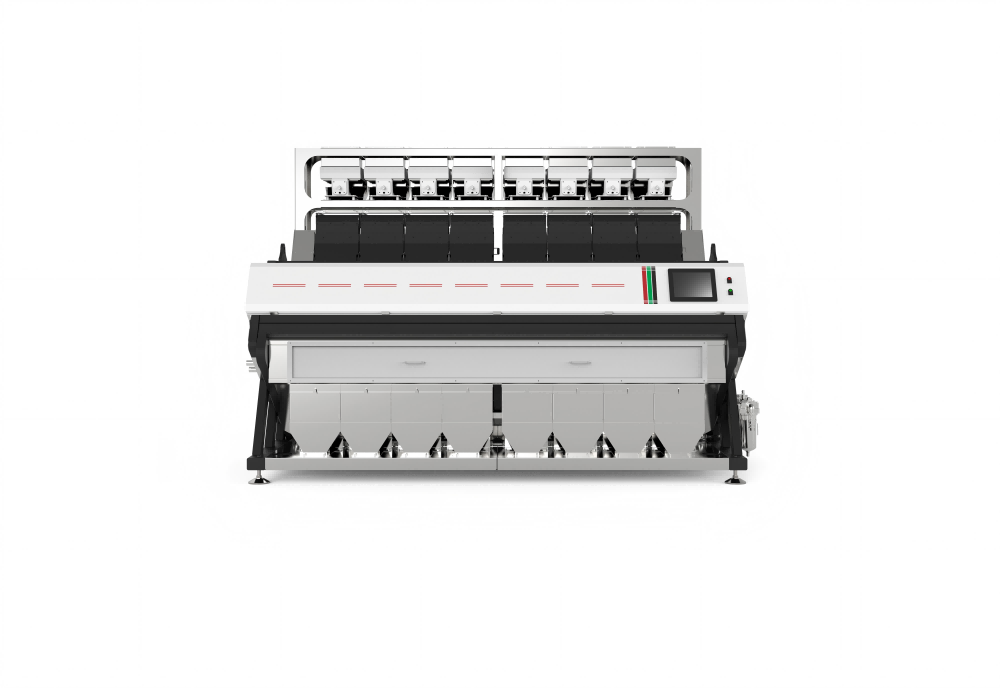
Whenever possible, test representative material before making the final equipment decision.
This is one of the most useful steps in the purchasing process.
Photos, videos, and material descriptions can help with preliminary evaluation. However, they cannot fully demonstrate polymer composition, contamination distribution, moisture, subtle color differences, or actual feeding behavior.
A useful sorting test should therefore use material that represents normal plant conditions—not only a handful of unusually clean samples.
Define the Sorting Target Before Testing
Before the test begins, establish what a successful result should look like.
For example:
Input: Mixed washed PET flakes
Target product: Clear PET
Reject: Colored flakes and unwanted polymer contamination
Required throughput: According to plant conditions
Quality target: According to downstream processing requirements
After testing, examine both the accepted and rejected fractions.
Do not look only at how clean the accepted product appears.
Ask the Supplier the Right Questions
Instead of asking only:
“What sorting accuracy can your machine achieve?”
Ask:
What output purity was achieved?
How much target material entered the reject stream?
What throughput was maintained during the test?
What sensor configuration was used?
Would another sorting pass improve the result?
What were the actual material and operating conditions during the test?
These questions provide much more useful information than a general accuracy percentage.
Testing can also prevent unnecessary investment.
If visible-light sorting already achieves the required separation, additional sensing technology may not provide enough benefit to justify the extra complexity. Conversely, if visually similar polymers must be separated, testing may show why polymer identification is necessary.
PolySorter evaluates plastic sorting projects according to factors such as material type, raw-material size, target capacity, and sorting requirements. Available sorting technologies cover visible color separation as well as sensor configurations designed for polymer identification and combined sorting tasks.
If you are planning a new recycling line or upgrading an existing plant, you can send PolySorter representative material and production requirements for application evaluation and sample testing before determining the final sorting configuration.
FAQ About Choosing a Plastic Sorting Machine
What information should I provide when choosing a plastic sorting machine?
Provide your material type, material form, particle-size range, incoming composition, major contaminants, required throughput, and desired output. Photos and representative samples can provide additional information for application evaluation.
The more accurately the incoming material and sorting target are defined, the easier it becomes to determine an appropriate sensor and machine configuration.
Do I need an optical color sorter or an NIR plastic sorter?
Choose optical color sorting when the difference is visible; consider NIR polymer sorting when the important difference is polymer composition rather than appearance.
For example, visible-light cameras can be suitable for separating clear and colored flakes. If visually similar plastics need to be separated according to polymer type, polymer-identification technology may be required.
Can one plastic sorting machine separate PET, PP, PE, and PVC?
A suitable polymer-identification system can distinguish many common plastic types, but actual separation performance depends on the sensor configuration, material condition, particle size, feed composition, and required output.
The application should therefore be evaluated with representative material rather than assuming performance from a general list of detectable polymers.
How much sorting capacity does my recycling plant need?
Choose capacity according to the actual material flow of your recycling line rather than the highest nominal throughput available.
Particle size, contamination level, material density, feed uniformity, and required output quality can all affect practical throughput. A suitable configuration should provide the required production capacity without sacrificing excessive purity or recovery.
Can a plastic sorting machine detect black plastics?
Yes, but it depends on what “detect” means.
A visible-light system may distinguish black or dark pieces from lighter material when there is sufficient visual contrast. However, identifying the polymer type of carbon-black-containing plastics is a different challenge because conventional NIR technology may have difficulty obtaining a usable spectral response.
If black plastics need to be separated by polymer type, the material should be tested with an appropriate specialized sensing solution.
How should I compare plastic sorting machine suppliers?
Compare suppliers using the same representative material and the same sorting target whenever possible.
Evaluate throughput, output purity, recovery rate, good-material loss, operating requirements, maintenance, and technical support. A controlled sample test usually provides more meaningful information than comparing specification sheets alone.
Choose the Sorting Process Before Choosing the Machine
There is no universal “best” plastic sorting machine.
A system that performs well in PET color purification may not be the right solution for mixed-polymer separation. Likewise, the machine with the highest nominal capacity or the largest number of sensors is not automatically the best investment.
A better approach is to work backward from the recycling objective:
What material enters the plant?
How much material must be processed?
What needs to be removed or recovered?
What final quality is required?
How much valuable material loss is acceptable?
Where will the sorter operate within the recycling line?
Once these questions are clear, choosing the sensing technology, sorting configuration, and required capacity becomes much easier.
If you are evaluating a plastic sorting machine for a recycling plant, contact PolySorter with your material type, particle-size range, target contaminants, required throughput, and desired sorting result. Representative material can also be tested to help determine an appropriate sorting technology and machine configuration for the project.