Plastic recycling has evolved far beyond simply reducing waste. Today, it is a technology-driven industry that supplies high-quality recycled materials for packaging, automotive components, consumer products, electronics, and countless other applications. As manufacturers increase their use of recycled plastics and governments introduce stricter recycling targets, recycling facilities face growing pressure to deliver cleaner, more consistent, and higher-value recycled products.
For many recyclers, investing in a plastic sorter is one of the most effective ways to improve product quality and production efficiency. However, choosing the right machine is often more challenging than expected. With numerous sorting technologies, sensor configurations, and equipment suppliers available, selecting a system that truly matches your recycling process requires careful evaluation. The wrong investment can result in lower recovery rates, higher operating costs, and limited flexibility as your business grows.
This guide explains everything you need to know before purchasing a plastic sorter. You’ll learn what a plastic sorter is, how it works, the major types of sorting equipment available, and the key factors to consider before making an investment. Whether you’re upgrading an existing recycling line or building a new facility, this guide will help you make a more informed purchasing decision.
What Is a Plastic Sorter?
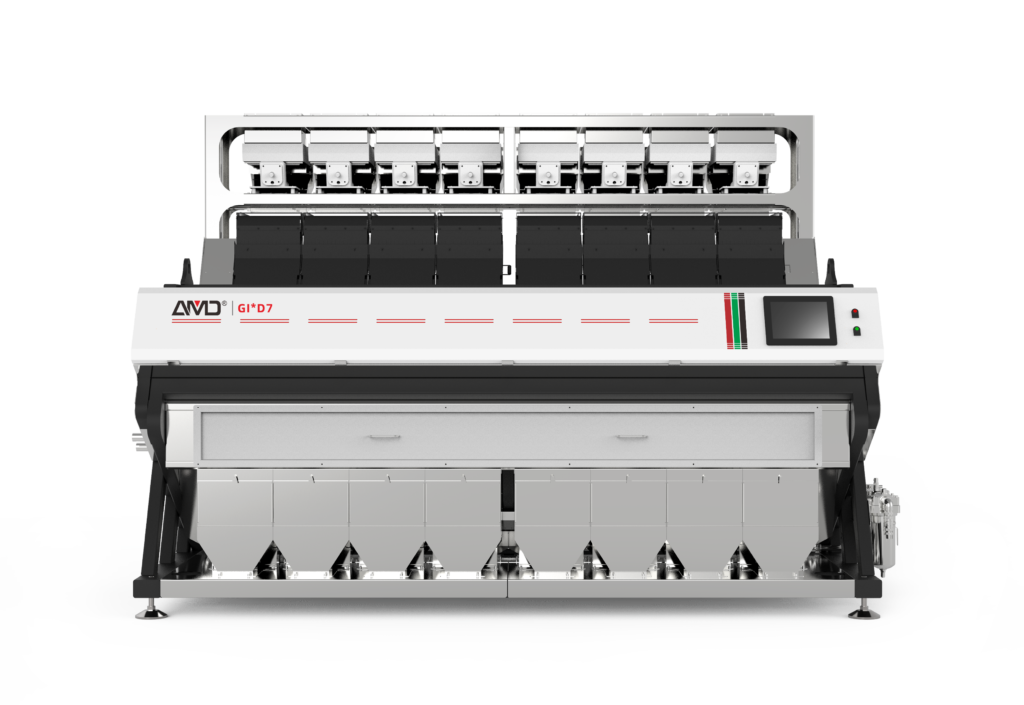
A plastic sorter, also known as a plastic sorting machine or plastic recycling sorting equipment, is an automated system that identifies, classifies, and separates plastic materials according to their optical and physical characteristics.
Unlike conventional separation equipment that relies mainly on size, density, or manual inspection, a plastic sorter analyzes every individual object as it passes through the inspection area. Using high-speed cameras, near-infrared (NIR) sensors, intelligent image processing, and AI-assisted recognition, the system can distinguish different plastic materials in real time before precision air valves remove unwanted items from the material stream.
Because every piece of material is inspected individually, modern plastic sorters can process thousands of objects every second while maintaining consistent sorting accuracy. This enables recycling facilities to produce higher-purity recycled plastics, recover more valuable material, reduce labor requirements, and improve overall production efficiency.
Today, plastic sorters have become one of the core pieces of equipment in modern recycling plants. They are widely used for processing post-consumer plastic bottles, industrial plastic scrap, recycled flakes, engineering plastics, and plastic pellets, helping recyclers meet increasingly strict quality standards while improving profitability.
Why Is a Plastic Sorter Important?
Modern recycling facilities are expected to produce recycled plastics that meet increasingly demanding quality requirements. Whether the final product is used for food packaging, consumer goods, automotive components, or industrial applications, buyers expect consistent color, high purity, and minimal contamination.
At the same time, recycling plants are processing larger volumes of increasingly complex waste streams. Mixed plastics, colored materials, labels, and contaminants make manual sorting slower, less accurate, and more expensive. Labor shortages and rising operating costs further increase the need for automation.
A plastic sorter addresses these challenges by combining optical sensing and intelligent automation to inspect every piece of material individually. Compared with traditional manual sorting, it offers several significant advantages:
- Higher material purity and product consistency
- Increased recovery of valuable plastics
- Reduced dependence on manual labor
- Higher processing capacity
- Lower long-term operating costs
- Greater flexibility for handling different plastic materials
For many recycling companies, the right plastic sorter is no longer simply a production upgrade—it has become an important investment that improves competitiveness, increases product value, and supports long-term business growth.
How Does a Plastic Sorter Work?
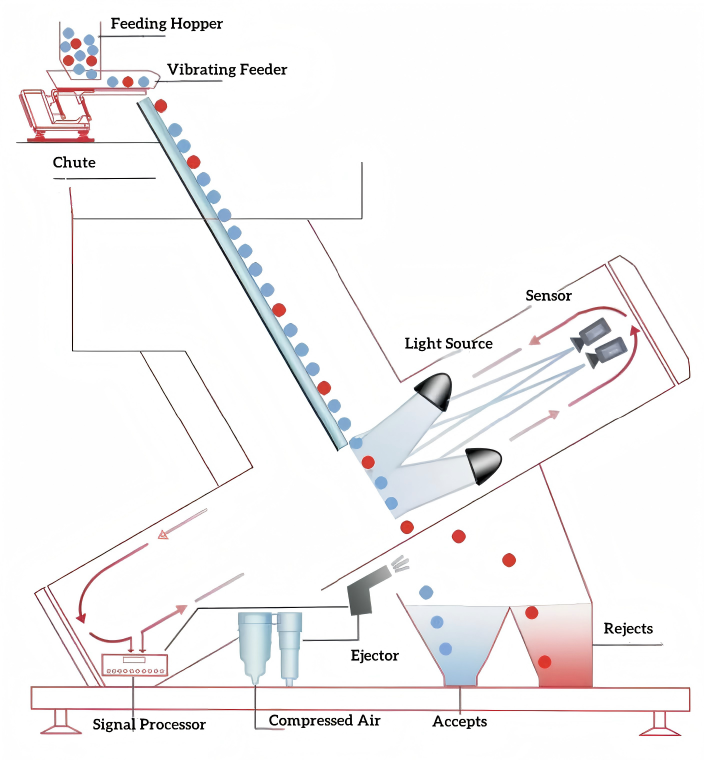
Although different plastic sorters are designed for different applications, most modern optical sorting systems follow the same four-step process.
Step 1: Material Feeding
Every successful sorting process begins with stable material presentation.
Depending on the application, materials are fed into the inspection area using either high-speed conveyor systems or gravity-fed chutes. Bottles and larger rigid plastics are typically transported on conveyor belts, while plastic flakes and pellets are often distributed through chute-type feeding systems.
Uniform feeding is essential because overlapping materials can reduce detection accuracy. Each bottle, flake, pellet, or plastic fragment should ideally be presented individually for inspection.
Step 2: High-Speed Detection
As the material enters the inspection zone, multiple sensors collect detailed information about every individual object.
Depending on the sorting task, the system may analyze:
- Visible color
- Polymer type through NIR technology
- Shape and size
- Transparency
- Surface texture
- Other optical characteristics
Rather than relying on color alone, modern plastic sorters combine multiple sources of information to achieve far more accurate identification.
Step 3: Intelligent Image Processing
Once the sensor data has been collected, advanced software processes the information in real time.
AI-assisted algorithms compare every object with predefined sorting criteria and determine whether it belongs to the target product or should be rejected. These decisions are made within milliseconds while thousands of objects continue moving through the machine every second.
Because the sorting logic is software-driven, operators can quickly switch between different materials or adjust sorting parameters without major hardware changes.
Step 4: Precision Air Ejection
When a target object reaches the discharge point, high-speed air valves activate with precise timing.
A short burst of compressed air changes the trajectory of the selected object, directing it into a separate collection channel while the accepted material continues through the production line. This process is fully automated and repeated continuously, allowing large volumes of plastic to be sorted with remarkable speed and consistency.
The combination of advanced sensors, intelligent software, and precision air ejection enables modern plastic sorters to achieve significantly higher purity levels than manual sorting while maintaining stable throughput and reducing operating costs.
Types of Plastic Sorters and Their Applications
Not all plastic sorters are designed for the same recycling application. The most suitable machine depends on the type of material being processed, the required product purity, and the goals of the recycling operation. Understanding the major categories of plastic sorting equipment is one of the first steps toward making the right purchasing decision.
Plastic Bottle Sorters
Plastic bottle sorters are designed to process whole bottles collected from municipal, commercial, and deposit-return recycling systems. These machines automatically separate bottles according to polymer type, color, or other visual characteristics, making them ideal for PET, HDPE, PP, and mixed bottle recycling lines.
They are commonly installed after label removal or before the washing stage to improve downstream efficiency and reduce contamination.
Plastic Flake Color Sorters
After washing and shredding, plastic flakes may still contain discolored material, labels, residual contaminants, or unwanted colored flakes. Plastic flake color sorters inspect every individual flake and remove defects based on color differences, helping producers manufacture cleaner and more consistent recycled materials.
These systems are widely used in PET, HDPE, PP, PVC, ABS, and many other flake recycling applications.
Polymer Sorters
Polymer sorters separate plastics according to their resin type rather than color alone. Using near-infrared (NIR) sensing technology, they distinguish materials with similar appearances but different chemical compositions, allowing recyclers to recover higher-value polymer fractions from mixed plastic streams.
Many advanced polymer sorters also integrate AI-assisted recognition and specialized optical technologies to improve the identification of difficult materials, including dark-colored plastics and complex mixed plastics.
Engineering Plastic Sorters
Engineering plastics require much higher sorting precision because many polymers share similar colors while offering completely different performance characteristics.
Advanced optical sorting systems can identify engineering plastics such as ABS, PS, PA, PC, PMMA, and POM, helping manufacturers produce higher-purity recycled engineering materials for demanding industrial applications.
Plastic Pellet Sorters
Plastic pellet sorters are primarily used for quality control after pelletizing. They inspect finished recycled pellets and remove black specks, discoloration, contaminants, and defective pellets before packaging. This helps manufacturers deliver recycled resin with improved appearance, consistency, and quality for downstream processing.
While each category serves a different purpose, the best plastic sorter is always the one that matches your feed material, production capacity, purity requirements, and future expansion plans. Understanding these requirements will make the purchasing process much more efficient and help ensure a better long-term return on investment.
8 Things to Consider Before Purchasing a Plastic Sorter
Selecting a plastic sorter involves much more than comparing prices or production capacity. The ideal solution should match your material characteristics, quality requirements, operational goals, and future expansion plans. Before making an investment, evaluate the following factors carefully.
1. Understand the Material You Process
The first question should never be “Which machine is the best?” Instead, ask “What material am I actually processing?”
Different recycling lines require different sorting technologies. Whole plastic bottles, washed PET flakes, mixed rigid plastics, engineering plastics, and recycled pellets each present unique sorting challenges. A machine designed for bottle recycling may not deliver the same performance when processing plastic flakes or engineering polymers.
Before speaking with a supplier, identify:
- Plastic type (PET, HDPE, PP, ABS, PS, PA, PC, etc.)
- Material size and shape
- Moisture content
- Color variation
- Contamination level
- Required final product purity
The more accurately you understand your feed material, the easier it becomes to select equipment that delivers the best performance.
2. Define Your Quality Requirements
Not every recycling application requires the same level of sorting precision.
If the recycled material will be used for lower-value applications, moderate purity may be sufficient. However, manufacturers producing food-contact packaging, premium recycled pellets, or engineering plastics often require significantly higher purity standards.
Higher-quality output usually requires more advanced sensors, improved image-processing algorithms, and more precise sorting parameters. Although these systems typically require a higher initial investment, they can generate greater long-term returns by producing higher-value recycled materials.
3. Choose the Right Detection Technology
The sensing system is the core of every plastic sorter.
Different technologies are designed for different applications. Some systems specialize in color recognition, while others identify polymer types or analyze complex visual characteristics using artificial intelligence.
Modern plastic sorting equipment may combine several technologies, including:
- High-resolution RGB cameras for color sorting
- Near-infrared (NIR) sensors for polymer identification
- AI-assisted image recognition for complex materials
- Multi-sensor data fusion for improved sorting accuracy
Rather than choosing the machine with the greatest number of sensors, focus on selecting the technology that best fits your recycling process. The right configuration is usually more valuable than the most complicated one.
4. Balance Throughput and Sorting Accuracy
High processing capacity is important, but it should never come at the expense of sorting performance.
A machine capable of processing several tons per hour may still produce poor results if excessive speed reduces detection accuracy. Likewise, unstable feeding or material overlap can decrease both recovery rates and product purity.
When comparing different suppliers, evaluate throughput and sorting accuracy together. A balanced system that consistently delivers clean material at stable production speeds will generally provide a higher return on investment than one focused solely on maximum capacity.
5. Evaluate Software and AI Performance
Today’s plastic sorters rely on intelligent software just as much as advanced hardware.
Modern image-processing systems allow operators to create multiple sorting recipes, adjust rejection thresholds, and optimize performance for different materials. AI-assisted recognition also enables more accurate identification of complex waste streams that traditional rule-based systems may struggle to classify.
Equally important is ease of use. An intuitive software interface reduces operator training, simplifies recipe changes, and minimizes downtime during production.
6. Consider the Total Cost of Ownership
The purchase price is only one part of the overall investment.
Long-term operating expenses—including electricity consumption, compressed air usage, maintenance, spare parts, software updates, and technical support—can have a significant impact on profitability throughout the machine’s lifetime.
When comparing suppliers, consider questions such as:
- How energy efficient is the machine?
- How often do wear parts require replacement?
- Are spare parts readily available?
- Is remote technical support available?
- How simple is routine maintenance?
A machine with a higher purchase price may ultimately offer a lower total cost of ownership if it delivers greater reliability and lower operating costs.
7. Plan for Future Expansion
Plastic recycling continues to evolve, and many businesses gradually expand into new materials or increase production capacity.
Choosing equipment that supports software upgrades, modular sensor configurations, and flexible sorting programs can help your recycling line adapt to changing market demands without requiring a complete equipment replacement.
Planning for future growth protects your investment and allows your business to respond more quickly to new opportunities.
8. Work with an Experienced Supplier
Choosing the right supplier is just as important as choosing the right machine.
An experienced manufacturer should provide more than equipment. Material evaluation, sample testing, application analysis, installation support, operator training, software optimization, and responsive after-sales service all contribute to the long-term success of your recycling operation.
Whenever possible, request a sorting test using your own production material. Actual sample testing provides the most reliable way to verify sorting performance and determine whether a machine truly meets your production objectives.
Common Mistakes to Avoid When Buying a Plastic Sorter
Even experienced recyclers can make costly purchasing decisions. Understanding the most common mistakes will help you select equipment that delivers reliable performance for years to come.
Choosing Based Only on Price
A lower purchase price does not necessarily mean a lower operating cost.
Sorting accuracy, recovery rate, energy consumption, maintenance frequency, and machine reliability all influence the total cost of ownership. A machine that initially appears less expensive may become more costly over time if it produces excessive material loss or requires frequent repairs.
Purchasing Equipment That Doesn’t Match the Material
Every recycling application is different.
A machine designed for sorting plastic bottles may not achieve the same results with plastic flakes or engineering plastics. Before requesting quotations, clearly communicate your material type, contamination level, production capacity, and target purity so suppliers can recommend the most appropriate solution.
Ignoring Future Production Needs
Many buyers focus only on their current production requirements.
However, expanding into additional plastic types or increasing production capacity is common as recycling businesses grow. Investing in a flexible system today can significantly reduce future upgrade costs.
Overlooking After-Sales Service
Reliable technical support becomes especially important after installation.
Ask suppliers about installation assistance, operator training, spare parts availability, software updates, warranty coverage, and response times. Strong after-sales support helps minimize downtime and protects your investment over the long term.
Making a Decision Without Material Testing
No two recycling streams are identical.
The most effective way to evaluate a plastic sorter is by testing your own material. Sample testing allows you to verify sorting accuracy, recovery rate, and final product quality under conditions that closely match your actual production line.
FAQs
What is the difference between a plastic sorter and a color sorter?
A color sorter primarily separates materials according to visible color differences. A modern plastic sorter offers broader capabilities by combining color recognition, NIR polymer identification, AI-assisted image analysis, and intelligent software to classify plastics more accurately across a wider range of applications.
Can one plastic sorter separate multiple plastic types?
Yes. Modern plastic sorting systems can separate multiple polymers, colors, or product categories, provided they are configured with the appropriate sensors and sorting programs. The exact capability depends on the material being processed and the production requirements.
What materials can a plastic sorter process?
Plastic sorters are commonly used for plastic bottles, washed plastic flakes, mixed rigid plastics, engineering plastics, recycled pellets, and many other recyclable plastic materials. The appropriate configuration depends on particle size, material composition, and desired product quality.
How much does a plastic sorter cost?
The cost varies depending on factors such as sorting capacity, sensor configuration, automation level, application, and customization requirements. Most manufacturers provide a quotation after evaluating the customer’s materials, production capacity, and quality objectives.
How accurate are modern plastic sorting machines?
Sorting accuracy depends on the material characteristics, contamination level, operating conditions, and machine configuration. Under optimized production conditions, modern optical plastic sorters can achieve extremely high material purity while maintaining stable recovery rates.
How do I choose the right plastic sorter?
Begin by evaluating your material type, production capacity, purity requirements, installation space, and future expansion plans. Working with an experienced supplier and conducting sample testing before purchase is the most reliable way to select the right solution.
Make Your Investment with Confidence
Purchasing a plastic sorter is more than buying a piece of equipment—it’s an investment in the long-term efficiency, profitability, and competitiveness of your recycling business.
The best machine is not necessarily the one with the highest capacity or the most advanced technology. It is the one that matches your materials, production goals, and future development plans.
At PolySorter, we work closely with recycling companies to evaluate materials, perform sample testing, and recommend customized optical sorting solutions for plastic bottles, plastic flakes, mixed plastics, engineering plastics, and recycled pellets. Whether you’re upgrading an existing recycling line or planning a new recycling facility, our engineering team can help you select a solution that delivers reliable performance and long-term value.
Contact PolySorter today to discuss your recycling project and discover how the right plastic sorting technology can help maximize material purity, improve operational efficiency, and increase the value of your recycled plastics.