Mining companies today face increasing pressure from regulators, investors, and local communities to improve sustainability performance while maintaining profitability. Water scarcity, rising energy costs, stricter tailings regulations, and carbon reduction targets are forcing mine operators to rethink traditional mineral processing strategies.
One of the most effective technologies helping mines achieve these goals is the modern ore sorting machine. By removing waste rock after primary crushing but before energy-intensive grinding, sensor-based sorting systems dramatically reduce the amount of material entering downstream processing circuits. The result is lower energy consumption, reduced water usage, decreased reagent demand, smaller tailings volumes, and improved plant efficiency.
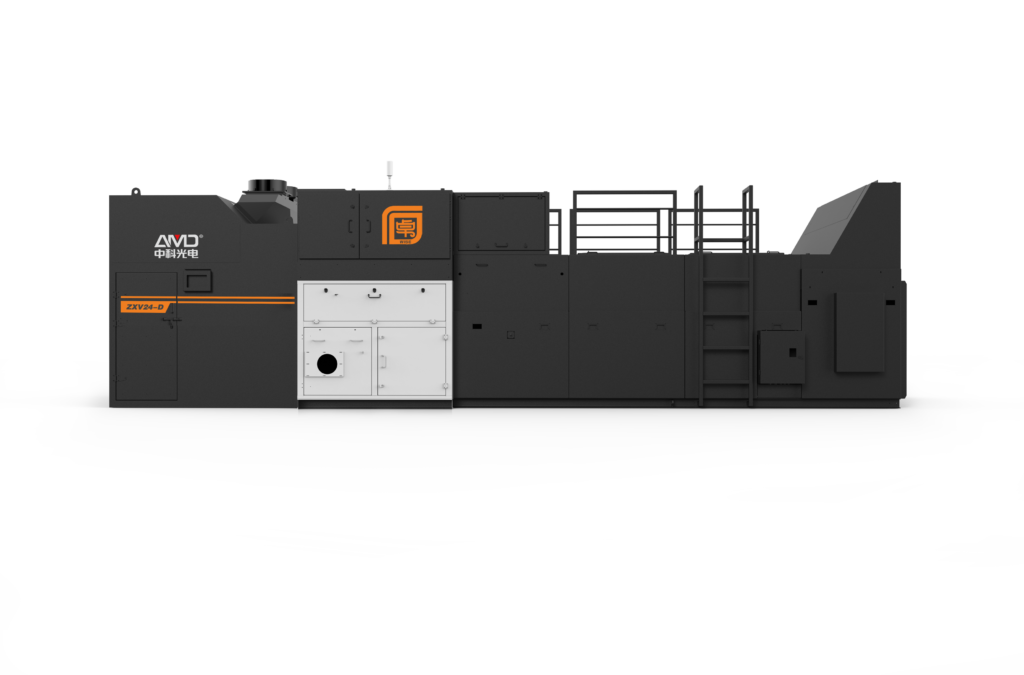
Among the most advanced solutions available today are PolySorter ZXV-Series XRT Ore Sorting Machines, which use X-ray Transmission (XRT) technology to identify and separate valuable ore from barren material based on differences in atomic density and elemental composition. This pre-concentration approach enables mines to process more valuable material while consuming fewer resources.
In this article, we’ll explore how ore sorting technology improves sustainability, lowers operating costs, and helps mining companies achieve stronger environmental and economic performance.
Why Traditional Mineral Processing Consumes So Much Water and Energy
Conventional mining operations typically process the entire run-of-mine (ROM) ore stream through multiple stages:
- Primary crushing
- Secondary and tertiary crushing
- Grinding and milling
- Classification
- Flotation or gravity separation
- Thickening
- Tailings management
The challenge is that a large percentage of mined material often contains little or no economic value. Yet every ton of waste rock still consumes electricity, water, reagents, equipment capacity, maintenance resources, and labor throughout the processing chain.
For example, a copper mine operating at a feed grade of 0.5% may process hundreds of tons of gangue material to recover a relatively small amount of metal. Without pre-concentration, all of this material passes through the mill.
Grinding is particularly expensive. Industry studies frequently estimate that comminution activities—including crushing and grinding—account for approximately 40% to 60% of total mineral processing energy consumption. Every ton of barren rock entering the mill increases power demand without generating additional revenue.
Similarly, flotation circuits require significant volumes of water and chemical reagents regardless of whether the processed material ultimately contributes to metal recovery.
This is why many modern mining operations are adopting pre-concentration technologies before fine grinding begins.
How XRT Ore Sorting Enables Pre-Concentration
Pre-concentration refers to upgrading ore before it enters expensive downstream processing stages.
An XRT ore sorting machine scans individual rocks on a conveyor belt using X-ray transmission technology. Unlike conventional optical sorting systems that rely on surface color, XRT analyzes internal atomic density differences based on the attenuation of X-rays passing through each particle.
The system rapidly evaluates each rock and determines whether it contains economically valuable mineralization. High-speed pneumatic ejectors then separate accepted ore from rejected waste material.
The process is simple but highly effective:
- Valuable ore proceeds to the processing plant.
- Low-grade material is removed early.
- Less material enters grinding circuits.
- Feed grade increases.
- Processing costs decline.
Depending on ore characteristics, many XRT sorting projects can reject 10% to 40% of total feed mass while maintaining high recovery rates for valuable minerals.
PolySorter’s ZXV-Series XRT Ore Sorting Machines are specifically designed to support this pre-concentration strategy. By identifying valuable ore before fine grinding, they help mines improve resource efficiency while reducing downstream processing loads.
How XRT Ore Sorting Machines Reduce Energy Consumption
Energy reduction is often the most immediate and measurable benefit of ore sorting.
Lower Crushing and Grinding Loads
Every ton of waste removed before milling translates directly into lower energy consumption.
Consider a mining operation processing 1 million tons of ore annually.
If an XRT sorting system rejects 25% of barren rock before grinding:
- 250,000 fewer tons enter the mill
- Grinding power demand decreases significantly
- Crusher and mill wear is reduced
- Maintenance costs decline
- Equipment life is extended
Since grinding circuits are typically among the largest energy consumers in a concentrator, even modest reductions in mill feed volume can generate substantial savings.
Increased Throughput Without Expansion
Many concentrators are constrained by grinding capacity rather than mining capacity.
When waste rock is removed before milling, existing equipment can process a larger proportion of valuable ore without requiring additional mills, flotation cells, or infrastructure upgrades.
This effectively creates additional processing capacity from existing assets.
Reduced Carbon Emissions
Lower electricity consumption also reduces greenhouse gas emissions.
For mining companies pursuing ESG objectives and carbon reduction targets, ore sorting provides a practical method for lowering Scope 2 emissions associated with mineral processing operations.
How XRT Ore Sorting Machines Reduce Water Consumption
Water availability is becoming one of the most important operational challenges in global mining.
Many new projects are located in arid or semi-arid regions where water resources are limited and increasingly regulated.
Less Material Requires Water-Intensive Processing
Water is used throughout the mineral processing circuit, including:
- Grinding
- Classification
- Flotation
- Washing
- Thickening
When ore sorting removes waste rock before these stages, fewer tons require treatment.
As a result, water consumption per unit of recovered metal often declines significantly.
Improved Water Recovery Efficiency
Processing lower material volumes reduces hydraulic loads across the plant.
This often improves:
- Thickener performance
- Clarification efficiency
- Water recycling rates
- Process stability
Higher water recovery reduces reliance on freshwater sources and lowers pumping and treatment costs.
Reduced Water Losses in Tailings Storage
Tailings facilities represent a major source of water loss through evaporation and water retention within fine particles.
Because ore sorting removes waste before grinding, less material becomes slurry tailings. This means less water is trapped in tailings storage facilities, allowing more process water to be recovered and reused.
How XRT Sorting Reduces Reagent Consumption in Flotation
Flotation reagents represent a significant operating expense for many mining operations.
Common reagents include:
- Collectors
- Frothers
- Depressants
- Activators
- pH modifiers
The amount of reagent required generally increases with the volume of material processed.
Lower Chemical Consumption
When waste rock is removed before flotation:
- Less slurry enters flotation cells
- Reagent dosage requirements decrease
- Chemical handling requirements are reduced
- Reagent procurement costs decline
Even a modest reduction in flotation feed volume can generate substantial annual savings for large-scale operations.
Improved Flotation Performance
Pre-concentrated feed typically exhibits a higher average grade than unsorted ore.
This can improve flotation performance by:
- Increasing concentrate quality
- Stabilizing recovery rates
- Reducing circulating loads
- Simplifying process control
Many operators find that flotation circuits become easier to manage when feed variability decreases.
How Ore Sorting Helps Reduce Tailings Volume
Tailings management has become one of the most closely monitored aspects of mining sustainability.
As environmental regulations continue to tighten, mining companies are seeking ways to reduce the amount of material sent to tailings storage facilities.
Less Waste Becomes Tailings
Traditional processing converts virtually all rejected material into wet tailings after grinding and beneficiation.
Ore sorting changes this process.
Waste rock rejected by XRT sorting remains coarse material rather than becoming fine slurry.
As a result:
- Tailings volumes decrease
- Tailings facilities fill more slowly
- Storage capacity lasts longer
- Future expansion costs may be deferred
In some projects, tailings reduction becomes one of the largest contributors to overall project economics.
Reduced Environmental Risk
Smaller tailings facilities can also reduce:
- Land disturbance
- Water retention risks
- Closure liabilities
- Long-term monitoring costs
These benefits contribute directly to stronger ESG performance and improved community acceptance.
How Ore Sorting Can Unlock Lower-Grade Deposits
One of the most overlooked advantages of ore sorting is its ability to improve the economics of lower-grade resources.
Across the mining industry, average ore grades continue to decline. Deposits that were once highly profitable often contain less metal than comparable operations developed decades ago.
By upgrading feed before processing, XRT sorting can:
- Increase effective mill feed grades
- Lower processing costs per ton of metal produced
- Reduce cut-off grades
- Convert marginal resources into economic reserves
- Extend mine life
In some cases, ore sorting allows operators to profitably process material that would otherwise be classified as waste.
This capability can significantly increase the overall value of a mining project without expanding the resource base.
Ore Types Well-Suited for XRT Pre-Concentration
XRT sorting has proven effective across a wide range of mining applications, including:
Copper Ore
Remove barren waste rock before grinding and flotation while increasing mill feed grade.
Lithium Ore
Upgrade spodumene-bearing material before dense media separation and downstream concentration processes.
Tungsten and Tin Ore
Improve feed quality before gravity separation circuits.
Lead-Zinc Ore
Reduce processing loads while maintaining high metal recovery rates.
Quartz and Industrial Minerals
Remove unwanted contaminants and improve final product quality.
Coal Applications
Separate high-ash material from saleable coal products.
The suitability of any deposit depends on the atomic density contrast between valuable minerals and the surrounding gangue. Pilot-scale testing remains the most reliable method for evaluating sorting performance.
A Practical ROI Framework for Ore Sorting Projects
Every mining operation is unique, but most ore sorting evaluations follow a similar framework.
1. Calculate Feed Reduction
Determine:
- Annual ROM tonnage
- Expected waste rejection rate
- Metal recovery rate
Example:
- Annual feed: 1,000,000 tons
- Waste rejection: 25%
- Metal recovery: 95%
Result:
- 250,000 tons removed before grinding
2. Estimate Energy Savings
Calculate:
- Crushing energy reductions
- Grinding energy reductions
- Conveying energy reductions
Multiply the expected power savings by local electricity costs.
3. Quantify Water Savings
Estimate:
- Water consumption per processed ton
- Reduction in processed material
- Freshwater acquisition costs
- Water treatment expenses
4. Calculate Reagent Savings
Evaluate:
- Reagent consumption per ton
- Reduction in flotation feed volume
- Annual chemical expenditures
5. Include Tailings Benefits
Consider:
- Lower storage costs
- Delayed tailings expansion projects
- Reduced closure liabilities
6. Assess Revenue Improvements
Potential gains may include:
- Higher feed grades
- Increased throughput
- Additional recoverable reserves
- Longer mine life
Combining these factors provides a realistic estimate of project payback and long-term economic value
Why Mines Choose PolySorter ZXV-Series XRT Machines
As sustainability and operational efficiency become increasingly important, mining companies require ore sorting solutions that deliver both performance and reliability.
PolySorter’s ZXV-Series XRT Ore Sorting Machines are designed to help mines:
- Upgrade ore before grinding
- Reduce energy consumption
- Lower water usage
- Minimize flotation reagent demand
- Decrease tailings generation
- Improve overall project economics
The systems combine advanced XRT detection technology, high-speed data processing, and precision ejection mechanisms to support efficient pre-concentration across a wide range of mineral applications.
Whether the objective is increasing throughput, reducing operating costs, or achieving sustainability targets, XRT sorting has become an increasingly valuable tool for modern mining operations.
Summary
The mining industry is moving beyond the traditional assumption that every mined ton must be processed.
Modern ore sorting machines allow operators to remove waste before it consumes energy, water, reagents, and processing capacity. The result is a more efficient operation with lower costs, reduced environmental impact, and stronger long-term profitability.
By enabling pre-concentration before grinding, PolySorter’s ZXV-Series XRT Ore Sorting Machines help mines reduce water consumption, lower energy use, decrease tailings generation, and improve resource utilization across the entire processing chain.
Every ton of waste removed before milling represents an opportunity to save resources and improve project economics.
If you are evaluating XRT pre-concentration for copper, lithium, tungsten, tin, quartz, coal, or industrial mineral applications, contact the PolySorter team to discuss pilot testing and discover the potential economic and sustainability benefits for your operation.