Fusarium contamination in wheat is more than a visual quality problem. For flour mills, grain processors, storage facilities, and wheat exporters, Fusarium-damaged kernels can affect grain grade, milling performance, finished-product consistency, and mycotoxin management.
One of the main concerns is Fusarium head blight (FHB), a fungal disease associated with Fusarium-damaged kernels (FDK) and mycotoxins such as deoxynivalenol (DON), commonly known as vomitoxin. Depending on the infection, affected wheat may appear shriveled, lightweight, chalky, pale, pinkish, or otherwise abnormal.
Post-harvest cleaning can remove part of this undesirable fraction. However, screening and aspiration alone may not separate every damaged kernel from sound wheat.
This is where grain sorting becomes valuable. Modern optical sorting systems inspect individual kernels and remove defects according to detectable differences in color, shape, size, surface appearance, and—when additional sensor technologies are used—spectral characteristics.
For processors evaluating a grain sorter, however, the key question is not simply whether a machine can reject bad-looking wheat. It is whether the complete sorting process can reduce the Fusarium-damaged fraction while preserving good wheat and maintaining the required throughput.
What Is Fusarium Contamination in Wheat?
Fusarium refers to a group of fungi capable of infecting cereal crops. In wheat, one of the most important diseases associated with these fungi is Fusarium head blight.
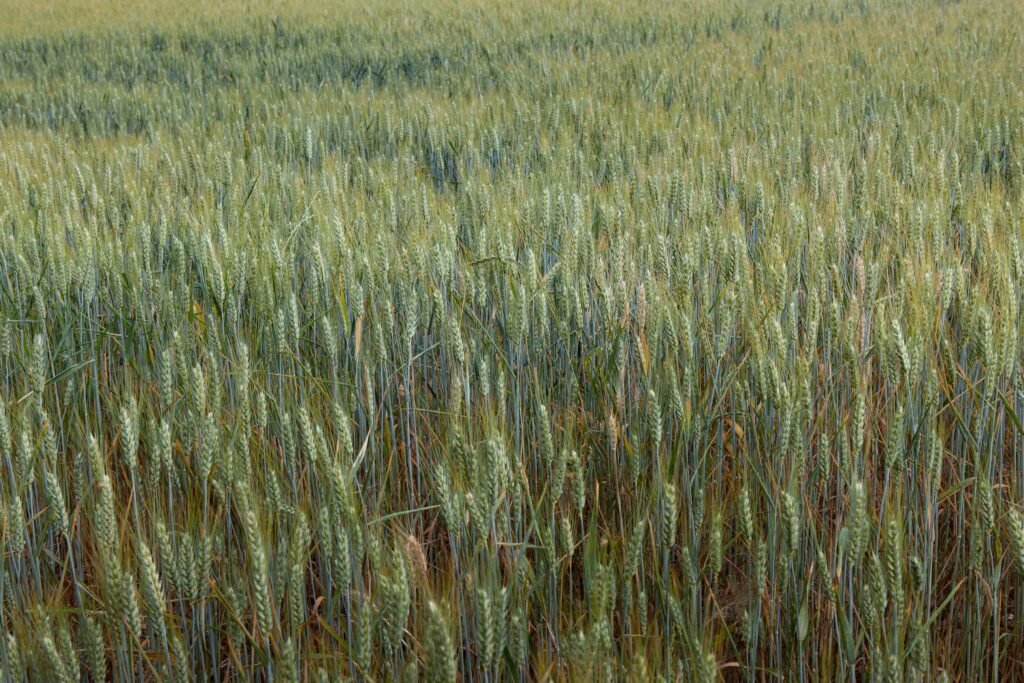
Infection commonly develops in the field, with environmental conditions around flowering playing an important role. Wet and humid conditions during susceptible stages can increase the risk of disease development.
After harvest, a contaminated wheat lot may contain a mixture of healthy kernels and FDK.
Typical Fusarium-damaged kernels may show:
- shriveled or lightweight appearance;
- pale, whitish, or chalky surfaces;
- pink or reddish discoloration;
- irregular kernel development;
- rough or damaged surfaces;
- reduced kernel size or density.
The challenge is that the severity and appearance of infection vary considerably.
Some FDK are easy to distinguish from sound wheat. Others are much less obvious. Furthermore, visible kernel damage does not perfectly predict the concentration of mycotoxins inside a particular kernel or wheat lot.
That difference becomes important when choosing a post-harvest sorting strategy.
Fusarium Head Blight, FDK, and DON Are Related—but Not Identical
These terms are sometimes used almost interchangeably, but they describe different things.
Fusarium head blight (FHB) is the crop disease. Fusarium-damaged kernels (FDK) are grains showing damage associated with infection. Deoxynivalenol (DON) is a mycotoxin that certain Fusarium species can produce.
Other Fusarium-associated toxins can also occur, including nivalenol (NIV).
A processor should therefore avoid treating visible FDK percentage as a direct measurement of DON concentration. The two can be related, but laboratory analysis remains important when mycotoxin concentration is a critical acceptance criterion.
This distinction also explains why grain sorting should be viewed as a physical risk-reduction step, rather than a substitute for mycotoxin testing.
Why Fusarium-Damaged Wheat Creates a DON Control Challenge
DON is particularly important because contamination may not be evenly distributed throughout a wheat lot.
A relatively small fraction of heavily affected kernels can contribute disproportionately to overall contamination. Removing that fraction can therefore improve the quality of the accepted wheat.
Research has demonstrated the potential of this approach. USDA work using visible and near-infrared wavelengths to separate Fusarium-damaged wheat found an average DON concentration in sorted wheat of approximately 51% of the unsorted level, although results varied substantially between samples. Additional sorting passes produced further reductions in some lots.
That variability matters.
A grain sorter should not be described as a machine that automatically detects or eliminates all DON.
Instead, it identifies characteristics associated with undesirable kernels and physically separates those kernels. If Fusarium damage produces detectable visual, structural, or spectral differences, sorting can concentrate more of the affected material in the reject fraction.
Why Conventional Cleaning Alone May Not Be Enough
Wheat processing plants normally remove obvious foreign material before optical sorting.
Screens can separate material by dimensions. Aspiration can remove lighter impurities and some low-density kernels. Gravity separation can further divide material according to differences in density.
These methods are valuable because Fusarium-damaged wheat is often shriveled or lighter than sound wheat. Research reviews specifically identify sieving and gravity separation among the physical approaches used to reduce mycotoxin-contaminated fractions.
But physical properties can overlap.
A damaged kernel may have approximately the same dimensions as an acceptable kernel. Likewise, not every defective kernel is light enough to be efficiently removed by aspiration or density separation.
Optical sorting adds another layer of discrimination by evaluating individual kernels according to detectable optical characteristics.
The technologies therefore complement one another.
How Grain Sorting Identifies Fusarium-Damaged Wheat
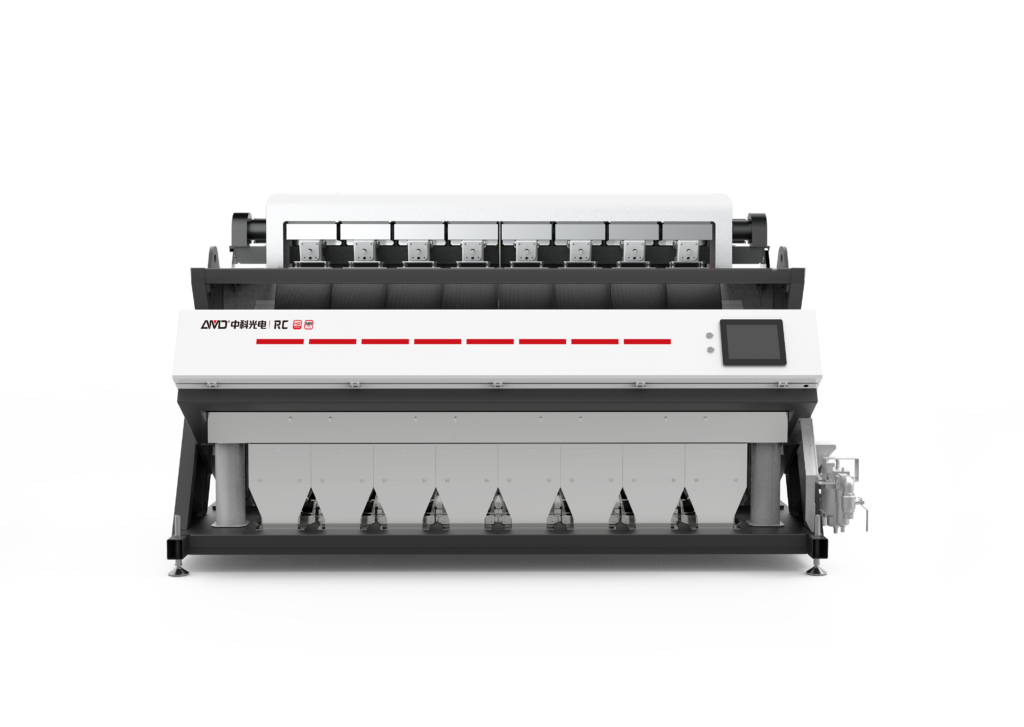
A modern grain sorter processes large numbers of individual kernels in a continuous material stream. Effective separation depends on four closely connected stages.
1. Controlled Feeding Creates a Uniform Wheat Flow
Before the inspection system can classify kernels accurately, the material must be presented consistently.
An intelligent feeding system controls the flow of wheat into the sorting channels. Stable feeding helps reduce excessive overlap and gives the inspection system a clearer view of individual kernels.
This becomes particularly important when the difference between acceptable wheat and FDK is subtle.
Higher throughput is useful only when the inspection and ejection systems can maintain the required separation performance at that throughput.
2. RGB Cameras Detect Visible Fusarium-Related Defects
High-resolution cameras inspect wheat as it passes through the detection area.
For visibly damaged wheat, the system can be trained or configured to recognize characteristics such as:
- pink or reddish discoloration;
- pale or chalky kernels;
- dark spots;
- abnormal shape;
- shriveled appearance;
- surface defects;
- other color differences from acceptable wheat.
Research on high-speed optical sorting has shown that color, size, and texture information can be used to distinguish Fusarium-damaged kernels from sound kernels.
For many grain-processing applications, visible-light inspection therefore provides a practical starting point.
3. NIR or InGaAs Sensing Can Add Spectral Information
Visible appearance is not the only potential basis for separation.
NIR-based sensing can provide additional spectral information related to differences between sound and Fusarium-damaged wheat. Studies have found spectral differences between healthy and Fusarium-affected kernels and have investigated NIR and near-infrared transmittance for FDK separation.
This does not mean that every wheat processor automatically needs an NIR sorter.
Where Fusarium damage produces strong and consistent visible differences, an RGB-based grain color sorter may provide an effective solution. When defects are more subtle, or when the processor needs additional spectral discrimination, NIR or InGaAs-based sensing may be worth evaluating.
Actual performance depends on the sensor configuration, sorting algorithm, wheat variety, contamination characteristics, and processing objective.
The best technology should therefore be selected through material testing rather than by assuming that a more complex sensor is always the better choice.
4. Sorting Algorithms and Air Ejection Complete the Separation
After the sensors capture information about each kernel, the sorting algorithm determines whether the material falls within the acceptable range.
When a target defect is identified, precisely timed compressed-air ejectors remove that kernel from the main product stream.
The result is two fractions:
Accept — wheat that meets the configured sorting criteria
Reject — material identified as undesirable
For Fusarium applications, both fractions matter.
A highly aggressive setting may remove more damaged kernels but also increase good wheat loss. A setting that is too tolerant may protect yield but leave too much FDK in the accepted stream.
The goal is therefore not maximum rejection. It is the right balance between defect removal, finished-product quality, throughput, and yield.
Where Should a Grain Sorter Be Used in Fusarium Wheat Processing?
Optical sorting performs best as part of a multi-stage quality-control process rather than as a standalone solution.
A practical wheat-processing sequence may look like this:
Receiving → Sampling & DON Testing → Pre-Cleaning & Aspiration → Gravity Separation → Optical Sorting → Quality Verification → Milling or Further Processing
Each stage has a different job.
Sampling and DON Testing
Representative sampling establishes the contamination status of incoming wheat.
When DON is an important purchasing or processing criterion, appropriate analytical testing provides information that visual inspection alone cannot.
Pre-Cleaning and Aspiration
Screens, aspiration systems, and other conventional cleaners remove straw, dust, stones, undersized material, and other easily separated impurities.
Removing these materials early also reduces the unnecessary load placed on downstream sorting equipment.
Gravity Separation
A gravity separator can remove part of the lightweight, low-density fraction before optical sorting.
This is especially relevant for Fusarium because affected kernels are often shriveled and lower in density than healthy wheat. Density separation has long been used alongside aspiration for the removal of Fusarium-damaged material.
Optical Sorting
After obvious physical impurities and some low-density kernels have been removed, optical sorting can focus on defects that remain distinguishable by color, shape, surface appearance, or other detectable characteristics.
This is where kernel-level inspection becomes especially valuable.
Quality Verification
The accepted fraction should then be evaluated against the processor’s actual quality requirements.
When mycotoxin reduction is one of the objectives, comparing incoming wheat, accepted product, and reject material provides a much clearer picture of sorting performance.
Laboratory testing of these fractions can show whether the sorting strategy is producing the required improvement rather than simply making the wheat look cleaner.
How to Choose a Grain Sorter for Fusarium Contamination in Wheat
When Fusarium contamination in wheat is one of the main reasons for investing in sorting equipment, do not compare machines by throughput alone.
Start with the material and the required result.
Test the Machine with Representative Fusarium-Damaged Wheat
A supplier demonstration using clean, carefully selected wheat tells you very little about how the machine will perform in your plant.
Provide a representative sample containing the defects normally encountered in production.
Then compare:
Raw Material → Accepted Wheat → Rejected Material
Look at how effectively FDK moves into the reject fraction and how much acceptable wheat is lost with it.
If DON reduction is a major objective, laboratory analysis of the fractions can add another layer of verification.
Decide Whether RGB or Additional Sensor Technology Is Needed
Do not assume NIR is automatically necessary simply because Fusarium is involved.
If the main defects are visibly pale, pink, chalky, dark, shriveled, or otherwise distinguishable, high-resolution RGB sorting may already address the primary separation task.
If important defects are difficult to distinguish in visible light, ask whether NIR, InGaAs, or another sensor configuration provides a measurable improvement on your samples.
The important word is measurable.
The supplier should demonstrate improved separation performance with your material rather than relying only on a sensor specification.
Compare Good-Product Loss
Reject purity is only half of the equation.
Suppose two machines both produce cleaner wheat, but one sends considerably more sound kernels into the reject stream. Over thousands of tons of annual production, that difference can become economically significant.
Evaluate:
- FDK removal;
- accepted-product quality;
- good wheat in the reject stream;
- recovery rate;
- required number of passes;
- practical throughput.
These indicators provide a much better picture of sorting economics than a single accuracy percentage.
Evaluate Capacity Under Real Sorting Conditions
Nominal throughput describes how much material a machine can process under specified conditions. It does not automatically tell you how much contaminated wheat can be processed while maintaining your required quality.
Feed rate, contamination level, wheat characteristics, sorting sensitivity, sensor configuration, and the number of sorting passes can all affect practical capacity.
For facilities processing multiple grains, it is also worth considering whether the equipment can handle other agricultural materials and whether recipes or sorting parameters can be adjusted efficiently between products.
Look at the Complete Sorting System
Camera resolution or sensor type should not be evaluated in isolation.
Feeding stability, illumination, image processing, sorting algorithms, valve response, air consumption, machine configuration, operating interface, maintenance requirements, and technical support all influence real-world performance.
The grain sorting equipment used for wheat applications can combine intelligent algorithms, high-resolution imaging, stable feeding, and high-speed ejection to identify and remove undesirable kernels from the product stream.
For procurement teams, the best machine is therefore not necessarily the one with the longest specification sheet. It is the system that achieves the required separation on actual raw material with an acceptable balance of quality, yield, capacity, and operating cost.
FAQ About Fusarium Contamination in Wheat
Can a grain color sorter remove Fusarium-damaged wheat?
Yes. Optical sorting can remove many Fusarium-damaged kernels when those kernels have detectable differences in color, shape, size, texture, surface appearance, or other measurable characteristics. However, not every contaminated kernel necessarily displays the same detectable symptoms.
Can optical sorting reduce DON in wheat?
It can help. Studies have demonstrated substantial DON reductions in some wheat lots after Fusarium-damaged kernels were separated. Results vary according to the raw material, contamination pattern, sorting technology, settings, and number of sorting passes.
Can a grain sorter directly detect DON?
Conventional optical sorting should not be treated as a direct replacement for laboratory DON analysis. The sorter separates kernels according to detectable characteristics associated with undesirable material, while analytical testing determines mycotoxin concentration.
Is NIR better than RGB for sorting Fusarium wheat?
Not in every application. RGB systems are useful when FDK shows clear visual abnormalities. NIR can provide additional spectral information and may improve discrimination for certain less-visible differences. The right choice depends on the wheat and should be verified through representative sample testing.
Should a gravity separator be used before optical sorting?
It can be beneficial. Because many Fusarium-damaged kernels are shriveled or lower in density, gravity separation can remove part of this fraction before optical sorting. Optical sorting can then target remaining kernel-level defects that are harder to separate by density alone.
What should I test before buying a wheat grain sorter?
Test actual production material whenever possible. Compare raw, accepted, and rejected fractions for FDK removal, good-product loss, recovery, throughput, and finished-product quality. If mycotoxin reduction is a key objective, appropriate laboratory analysis should also be included.
Build a More Reliable Fusarium Control Strategy for Wheat
Managing Fusarium contamination in wheat requires more than one processing step.
Sampling and testing identify the problem. Pre-cleaning removes obvious impurities. Aspiration and gravity separation target lightweight material. Optical sorting provides kernel-level separation of remaining detectable defects. Final verification confirms whether the processed wheat meets the required quality standard.
For flour mills and grain processors, this combined approach is more meaningful than expecting one machine to solve every aspect of Fusarium and DON contamination.
The same principle should guide equipment purchasing.
Do not choose a grain sorter simply because it offers the highest nominal capacity, the largest number of cameras, or the most advanced-sounding sensor. Start with your wheat: What defects must be removed? How visible are they? What finished quality is required? How much good-product loss is acceptable?
Then test the sorting system against those requirements.
If you are evaluating a Grain Color Sorter for Fusarium-damaged wheat, contact PolySorter with your wheat sample, target defects, required throughput, and finished-product requirements. We can help evaluate an appropriate sorting configuration for your processing line.