Among all contamination challenges in plastic recycling, PVC contamination in PET flakes remains one of the most costly. Even a small amount of PVC mixed into recycled PET can create significant processing issues during extrusion and pelletizing. PVC begins degrading at lower temperatures than PET, releasing hydrochloric acid and causing discoloration, equipment corrosion, reduced mechanical properties, and lower product value.
For recycling plants producing food-grade PET, bottle-grade rPET, or high-purity polyester materials, removing PVC is not simply a quality improvement measure—it is a necessity. This is why modern recycling facilities increasingly rely on AI sorting machines capable of detecting and separating PVC from PET flakes with extremely high accuracy.
As recycling standards become stricter and buyers demand cleaner recycled materials, understanding how AI-powered sorting systems work has become essential for plant operators, investors, and recycling businesses seeking long-term profitability.
Why Traditional PVC Separation Methods Struggle with PET Flakes
Before intelligent sorting systems became available, recyclers relied on manual inspection, density separation, flotation systems, or basic optical sorting technologies.
While these methods can remove large contaminants, they often struggle when processing:
- Small PET flakes
- Similar-colored materials
- Dirty or washed flakes
- Transparent plastics
- Mixed post-consumer waste streams
The challenge becomes even greater because PVC and PET can appear nearly identical to the human eye. Clear PVC flakes and clear PET flakes may have very similar visual characteristics, making manual separation unreliable.
Traditional RGB cameras mainly identify differences in color and brightness. However, when PVC and PET share similar colors, conventional color sorting systems cannot consistently distinguish one polymer from another.
As recycling volumes increase and labor costs continue rising, manual sorting becomes both inefficient and economically unsustainable. This has accelerated the adoption of AI-driven sorting technologies capable of identifying materials based on their molecular characteristics rather than appearance alone.
How AI Sorting Machines Identify PVC and PET at the Molecular Level
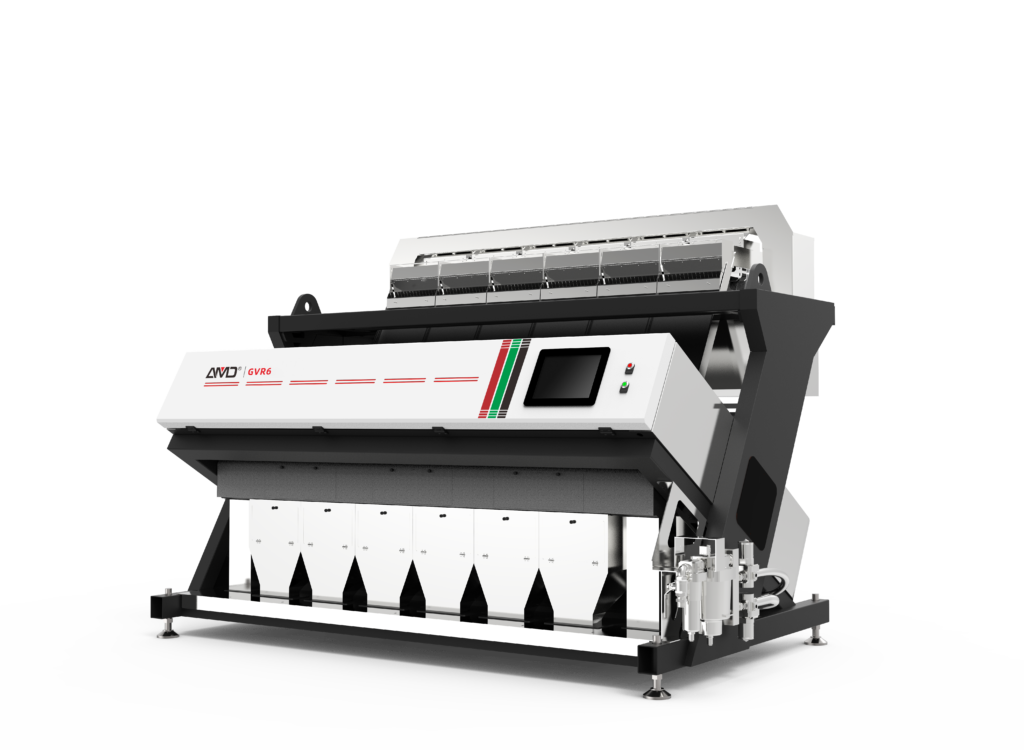
The biggest advancement in modern recycling technology is the combination of artificial intelligence with Near-Infrared (NIR) spectroscopy.
Instead of simply analyzing color, NIR sensors examine how different polymers reflect and absorb infrared wavelengths.
Every plastic polymer possesses a unique spectral fingerprint.
When PET flakes pass beneath an NIR sensor, the system captures their infrared reflection pattern. The same process occurs for PVC flakes. Because the chemical structures of PET and PVC differ significantly, their infrared signatures are also different.
Advanced AI algorithms then compare these signatures against trained material databases in real time.
The process typically occurs in milliseconds:
- Material enters the feeding system.
- Flakes spread into a single layer.
- NIR sensors scan every particle.
- AI software classifies the material.
- High-speed ejectors remove unwanted flakes.
- Pure PET continues through the production line.
Unlike older sorting methods, modern AI systems continuously learn from data and optimize recognition performance. This allows them to maintain high sorting accuracy even when feedstock quality changes throughout the day.
Many modern polymer sorting systems are capable of recognizing:
- PET
- PVC
- PP
- PE
- ABS
- PS
- PA
- PMMA
- Engineering plastics
This multi-polymer capability significantly increases plant flexibility and revenue opportunities.
The Role of AI Vision Systems in PVC and PET Flake Separation
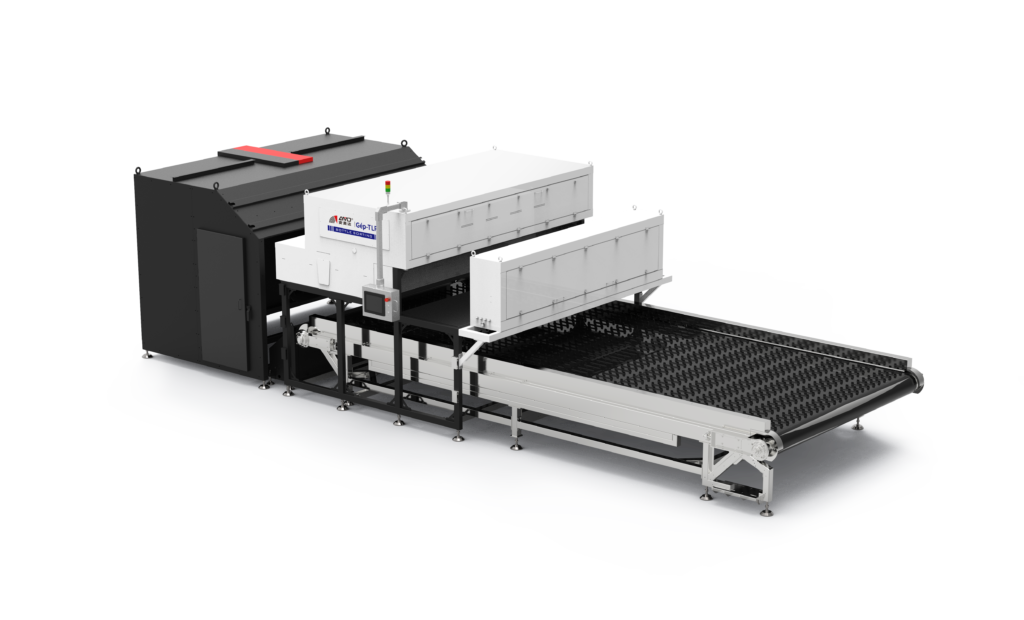
NIR technology provides polymer identification, but modern sorting machines increasingly combine it with AI vision systems.
This hybrid approach delivers much higher accuracy than either technology alone.
High-resolution cameras collect information such as:
- Color
- Shape
- Transparency
- Surface texture
- Contamination patterns
AI image recognition software then evaluates thousands of visual characteristics simultaneously.
For example, if a flake exhibits unusual optical behavior or contains labels, adhesives, or contamination, the AI system can make additional classification decisions beyond what NIR data alone can provide.
Deep learning models are particularly effective because they improve performance over time. By analyzing millions of sorting events, the system becomes better at recognizing difficult materials and reducing false ejections.
This combination of NIR polymer recognition and AI visual inspection has become the preferred solution for high-purity PET recycling operations worldwide.
High-Speed Ejection Technology: The Final Step in Accurate Separation
Detection alone is not enough. Once PVC flakes are identified, they must be removed instantly without disrupting production throughput.
Modern AI sorting machines accomplish this using high-frequency air ejection systems.
As each flake passes through the detection zone, the control system calculates:
- Material type
- Position
- Velocity
- Trajectory
If the system identifies PVC, a precisely timed burst of compressed air ejects the particle from the material stream.
This entire process happens within milliseconds.
Today’s industrial sorting systems can process several tons of material per hour while maintaining exceptional purity levels.
Key advantages include:
Higher Product Purity
Removing PVC contamination helps recyclers achieve premium-grade PET suitable for demanding applications.
Reduced Production Losses
Accurate ejection minimizes the amount of good PET removed alongside contaminants.
Lower Operating Costs
Automated sorting reduces dependence on manual labor while increasing production consistency.
Increased Market Value
Cleaner PET flakes command higher prices in both domestic and export markets.
For many recycling facilities, the return on investment comes not only from labor savings but also from improved product quality and reduced customer complaints.
Choosing the Right AI Sorting Machine for PVC and PET Flakes
Not all sorting machines are designed for the same application. When evaluating equipment for PVC and PET separation, recyclers should consider several critical factors.
Sensor Technology
Look for systems equipped with advanced NIR polymer recognition capabilities rather than color-only sorting technology.
AI Recognition Performance
Deep-learning algorithms provide better adaptability to changing feedstock conditions.
Throughput Requirements
The machine should match the facility’s production capacity without compromising accuracy.
Ejection Precision
High-speed ejector systems are essential for maximizing PET recovery while effectively removing PVC.
Future Expansion
Facilities planning to process multiple polymer streams should select equipment capable of recognizing a wide range of plastic materials.
Modern sensor-based sorting platforms can often be upgraded to handle additional polymers, colors, and contaminants as business requirements evolve.
FAQs
Can AI sorting machines completely remove PVC from PET flakes?
No sorting technology can guarantee an absolute 100% removal under all conditions. However, modern AI and NIR sorting systems can achieve extremely high purity levels suitable for most industrial recycling applications.
Why is PVC so harmful in PET recycling?
PVC degrades at lower processing temperatures than PET. Even small amounts can cause discoloration, degradation, equipment corrosion, and reduced product quality.
Is NIR technology better than traditional color sorting?
For polymer identification, yes. Color sorters identify visual differences, while NIR systems identify material composition, making them much more effective for separating PVC and PET.
Can one machine sort multiple plastic types?
Yes. Modern AI sorting systems can often recognize and separate multiple polymers such as PET, PVC, PP, PE, ABS, PS, PA, and PMMA within the same processing line.
What industries use PVC and PET flake sorting systems?
Applications include bottle recycling plants, packaging recyclers, textile recycling facilities, food-grade rPET production, plastic pellet manufacturers, and advanced material recovery facilities.
Summary
As recycling standards continue to rise, accurately separating PVC from PET flakes has become one of the most important challenges facing modern recycling operations. Traditional methods often struggle to achieve the purity levels required by today’s market, particularly when dealing with mixed-color, transparent, or highly contaminated material streams.
AI-powered sorting machines combine NIR spectroscopy, machine vision, deep-learning algorithms, and high-speed ejection technology to identify polymers at the molecular level and remove contaminants with exceptional precision. The result is cleaner PET, higher product value, lower operating costs, and greater confidence from downstream buyers.
If your facility is looking to improve PET purity, reduce PVC contamination, and increase recycling profitability, investing in advanced AI sorting technology can provide a significant competitive advantage. Contact the Polysorter team to learn how our intelligent plastic sorting solutions can help optimize your recycling operation and maximize the value of every ton of material processed.