The mining industry is undergoing a structural transformation. As high-grade ore deposits become increasingly scarce and energy costs continue to rise, mining operations are under constant pressure to process more material with lower ore grades while maintaining profitability.
At the same time, environmental regulations are becoming stricter, and mining companies are expected to reduce energy consumption, minimize waste generation, and improve overall resource efficiency. These combined pressures are accelerating the adoption of advanced pre-concentration technologies across both new and existing mineral processing plants.
This is where sensor-based ore sorting plays a critical role.
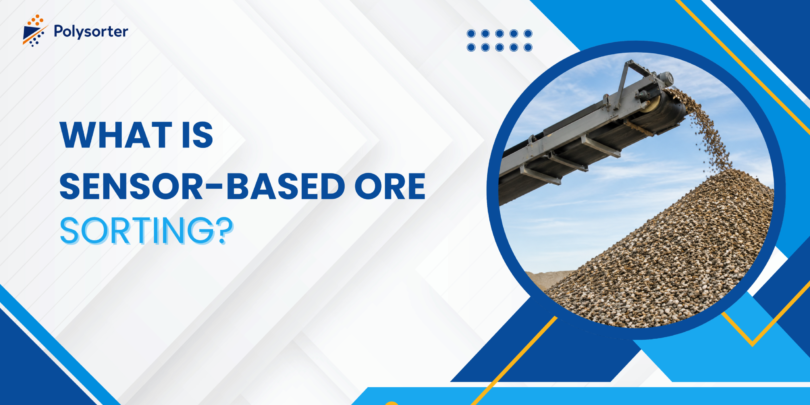
Sensor-based ore sorting is a modern mineral pre-concentration method that uses advanced sensors to identify individual ore particles and separate valuable minerals from waste rock before traditional processing stages such as grinding or flotation.
By rejecting barren material early in the process, mines can significantly reduce energy consumption, lower operating costs, and improve the feed grade entering downstream circuits.
Modern systems combine high-speed mechanical handling with intelligent sensor technologies such as X-ray Transmission (XRT), optical imaging, Near-Infrared (NIR), laser detection, and X-ray Fluorescence (XRF). These technologies allow thousands of particles to be analyzed and classified every second with high precision.
For commodities such as gold, copper, lead-zinc, iron ore, lithium, fluorite, and phosphate, sensor-based ore sorting has become an essential part of modern mining flowsheets. It enables efficient waste rejection after crushing but before grinding, which is one of the most energy-intensive stages in mineral processing.
In many operations, this approach is now considered a key enabler for extending mine life and improving the economic value of low-grade deposits.
What Is Sensor-Based Ore Sorting?
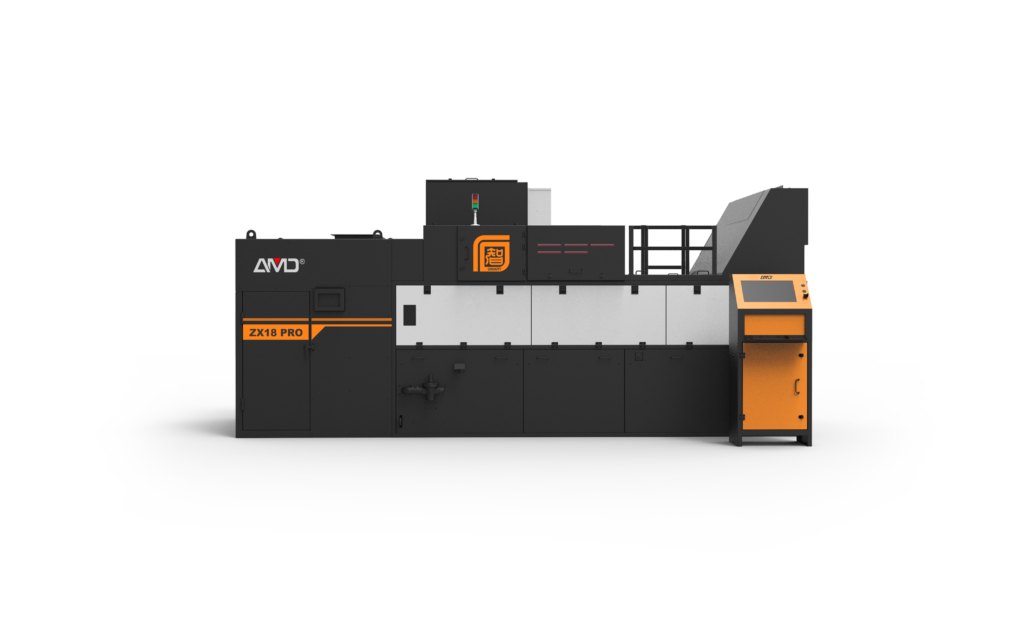
Sensor-based ore sorting is an automated particle-level separation technology that identifies and classifies individual rocks using physical or chemical property sensors before separating them into valuable ore and waste streams.
In simple terms, it is a real-time decision system that determines whether each rock is worth processing or should be rejected.
Unlike traditional bulk mineral processing methods, sensor-based sorting does not treat ore as a uniform mixture. Instead, it analyzes each particle independently within milliseconds.
A typical system performs five core functions:
- Individual ore particles are separated and presented in a single layer
- Sensors capture physical or chemical characteristics
- Data is processed in real time by control software
- AI algorithms classify each particle
- High-speed air jets separate ore from waste
Although the concept is simple, the execution is highly advanced. Modern systems perform millions of calculations per hour while maintaining stable recognition accuracy under variable feed conditions.
This process is widely referred to as pre-concentration, because it upgrades ore before energy-intensive processes such as grinding, flotation, or leaching.
By removing barren rock early, mining operations can focus downstream processing capacity only on material that contains economic value.
For mines dealing with declining head grades and rising production costs, this early-stage upgrading significantly improves overall plant efficiency and operational stability.
How Does Sensor-Based Ore Sorting Work?
Although different manufacturers use different hardware configurations, most sensor-based ore sorting systems follow a standardized process flow.
Step 1 – Crushing and Screening
The process begins after primary or secondary crushing.
Raw ore is screened into a controlled particle size range to ensure consistent detection conditions. Particle size uniformity is critical because it directly affects sensor accuracy and separation efficiency.
For example:
- XRT-based systems typically operate in the range of 10–50 mm
- Coarse ore sorting systems may handle up to 80–100 mm
Proper size classification ensures that each particle can be independently detected and processed without interference from neighboring material.
Step 2 – Material Feeding and Acceleration
After screening, ore is evenly distributed onto a high-speed conveyor belt or acceleration chute.
This stage is essential for system performance.
If particles overlap or cluster, sensors cannot accurately detect individual rocks, which reduces sorting precision.
Modern feeding systems are therefore designed to create a single-layer particle distribution, ensuring full visibility of each particle during detection.
A stable and uniform feed also improves downstream ejection accuracy and reduces misplaced material losses.
Step 3 – Sensor Detection
As each particle passes through the detection zone, multiple sensors collect real-time data based on different physical properties.
Depending on the system configuration, the following characteristics may be analyzed:
- X-ray attenuation behavior
- Effective atomic number response
- Color and surface reflectance
- Texture and morphology
- Mineralogical composition
- Elemental characteristics
- Particle geometry
Each detection method provides a different perspective of the ore, allowing the system to build a more complete understanding of material composition.
Step 4 – Real-Time Data Processing and Decision Making
Once sensor data is collected, it is transmitted to a high-speed processing unit.
Modern ore sorting systems no longer rely on simple threshold-based logic. Instead, they use AI-driven classification models that can recognize complex mineral patterns and adapt to changing ore characteristics.
Rather than evaluating a single parameter, the system analyzes multiple variables simultaneously, including density response, surface features, and statistical patterns derived from historical data.
This multi-variable decision model significantly improves separation accuracy while reducing the risk of rejecting valuable ore.
Step 5 – Precision Separation
After classification, each particle enters the separation zone.
High-frequency solenoid air valves respond within milliseconds, directing compressed air to precisely eject unwanted material.
Accepted ore continues forward into downstream processing circuits, while waste material is diverted into a separate tailings stream.
Because this entire process is fully automated and continuous, modern systems can process tens to hundreds of tons of ore per hour while maintaining consistent separation performance.
What Is Sensor-Based Ore Sorting Used For?
Sensor-based ore sorting is primarily used as a pre-concentration stage in mineral processing plants.
Its main purpose is to remove waste rock early in the process chain and upgrade ore quality before energy-intensive downstream operations.
Common applications include:
- Pre-discarding waste after crushing
- Upgrading low-grade ore before grinding
- Recovering value from waste dumps
- Reducing load on grinding and flotation circuits
- Improving overall plant feed grade
By shifting part of the separation process upstream, mining operations can significantly reduce total processing costs while improving overall resource efficiency.
What Sensors Are Used in Sensor-Based Ore Sorting?
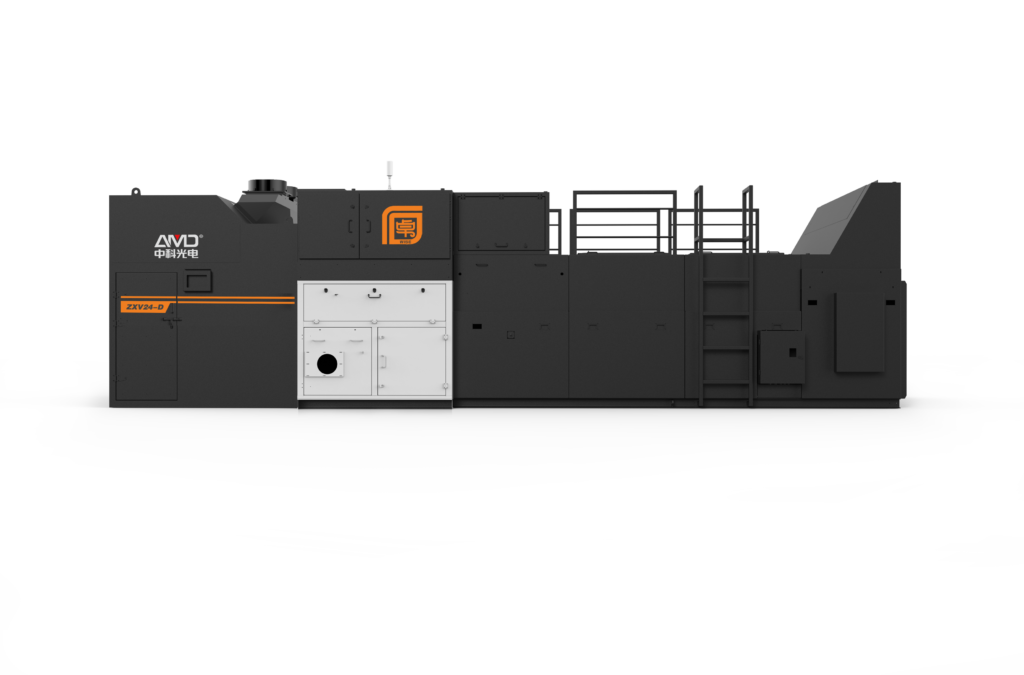
The performance of a sensor-based ore sorting system depends largely on the type of sensors used. Different minerals respond differently to physical and chemical detection methods, which is why modern sorting machines are often configured based on ore characteristics rather than a single universal technology.
Today, most industrial systems use a combination of sensor technologies instead of relying on one detection method alone.
XRT (X-Ray Transmission)
X-ray Transmission (XRT) is one of the most widely used technologies in modern hard-rock ore sorting.
XRT works by passing low-energy X-rays through individual ore particles and measuring how much radiation is absorbed. This measurement is known as X-ray attenuation, which is closely related to the material’s density and effective atomic number.
Because different minerals absorb X-rays at different levels, XRT can distinguish valuable ore from waste rock even when their surface appearance is identical.
XRT is particularly effective for:
- Gold ore
- Copper ore
- Lead-zinc ore
- Iron ore
- Tungsten and tin ores
- Manganese and lithium-bearing ores
One of the key advantages of XRT is its ability to detect internal mineral composition, making it highly effective for complex ores where valuable minerals are not visible on the surface.
As a result, XRT-based systems are widely used for:
- Pre-concentration of low-grade ore
- Waste rock rejection after crushing
- Tailings reprocessing
- Feed grade improvement before grinding
Optical and CCD Sensors
Optical and CCD-based sorting systems analyze the surface characteristics of ore particles using high-resolution industrial cameras.
Unlike XRT, optical systems do not penetrate the rock. Instead, they evaluate visible features such as:
- Color differences
- Surface texture
- Shape and morphology
- Reflectance intensity
- Visible mineral patterns
This makes optical sorting highly effective when valuable minerals have clear visual contrast compared to surrounding gangue.
Typical applications include:
- Industrial minerals
- Quartz and feldspar
- Coal and sedimentary materials
- Some non-metallic ores
Optical systems are often used in combination with AI image recognition to improve classification accuracy, especially in heterogeneous material streams.
Near-Infrared (NIR) Sensors
Near-Infrared (NIR) technology identifies materials by analyzing how they reflect infrared light at specific wavelengths.
Each mineral has a unique spectral response, allowing NIR systems to distinguish between different material types based on their molecular structure.
NIR is commonly used for:
- Limestone
- Gypsum
- Kaolin
- Talc
- Potash
- Industrial mineral sorting applications
However, NIR is generally less effective for dense metallic ores because it only analyzes surface-level spectral properties, rather than internal density or elemental composition.
For this reason, NIR is often used in combination with other technologies in multi-sensor systems rather than as a standalone solution.
XRF (X-Ray Fluorescence)
X-Ray Fluorescence (XRF) identifies the elemental composition of ore particles.
When exposed to X-rays, each chemical element emits a unique fluorescent signal. By analyzing this signal, the system can determine the presence and concentration of valuable elements within the ore.
XRF is particularly valuable for:
- High-grade metal ores
- Polymetallic deposits
- Critical mineral recovery
- Grade control applications in mining operations
Because XRF directly measures elemental content, it is often used in applications where precise chemical composition is more important than physical density differences.
In most industrial systems, XRF is used for coarse particle sorting or belt-based configurations, as signal acquisition requires slightly longer measurement time compared to XRT or optical systems.
Multi-Sensor Fusion: The Future of Ore Sorting Technology
Modern mining operations are increasingly moving toward multi-sensor fusion systems, where two or more detection technologies are integrated into a single platform.
For example:
- XRT provides internal density and atomic structure information
- CCD cameras provide surface texture and visual data
- AI algorithms combine both data streams for final classification
This integrated approach significantly improves sorting accuracy, especially for complex ore bodies where no single sensor is sufficient on its own.
Multi-sensor systems can:
- Reduce misclassification of borderline particles
- Improve recovery of valuable minerals
- Adapt to changing ore characteristics
- Maintain stable performance under variable feed conditions
As ore bodies become more complex and heterogeneous, multi-sensor fusion is becoming the dominant trend in advanced mineral processing design.
Why More Mines Are Choosing Sensor-Based Ore Sorting
The adoption of sensor-based ore sorting is accelerating globally because it directly improves both operational efficiency and financial performance.
Unlike traditional beneficiation methods that process all mined material equally, ore sorting introduces a selective pre-concentration step that removes waste before energy-intensive processing begins.
Increase Feed Grade Before Milling
By rejecting barren rock early, the average grade of material entering the grinding circuit is significantly improved.
This leads to:
- Higher concentrate quality
- More stable downstream processing
- Better overall recovery efficiency
Reduce Energy Consumption in Comminution
Comminution (crushing and grinding) is one of the most energy-intensive stages in mining.
By removing waste rock before milling, sensor-based ore sorting can significantly reduce energy consumption, lower equipment wear, and minimize operational load on mills.
In some operations, reducing waste by even a small percentage can result in substantial energy savings at scale.
Lower Water and Chemical Usage
Higher-grade feed requires fewer reagents during flotation and leaching.
This leads to:
- Reduced water consumption
- Lower chemical usage
- Improved environmental performance
As sustainability requirements increase globally, this has become a key operational advantage.
Improve Economic Viability of Low-Grade Deposits
Many ore bodies previously considered uneconomical can become viable when pre-concentration is applied.
Sensor-based ore sorting allows operators to:
- Upgrade low-grade ore before processing
- Extend mine life
- Unlock additional resource value
Reduce Tailings and Environmental Impact
Every ton of waste removed before milling reduces tailings production.
This helps mining companies:
- Reduce tailings storage requirements
- Lower long-term environmental liabilities
- Improve overall sustainability metrics
How to Choose the Right Sensor-Based Ore Sorting Machine
Selecting the right ore sorting system requires a technical understanding of both ore characteristics and production requirements.
1. Ore Mineralogy and Liberation Characteristics
The most important factor is understanding how valuable minerals are distributed within the ore body.
Key questions include:
- Are minerals visible or hidden internally?
- Is density the primary differentiator?
- Is elemental composition required for separation?
This determines whether XRT, XRF, optical, or hybrid systems are most suitable.
2. Particle Size Distribution
Ore sorting systems are designed for specific particle size ranges.
Choosing the correct size fraction is essential for:
- Detection accuracy
- Stable material flow
- Efficient separation performance
Incorrect sizing can significantly reduce system efficiency.
3. Throughput and Plant Integration
Production capacity must match both current and future requirements.
Operators should consider:
- Peak throughput demand
- Expansion potential
- Integration with crushing and grinding circuits
4. AI and Software Intelligence
Modern ore sorting performance is increasingly determined by software rather than hardware alone.
Advanced systems use AI models that:
- Learn from operating data
- Adapt to changing ore conditions
- Improve classification accuracy over time
5. Service and Lifecycle Support
Because ore sorting is a long-term investment, technical support is critical.
Key factors include:
- Laboratory testing capability
- Pilot-scale validation
- Remote monitoring systems
- Spare parts availability
- Software upgrade support
FAQs
What is sensor-based ore sorting?
Sensor-based ore sorting is a mineral processing technology that uses physical and chemical sensors such as XRT, XRF, NIR, or optical systems to separate valuable ore from waste rock at the particle level before downstream processing.
What is the main advantage of sensor-based ore sorting?
The main advantage is early waste rejection, which reduces energy consumption, improves ore grade, and increases overall processing efficiency.
Which sensor is best for ore sorting?
There is no single best sensor. XRT is widely used for metallic ores, optical systems for surface-based separation, NIR for industrial minerals, and XRF for elemental analysis. Many modern systems combine multiple sensors.
Can ore sorting replace traditional beneficiation methods?
No. Ore sorting is a pre-concentration step that improves feed quality before traditional processes such as flotation, gravity separation, or leaching.
What particle size is required for ore sorting?
Most systems operate between 10 mm and 100 mm depending on ore type and machine configuration.
Is sensor-based ore sorting suitable for low-grade ore?
Yes. It is especially effective for upgrading low-grade ore by removing waste before grinding.
Improve Your Mining Efficiency with Advanced Ore Sorting Technology
Sensor-based ore sorting is redefining modern mining by shifting value recovery to the earliest stage of the processing chain. By combining advanced sensors, real-time data processing, and intelligent AI algorithms, mining operations can significantly improve efficiency, reduce operating costs, and maximize resource utilization.
Whether the goal is to upgrade low-grade ore, reduce energy consumption, or extend mine life, selecting the right sorting technology is a critical decision.
At PolySorter, we develop advanced ore sorting solutions including XRT systems, multi-sensor intelligent platforms, and customized mineral separation technologies designed for complex mining environments.
If you are evaluating a new project or optimizing an existing plant, our engineering team can provide ore testing, process evaluation, and tailored sorting solutions to help you maximize recovery and operational efficiency.