Mining companies are constantly looking for ways to improve mineral recovery, reduce processing costs, and make better use of available resources. However, traditional mineral processing methods often require large amounts of energy because extracted materials usually contain both valuable minerals and a significant amount of waste rock. Processing all of these materials together increases the workload of crushing, grinding, and separation systems.
An ore sorting machine provides an advanced solution by introducing an early separation process before traditional mineral processing stages. Using sensor-based sorting technology, the machine analyzes individual rocks or particles, identifies differences between valuable minerals and unwanted materials, and separates them automatically. This approach, often known as pre-concentration, helps mining operations improve feed quality before materials enter more energy-intensive processing stages.
Understanding how an ore sorting machine works is important for mining companies planning to upgrade their processing lines. Different minerals have different physical characteristics, including color, surface structure, density, and internal composition. Therefore, selecting the right sorting technology requires a clear understanding of how sensors, intelligent algorithms, and separation systems work together.
What Is an Ore Sorting Machine and Why Is It Used in Modern Mining?
An ore sorting machine is an automated mineral separation system that uses advanced sensors and intelligent control technology to identify and separate valuable ore from waste materials. Unlike manual inspection or traditional separation methods that process large quantities of mixed material, sensor-based ore sorting evaluates individual particles during movement and makes real-time sorting decisions.
The main purpose of an ore sorting machine is to improve the quality of material entering downstream processing. In conventional mining operations, extracted ore often contains a combination of valuable minerals and low-value waste rock. When all materials are processed together, companies must spend additional energy and resources treating materials that have little economic value.
By removing waste rock at an early stage, ore sorting technology can provide several important advantages:
- Higher-grade feed material: Removing unwanted material increases the concentration of valuable minerals before further processing.
- Lower energy consumption: Less waste material needs to go through crushing and grinding.
- Reduced operating costs: Smaller volumes of material require downstream treatment.
- Improved resource utilization: More valuable minerals can be recovered from complex deposits.
- More sustainable mining operations: Reduced processing requirements help lower resource consumption.
Sensor-based ore sorting can be applied across various mineral processing applications, including industrial minerals, non-metallic minerals, and metal ores. Common applications include quartz, calcite, dolomite, barite, fluorite, tungsten ore, copper ore, iron ore, and manganese ore. The suitable sorting method depends on the physical characteristics of the material and the required separation result.
How Does an Ore Sorting Machine Work? The Complete 4-Step Process
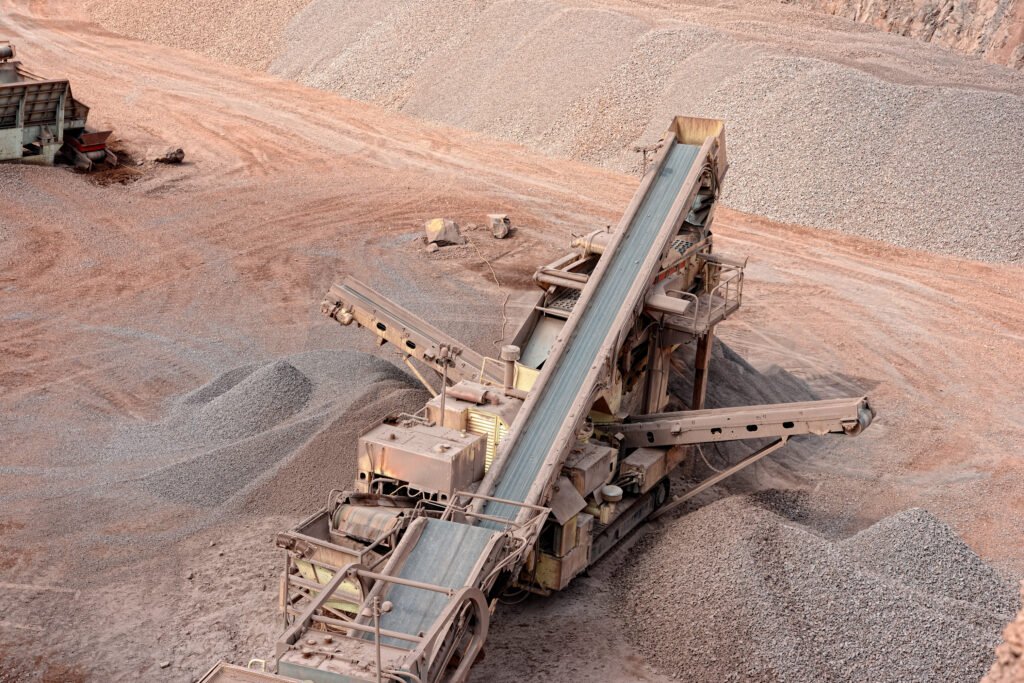
The working principle of an ore sorting machine can be explained through four main stages: material feeding, sensor detection, intelligent analysis, and precision separation. Each stage plays an important role in ensuring accurate identification and efficient removal of unwanted materials.
1. Material Feeding and Controlled Ore Distribution
The sorting process begins when raw ore enters the machine through a controlled feeding system. A stable and evenly distributed material flow is essential because sensors need a clear view of each individual particle.
If materials overlap or move irregularly, the system may not collect accurate information, which can reduce sorting performance. Therefore, modern ore sorting equipment uses specially designed feeding structures to regulate material speed, spacing, and movement.
Different mining applications require different equipment designs because ore size has a direct impact on sorting efficiency. Fine mineral powders, medium-sized particles, and larger rock fragments require different feeding methods and sensor configurations. Selecting the right equipment depends on particle size distribution, material characteristics, and expected processing capacity.
2. Sensor Detection and Mineral Identification
After feeding, ore particles enter the detection area where sensors collect information about their physical characteristics. This is the most important stage because the machine must accurately distinguish valuable minerals from waste materials.
Different sensor technologies are selected according to the properties of the ore.
Optical sorting technology uses high-resolution cameras and advanced image processing to analyze visible differences between materials. The system can identify characteristics such as:
- Color variation
- Surface texture
- Shape differences
- Visual defects
For minerals with clear surface differences, optical sorting provides a fast and efficient separation method. Materials such as quartz and other industrial minerals may benefit from this technology because quality differences can often be recognized through appearance.
However, not all minerals can be separated effectively through visual characteristics alone. When valuable minerals and waste rock have similar appearances, additional detection methods may provide better results.
XRT (X-Ray Transmission) sorting technology works by analyzing internal differences within materials rather than only surface features. It detects variations related to density and atomic characteristics, making it suitable for applications where different materials appear visually similar but have different internal structures.
By selecting the appropriate sensor technology, mining companies can achieve more accurate separation and improve overall mineral processing efficiency.
3. Intelligent Data Processing and Sorting Decision
After sensors collect information from each ore particle, the sorting system needs to analyze the data and determine whether the material should be accepted or rejected. This stage connects detection technology with the final separation process and directly influences sorting accuracy.
Modern sensor-based ore sorting systems use intelligent algorithms to evaluate multiple characteristics of each particle, including appearance, position, movement speed, shape features, and sensor signals. Based on this information, the system quickly identifies differences between valuable minerals and waste materials and makes a sorting decision in real time.
Artificial intelligence and deep learning technologies have further improved the ability of ore sorting machines to handle complex mineral conditions. Instead of relying only on fixed sorting parameters, AI-based systems can analyze large amounts of mineral data and optimize recognition performance for different materials.
This capability is especially valuable in mining environments where ore characteristics may change between different deposits or extraction areas. By continuously improving classification accuracy, intelligent sorting systems help maintain stable performance while reducing unnecessary loss of valuable minerals.
However, the purpose of an ore sorting machine is not simply to remove as much waste as possible. An effective sorting solution must balance waste rock separation and mineral recovery. Excessive rejection may remove valuable material, while insufficient rejection may reduce the quality of the final product. Intelligent analysis helps achieve the right balance between these two goals.
4. Precision Separation and Material Rejection
Once the sorting system identifies unwanted material, the machine performs the physical separation process. Because ore particles move continuously at high speed, the rejection system must respond quickly and accurately.
Most modern ore sorting machines use high-speed pneumatic separation systems. When the control system identifies a target particle as waste, it sends a signal to the air ejection unit, which releases a precise air pulse to change the particle’s trajectory.
The sorting process creates two main material streams:
- Accepted material: Higher-quality ore continues through the processing line.
- Rejected material: Waste rock or unwanted materials are removed from the main product stream.
The accuracy of this separation stage has a direct impact on mining profitability. A reliable sorting system should remove unwanted materials while minimizing the loss of valuable minerals.
Advanced rejection systems improve performance by analyzing particle position, movement path, and timing. This allows the machine to target specific particles more precisely instead of affecting nearby materials. As a result, mining companies can achieve better separation efficiency and more consistent product quality.
Key Technologies Behind Modern Ore Sorting Machines
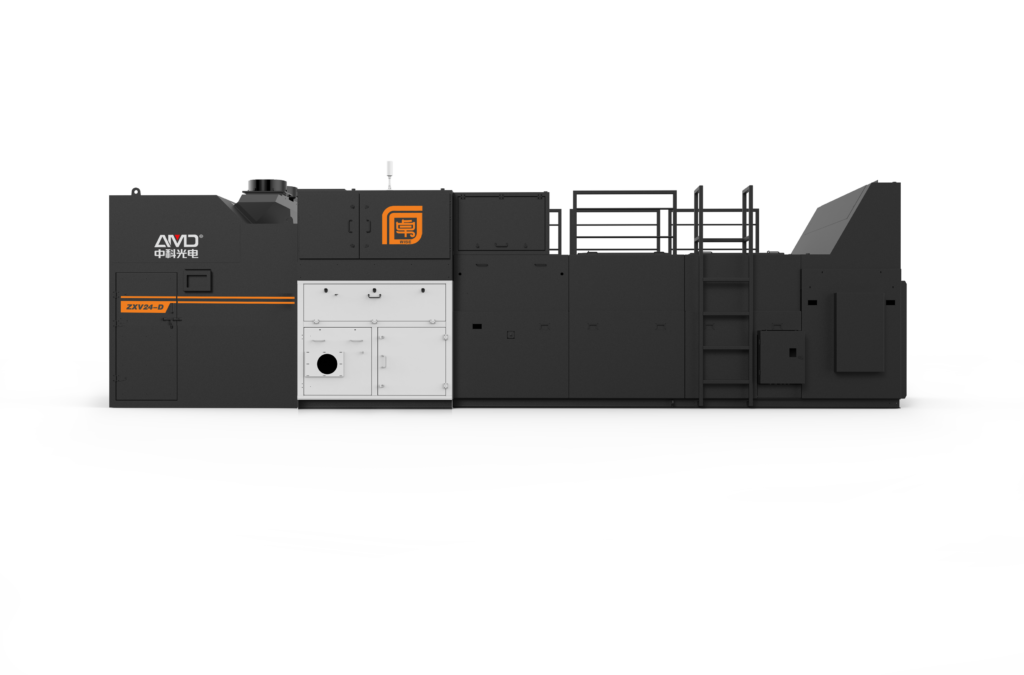
The performance of an ore sorting machine depends on the combination of sensor technology, intelligent software, mechanical design, and separation systems. Different technologies are selected according to mineral properties and production requirements.
Optical Ore Sorting Technology: Separating Minerals Through Surface Differences
Optical ore sorting is one of the most widely used sensor-based sorting methods. It uses industrial cameras, controlled lighting systems, and image processing technology to identify differences on the surface of ore particles.
During operation, cameras continuously capture images of moving materials. The sorting software analyzes the collected information and compares the detected characteristics with predefined sorting requirements. When the system recognizes unwanted material, the rejection mechanism removes it from the product flow.
Optical sorting technology is particularly suitable for materials where differences can be visually identified, such as:
- Color differences
- Surface texture variations
- Shape characteristics
- Visible impurities
For example, industrial minerals such as quartz, calcite, dolomite, and barite may benefit from optical sorting when quality differences appear through surface characteristics.
However, optical sorting also has limitations. When valuable minerals and waste materials have similar colors or similar surface appearances, camera-based identification may not provide enough information. In these situations, other sensor technologies may offer better separation results.
XRT Ore Sorting Technology: Detecting Internal Material Differences
XRT (X-Ray Transmission) ore sorting technology provides another approach by analyzing internal characteristics rather than only surface appearance.
Unlike optical sorting, which focuses mainly on visible features, XRT technology identifies differences related to material density and internal composition. This makes it suitable for applications where valuable minerals and waste rock look similar but have different physical properties.
XRT sorting can be especially useful in complex mineral processing environments where traditional visual identification methods are limited. By detecting internal differences, the system can separate materials that would otherwise be difficult to distinguish.
The choice between optical sorting and XRT sorting depends on the characteristics of the ore being processed. Mining companies should evaluate whether surface differences or internal differences provide the most reliable separation signals before selecting a sorting technology.
The Role of AI Technology in Ore Sorting Performance
Artificial intelligence has become an important part of modern mineral sorting because it improves the ability of machines to process complex and changing material conditions.
Traditional sorting systems often depend on fixed recognition settings, while AI-based systems can learn from large amounts of mineral data and improve classification performance over time.
AI technology helps ore sorting machines handle challenges such as:
- Changing ore characteristics
- Mixed mineral compositions
- Different surface conditions
- Variable production environments
By combining sensor data with intelligent algorithms, AI systems can recognize patterns that may be difficult to identify through traditional methods. This allows sorting equipment to adapt more effectively to different mining conditions.
A modern ore sorting machine is therefore not simply a mechanical separation device. It is an integrated system that combines sensing technology, intelligent analysis, automated control, and precision separation to improve mineral processing efficiency.
Factors That Influence Ore Sorting Machine Performance
Although sensor technology is an important factor, the overall performance of an ore sorting machine depends on multiple conditions working together. Understanding these factors helps mining companies select equipment that matches their actual processing requirements.
Ore Characteristics
The physical properties of ore directly influence sorting performance. Important factors include:
- Mineral composition
- Color difference
- Density variation
- Particle shape
- Moisture content
For minerals with clear surface differences, optical sorting may provide effective results. For materials where internal density differences are more significant, XRT sorting may be a better option.
Understanding the characteristics of the material before purchasing equipment is essential because the same sorting technology may perform differently on different types of ore.
Particle Size and Material Flow
Particle size is another important factor when selecting an ore sorting machine. Different material sizes require different feeding systems, detection methods, and mechanical designs.
Fine mineral powders require stable distribution and precise detection, while larger rocks require stronger structures and higher processing capacity. A suitable sorting system should match the particle size range and ensure that materials move through the machine in a consistent way.
A stable material flow is also important because overlapping particles can reduce detection accuracy and affect separation performance.
Processing Capacity and Production Requirements
Processing capacity is another key factor when selecting an ore sorting machine. Mining companies need to consider not only the current production volume but also future expansion plans.
A machine that performs well in laboratory testing may not always meet the requirements of a large-scale mining operation. The selected sorting system should provide stable performance under continuous industrial conditions while maintaining the required recovery rate and product quality.
Important factors to evaluate include:
- Tons of material processed per hour
- Required separation accuracy
- Expected recovery rate
- Available installation space
- Compatibility with existing processing equipment
Choosing equipment only based on purchase price may create problems in the future, such as insufficient capacity, higher operating costs, or reduced processing efficiency. A properly selected sorting system should match both current production needs and long-term operational goals.
How to Choose the Right Ore Sorting Machine for Your Mining Operation?
Selecting the right ore sorting machine requires more than comparing technical specifications. Every mining operation has different material characteristics, production targets, and processing challenges. The most suitable solution depends on how well the equipment matches the specific application.
Before investing in sensor-based sorting technology, mining companies should evaluate several important factors, including ore properties, particle size, sorting technology, processing capacity, and long-term maintenance requirements.
Understand Your Ore Characteristics Before Selecting a Sorting Technology
The first step is understanding the material that needs to be separated. Different minerals require different identification methods because the separation principle depends on the physical differences between valuable materials and waste rock.
For minerals with obvious surface differences, optical sorting technology may provide an efficient solution. High-resolution cameras can identify variations in color, texture, and appearance, making this approach suitable for many industrial minerals.
For materials where valuable minerals and waste rock have similar surface characteristics, XRT sorting may provide better results because it analyzes internal density differences rather than relying only on visual appearance.
Before selecting equipment, mining companies should evaluate:
- Mineral composition
- Difference between valuable ore and waste materials
- Required product quality
- Moisture conditions
- Material consistency
Material testing and application analysis are also important steps before investment. A reliable equipment evaluation process helps determine whether optical sorting, XRT sorting, or a combined approach can achieve the required separation performance.
Compare Different Ore Sorting Technologies
Choosing the right sensor technology is one of the most important decisions when purchasing an ore sorting machine. Different technologies provide different advantages depending on mineral characteristics.
| Sorting Technology | Working Principle | Suitable Applications | Main Advantages |
| Optical Ore Sorting | Uses cameras and image processing technology to identify color, texture, shape, and surface differences | Minerals with visible surface differences, industrial minerals, quality control applications | Fast recognition, flexible application, efficient separation based on appearance |
| XRT Ore Sorting | Uses X-ray transmission technology to detect internal density and material differences | Complex ores and materials with similar surface appearance | Identifies internal differences that cannot be detected through visual inspection |
| AI-Based Sorting System | Uses intelligent algorithms to analyze sensor information and optimize sorting decisions | Variable ore conditions and complex mineral environments | Improves adaptability and maintains stable sorting performance |
The best technology is not always the most advanced one. The correct choice depends on the characteristics of the material being processed. A properly matched sorting system can help mining companies achieve better recovery, lower waste rates, and more efficient mineral processing.
Consider Reliability, Maintenance, and Operating Conditions
Mining environments often involve dust, vibration, and continuous operation, which means equipment reliability is an important consideration.
A suitable ore sorting machine should be designed for long-term industrial operation and include features that support stable performance, such as:
- Durable mechanical structures
- Reliable sensor protection
- Convenient maintenance access
- Modular component design
- Stable control systems
Maintenance requirements should also be evaluated before purchasing. Advanced technology can improve sorting performance, but complicated maintenance procedures may increase downtime and operating costs.
Mining companies should consider not only the initial equipment investment but also long-term operating expenses, including maintenance frequency, spare parts availability, and technical support.
Benefits of Using an Ore Sorting Machine in Mineral Processing
The adoption of sensor-based sorting technology can provide significant advantages throughout the mining workflow. By separating valuable materials from waste at an early stage, ore sorting improves the efficiency of downstream processing and helps companies use resources more effectively.
Improving Ore Quality Through Early Separation
One of the main advantages of an ore sorting machine is improving the quality of material before it enters crushing, grinding, or concentration processes.
By removing waste rock early, mining operations can increase the grade of feed material and reduce the amount of unnecessary material entering downstream equipment. This improves processing efficiency and allows existing systems to handle valuable minerals more effectively.
This early separation approach is particularly valuable for deposits where a large percentage of extracted material has limited economic value.
Reducing Energy Consumption and Processing Costs
Crushing and grinding are among the most energy-intensive stages in mineral processing. When waste materials are removed before these stages, the amount of material requiring further treatment decreases.
This can help reduce:
- Energy consumption
- Equipment wear
- Grinding requirements
- Processing costs
For mining companies, improving efficiency before intensive processing stages can create significant operational benefits over the long term.
Supporting More Sustainable Mining Operations
Sustainability has become an increasingly important consideration in modern mining. Sensor-based ore sorting helps improve resource efficiency by reducing unnecessary processing of low-value materials.
Compared with traditional approaches that process all extracted materials together, ore sorting allows companies to focus resources on materials with higher economic value. This can contribute to lower energy use and more efficient resource utilization.
Increasing Recovery Opportunities
Some mineral deposits contain valuable resources mixed with large amounts of waste material. In these situations, traditional processing methods may become less economical because treatment costs are too high.
Ore sorting technology creates new opportunities by allowing mining companies to upgrade material quality before further processing. This can make previously challenging resources more suitable for economic recovery.
FAQ About Ore Sorting Machine
How does an ore sorting machine work?
An ore sorting machine uses sensors to detect differences between valuable minerals and waste materials. The system collects information through technologies such as optical cameras or XRT sensors, processes the data through intelligent algorithms, and separates unwanted materials using an automated rejection system.
What types of minerals can be sorted by an ore sorting machine?
Ore sorting machines can be applied to many mineral processing applications, including industrial minerals, non-metallic minerals, and metal ores. Suitable applications depend on material characteristics, such as surface differences, density variation, and mineral composition.
What is the difference between optical ore sorting and XRT ore sorting?
Optical ore sorting identifies materials through visible characteristics such as color, texture, and surface appearance. XRT ore sorting analyzes internal differences related to density and material composition. Optical technology is suitable when surface differences are clear, while XRT is useful when materials have similar appearances but different internal properties.
Can an ore sorting machine reduce mining costs?
Yes. By removing waste materials before energy-intensive processes such as crushing and grinding, an ore sorting machine can reduce the amount of material requiring downstream treatment. This may help lower energy consumption, improve processing efficiency, and reduce operating costs.
What should mining companies consider before buying an ore sorting machine?
Before purchasing equipment, companies should evaluate:
- Type of mineral being processed
- Particle size range
- Required processing capacity
- Sorting accuracy requirements
- Installation conditions
- Maintenance and technical support
The right sorting solution should match both current production requirements and future development plans.
Improve Mineral Processing Efficiency with the Right Ore Sorting Solution
As mining operations continue to focus on higher efficiency, better resource utilization, and more sustainable production, ore sorting machines are becoming an important technology in modern mineral processing.
By combining advanced sensors, intelligent algorithms, and automated separation systems, these machines help mining companies improve ore quality, reduce unnecessary processing, and increase overall production efficiency.
However, selecting the right sorting solution requires careful evaluation of mineral characteristics, processing requirements, and operating conditions. A properly matched system can provide reliable performance and long-term value for different mining applications.
If you are evaluating an ore sorting machine for your mining operation, contact Polysorter to discuss your material characteristics and explore a suitable sensor-based sorting solution.